
Review · FRANCE
Carcassonne: Castle and Ramparts Entry Ticket
Carcassonne is medieval drama in stone. This one-day ticket takes you inside the Château Comtal, across its double-walled ramparts, and into an archaeological museum that helps explain how this hilltop fortress grew from Roman stronghold to royal citadel. I especially like the freedom to explore at your own pace and the sweeping views from the western ramparts. The main caution is physical: narrow walkways, uneven surfaces, and some high steps can make parts of the route difficult.
I also like the price. At $15 per person, it gives you access to the castle courtyards, museum, and ramparts without paying for a private guide. The optional €3 audio guide adds useful context, though the written panels are enough if you are short on time or prefer to wander quietly.
Key points to know before you go
- The ticket covers the Château Comtal, archaeological museum, and ramparts, not just the outside of the fortress.
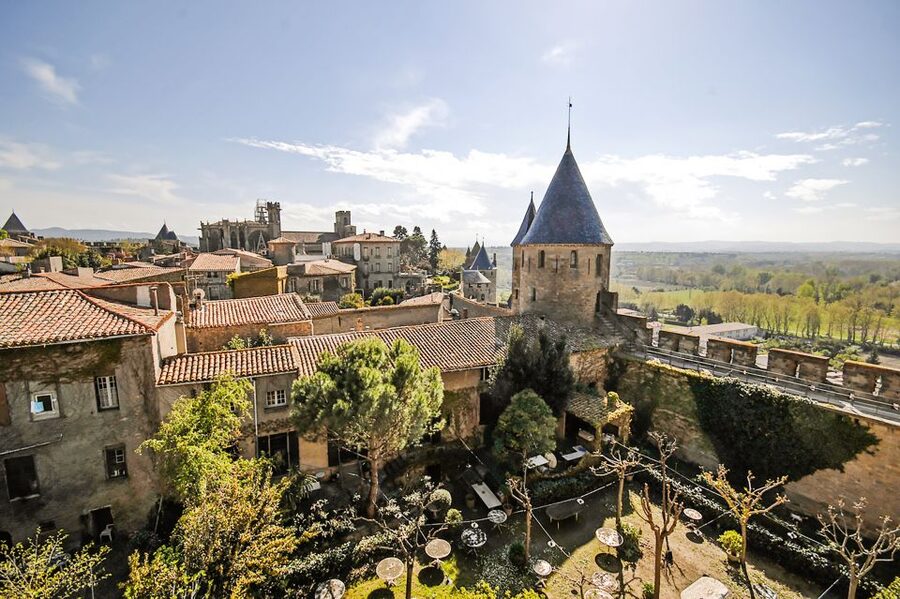
- The western ramparts provide the best payoff, with broad views over the modern city and surrounding countryside.
- The Bishop’s Tower is unique, because it spans both the inner and outer city walls.
- The audio guide costs an extra €3, but it gives the castle and fortifications more meaning.
- Go early in the day, especially in summer, when narrow rampart paths can become crowded.
- The medieval city around the castle is free to walk through, with cafés, restaurants, and souvenir shops outside the paid monument.
What your Carcassonne ticket actually includes

This is a self-guided visit rather than a scheduled tour with a live guide. Your ticket allows entry to the Château Comtal, its courtyards, the archaeological museum, and sections of the medieval ramparts. A leaflet is available in French, English, German, Italian, Spanish, Portuguese, Dutch, Japanese, Chinese, Russian, and Polish.
That setup suits you if you like stopping for photographs, reading only the displays that catch your eye, or moving quickly through less interesting rooms. You are not tied to a group or forced to keep pace with a guide.
The ticket is valid for one day. The price of about $15 is fair because the main attraction is not a single room or viewpoint. You get several connected parts of the fortified city, each showing a different side of Carcassonne. The castle explains royal power and military planning. The ramparts show how the defenses worked. The museum helps fill in details that the stones alone cannot provide.
The wider medieval city, known as the Cité, contains shops, restaurants, and cafés, but those streets are not the main reason to pay for admission. The paid visit gives you access to the areas where the structure and its military design are easiest to understand.
More Castle Entry Tickets in France
- Chambord: Entry Ticket to the Castle
★ 4.6 · 1,841 reviews - Chenonceau Castle Admission Ticket
★ 4.7 · 1,515 reviews - Loire Valley: Château Royal d’Amboise Entrance Ticket
★ 4.6 · 476 reviews
Start with the Château Comtal and its courtyards
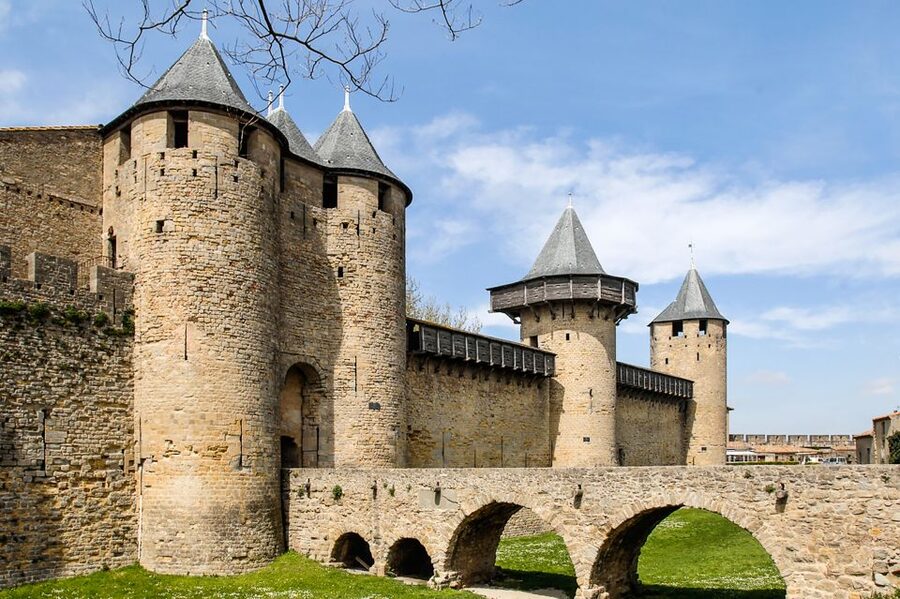
Begin with the castle before heading onto the walls. This is practical as well as sensible, since the Château Comtal closes before some other parts of the site. The castle was extended after the French crown took control of Carcassonne, and it became the strong center of a much larger fortified city.
As you move through the courtyards, look for the way each section controls movement. Carcassonne was not designed simply to look impressive from a distance. Its gates, walls, towers, and changes in height were built to slow an attack and give defenders several lines of protection.
The castle is linked to the story of the Trencavel family, one of the strongest noble families in southern France during the 12th century. Their power ended during the Cathar Crusade from 1209 to 1229, followed by the Inquisition and the exile of the family. That political background gives the stonework more weight. You are not just looking at a pretty medieval town. You are walking through a place shaped by religious conflict, royal expansion, and control of southern France.
The castle courtyards are also a good place to get your bearings. The leaflet and information panels explain the basic layout, and written signs are available in several languages. If you want every detail, rent the audio guide for €3. It is especially useful when you want to understand why a tower, gate, or wall was built in a particular position.
Look for the Bishop’s Tower between both walls
The square Bishop’s Tower is one of the most distinctive details in the fortifications. It is the only construction that straddles both the inner and outer city walls, which makes it easy to miss if you are only admiring the skyline from outside.
Its position shows how carefully the defenses were planned. Carcassonne has two rings of walls, and the tower connects them rather than belonging neatly to only one line. As you walk through the site, this is the sort of detail that helps you understand the fortress as a working military system instead of a collection of towers.
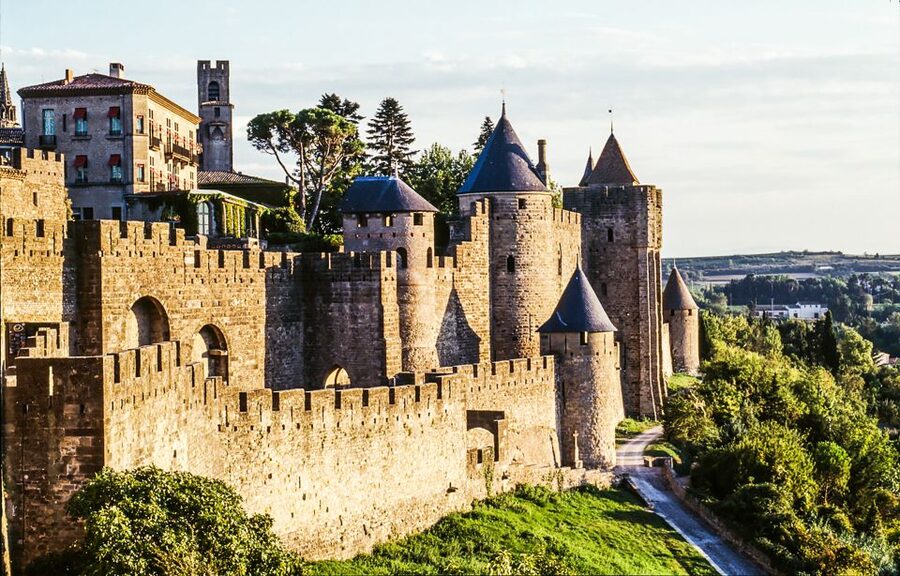
The double walls took their definitive form in the 13th century after the French king ordered major construction and an extension of the castle. The result is one of Europe’s clearest examples of layered medieval defense. The inner and outer walls create narrow spaces, controlled approaches, and several positions from which defenders could watch the surrounding area.
The Bishop’s Tower is also a good reason not to rush. From a distance, Carcassonne can seem almost too perfect, like a stage set. Small structural details such as this remind you that the city was built for security first, and beauty came from that practical design.
Walk the western ramparts for the views
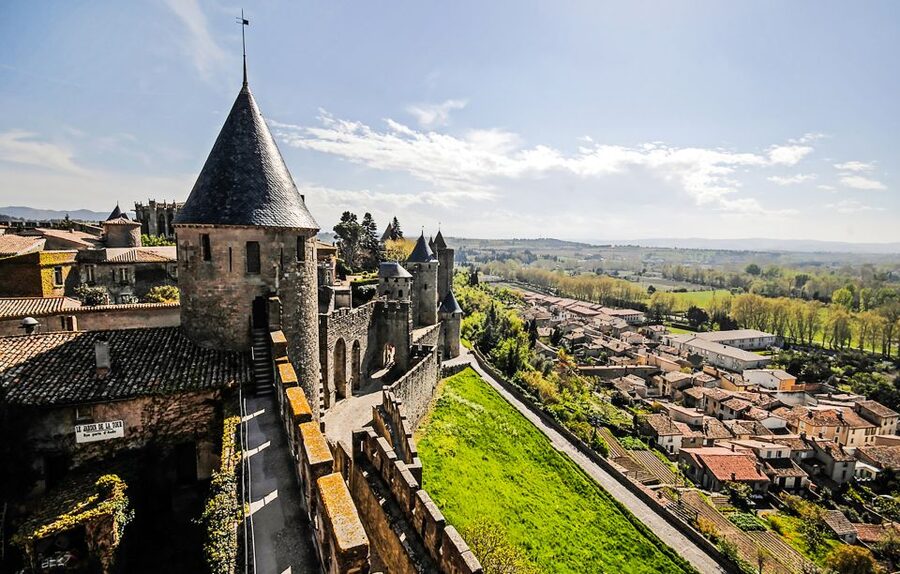
The ramparts are the part I would protect time for. The newer self-guided access to the medieval western walls lets you walk along the fortifications and see Carcassonne from a much higher, wider angle.
The full walk can take about 30 minutes if you keep moving, though you will probably spend longer stopping for photographs and reading signs. Views open toward the modern city and the countryside around Carcassonne. From the walls, you can also appreciate the scale of the Cité more clearly than you can from street level.
The walk is not difficult for everyone, but it is not a smooth promenade. Some sections have high steps, narrow passages, and uneven surfaces. You can leave the ramparts at several points if you need a shorter route. People with limited mobility can access the Barbican and main courtyard, but not every part of the walls will be equally easy.
Take care in windy weather. One visit was described as memorable despite an icy wind, and that is a useful reminder that the exposed walls can feel much colder than the streets below. Wear firm shoes and bring water in warm weather. Scooters, bicycles, helmets, non-folding strollers, and large luggage are not allowed inside the Château Comtal or on the ramparts.
The walls become less pleasant when crowded. Narrow paths leave little room for passing, and a busy summer afternoon can slow your progress. An early visit around 10:30 can be much calmer. By midday, queues and heavier foot traffic may appear, particularly during the busiest months.
More Fortress and Citadel Tours in France:
- Carcassonne: Private Guided Tour of the Medieval Fortress
★ 4.5 · 64 reviews - Carcassonne: Fortress Walking Tour
★ 5.0 · 24 reviews - Marseille: Historical Tour of the Citadelle of Marseille
★ 4.3 · 3 reviews - Salzburg: Hohensalzburg Fortress Admission Ticket
★ 4.6 · 2,236 reviews
Notice the Salle Pierre Embry and its alabaster window
The Salle Pierre Embry contains one of the visit’s most unusual details: a window made with three polychrome alabaster statues from the early 15th century. The colored stone is easy to overlook if you are focused only on towers and viewpoints, so keep an eye on the room names and displays.
This feature gives the interior visit a different mood. The ramparts are about distance, defense, and open views. The Salle Pierre Embry draws your attention to craftsmanship and religious art. It is a useful reminder that a fortress was also a place where people lived, worshipped, governed, and displayed wealth.
The archaeological museum adds another layer. It helps connect the medieval structures with the much older story of the site. Carcassonne was settled as early as the 6th century BC, later became an important Roman town, and was fortified in the 4th century. The castle you see today is part of a long sequence rather than the beginning of the story.
You do not need specialist knowledge to enjoy the museum. The signs and leaflet provide enough basic context, while the audio guide can help you link individual objects and rooms to the larger story.
Understand the restoration before judging the castle
Carcassonne looks remarkably complete, but much of what you see was restored in the 19th and early 20th centuries. After the Cathar Crusade, the Inquisition, and the fall of the Trencavel family, the city was left in poor condition.
French architect Eugène Viollet-le-Duc was commissioned by the state in 1844 to restore the fortress. Work continued under his pupil Paul Boeswillwald and was completed in 1911. The restored royal city later received UNESCO World Heritage status in 1997.
That restoration is worth keeping in mind as you walk. The site is not an untouched medieval ruin. It is a carefully reconstructed monument that reflects both medieval military architecture and 19th-century ideas about how the Middle Ages should look.
This does not make the visit less worthwhile. It simply gives you a more accurate way to see it. You can admire the scale and design while remembering that the present appearance is the result of long repair work, interpretation, and reconstruction.
Choose the audio guide if you want the story
The audio guide costs €3 and can be rented on-site. I would choose it if this is your main historical stop in Carcassonne or if you want more than the basic signs provide.
It covers the castle and ramparts in enough detail to make the route feel organized. Several people found it informative and entertaining, and it can help you notice small features you might otherwise pass. The extra fee is modest compared with the entry price, especially if you have a real interest in medieval architecture.
There is one practical weakness. The recording can advance or stop abruptly if you move into another room before finishing a segment. Pay attention to the device and do not walk too quickly between spaces. If you prefer complete control, the leaflet and information panels are perfectly workable.
The audio rental may require you to leave identification, so bring a passport or ID card. Cash is also listed among the things to bring. Children under 18 and European Union citizens under 26 can enter free with valid identification, but a time slot still needs to be booked in advance.
Plan your timing around closures and crowds
The monument is closed on January 1, May 1, and December 25. It closes at 4:00 PM on December 24 and December 31. The ramparts are closed on July 14 because of the fireworks.
The first Sunday of January, February, March, November, and December offers free entry, as do the European Heritage Days on the third weekend of September. Even on free-entry days, check the required reservation arrangements before setting out.
For a normal paid visit, I would allow at least two hours if you want the castle, museum, and ramparts without rushing. You can move through faster, but the site rewards pauses. The walls alone may take around 30 minutes, and the castle rooms, museum displays, and courtyards add useful time.
If you arrive by train, the walk up from Carcassonne station takes about 30 minutes according to one detailed visit account. It is a pleasant route, but map applications may bring you near the meeting address without leading you directly to the entrance. Follow signs for the Château Comtal and allow extra time to find the correct gate.
Who will enjoy this Carcassonne experience most
This ticket is a strong choice for first-time visitors who want the essential historic sights without paying for a private guide. It suits families with older children, couples, photographers, and anyone who enjoys walking through fortifications at an independent pace.
It is also good for visitors with limited time. Buying ahead can save you from the ticket queue, and the entry process is generally straightforward when you have the digital ticket ready. The castle and ramparts are the parts of Carcassonne where the history feels most direct, so I would give them priority over souvenir browsing.
You should think twice if stairs, wind, uneven paving, or narrow paths cause serious difficulty. The Barbican and main courtyard are accessible to people with limited mobility, but the entire rampart route is not equally easy. Large luggage, non-folding strollers, bicycles, scooters, and animals are not permitted inside the monument.
The surrounding Cité has many places to eat and drink, and the shops make it easy to turn the visit into a longer stop. Keep your expectations realistic, though. The medieval streets are heavily aimed at tourism. The castle, museum, and walls provide the strongest sense of place.
Should you book the Carcassonne castle ticket?
Yes, I would book it if you are visiting Carcassonne for the first time. The ticket gives you the key interior and exterior sections of the fortress for about $15, and the western ramparts provide views you cannot get by simply walking the free streets of the Cité.
Book ahead if you want quick entry during summer or busy weekends. Arrive early, visit the Château Comtal first, then take your time on the walls. Add the €3 audio guide if you want a fuller explanation, but do not feel that you have missed the point if you use only the leaflet and signs.
This is not a polished guided excursion with a host leading every step. It is better suited to independent exploring, good shoes, and a little patience. For most people, the combination of castle rooms, medieval defenses, museum displays, and wide views makes it one of the best uses of a day in Carcassonne.
FAQ
How much does the Carcassonne castle and ramparts ticket cost?
The listed price is $15 per person. Children under 18 and European Union citizens under 26 can enter free with valid identification, but they still need to pre-book a time slot.
How long is the ticket valid?
The ticket is valid for one day. Starting times depend on availability.
What does the entry ticket include?
It includes a self-guided visit to the castle courtyards, archaeological museum, and ramparts.
Is an audio guide included?
No. An audio guide can be rented on-site for an additional €3.
Which languages are available for the written leaflet?
The leaflet is available in French, English, German, Italian, Spanish, Portuguese, Dutch, Japanese, Chinese, Russian, and Polish.
Is the visit guided by a live tour leader?
No. This is a self-guided visit. You explore the castle, museum, and ramparts independently.
Can people with limited mobility visit the monument?
The Barbican and main courtyard are accessible to people with limited mobility. Some rampart sections have high steps and uneven surfaces, so the entire route may not be suitable for everyone.
What items are not allowed inside?
Scooters, bicycles, helmets, non-folding strollers, and large luggage are not permitted inside the Château Comtal or on the ramparts. Animals are also not allowed.
When is the monument closed?
It is closed on January 1, May 1, and December 25. It closes at 4:00 PM on December 24 and December 31. The ramparts are closed on July 14 because of the fireworks.
Just added around France
- Carcassonne: Secrets of the Castle’s Defense Self-Guided Tour★ 4.5 · 8 reviews
- Complete Private Tour City and Castle of Carcassonne★ 5.0 · 12 reviews
- Saint Emilion Castle and Village Wine Tour★ 4.5 · 23 reviews
- Château de Fieuzal, Pessac-Léognan: Visit and Tasting★ 5.0 · 18 reviews
- Wine Tour of Mèdoc : Châteaux, Tastings and WSET Guide★ 5.0 · 21 reviews
- Full-day Saint-Emilion: Village, Undergrounds and Châteaux★ 4.5 · 55 reviews
- Private Wine Lovers – Super St Emilion – behind the scenes visits top chateaux and medieval town★ 5.0 · 25 reviews
- Bordeaux Médoc Region Private Wine Lovers Tour with Chateau Visits & Tastings★ 5.0 · 40 reviews
Castle Entry Tickets, compared.


Edinburgh Castle: Guided Walking Tour with Entry Ticket
Read our review →
Castle Tour with Local Guide and Entry Ticket
Read our review →
Prague Castle 2.5-Hour Tour Including Admission Ticket
Read our review →
Edinburgh Castle: Guided Walking Tour with Entry Ticket
Read our review →
Prague Castle and Lobkowicz Palace Entry Tickets
Read our review →
Alcázar and Cathedral Entry Ticket and Guided Tour
Read our review →Browse the lists this tour appears in