
Review · BUDAPEST
Buda Castle Walking Tour: A Kingdom of Many Nations
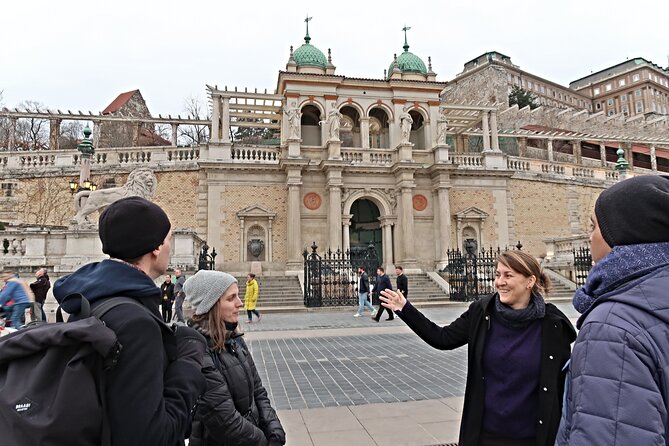
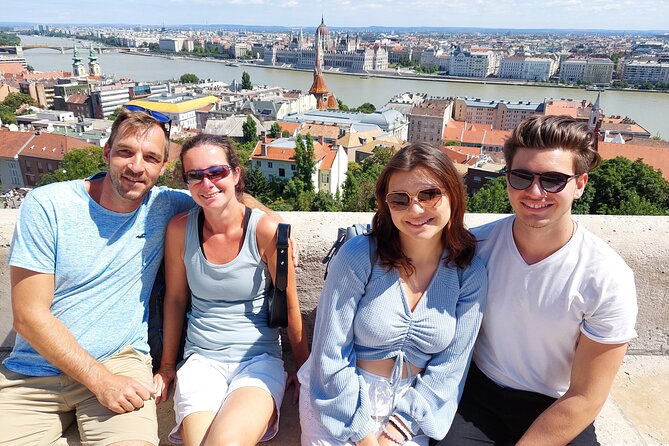
Castle Hill tells Budapest’s whole story in a few cobbled streets. This three-hour walk brings you through royal power, Ottoman rule, Habsburg influence, war damage, and modern Hungary. I especially like the small group of up to six people and the way the route links famous sights with lesser details, from old house names to the changing purpose of the palace. The broad views from Fisherman’s Bastion are another major reward.
The main drawback is simple: admission tickets are not included, including Matthias Church and Fisherman’s Bastion. You also need to be clear about what you are buying. This is a guided walk through the Castle District, not a tour inside the palace itself. Still, if you want history explained by a strong local guide rather than a quick succession of photo stops, this is a very appealing choice.
Key points to know before you book

- Small-group setting: Bookings are limited to six people, with the overall activity capped at eight.
- Three hours on foot: You get a proper walk through Castle Hill, not a rushed circuit.
- The palace is viewed from outside: The route explains the castle complex and its changing role, but the palace interior is not part of the experience.
- Matthias Church costs extra: The church is one of the tour’s highlights, but your admission ticket is separate.
- Excellent city views: Fisherman’s Bastion gives you wide views over the Danube, Pest, Margaret Island, and Gellért Hill.
- Guide quality matters here: Past tours have featured Peter, Judith, Gergely, Kata, Veronica, Marianna, Runa, Henk, and Susana, with repeated praise for their warmth, flexibility, and command of Hungarian history.
Why Castle Hill is worth three hours
Buda Castle District is not just a single fortress. It is Budapest’s oldest quarter, a hilltop area of narrow streets, churches, government buildings, reconstructed homes, and old fortifications. Its story is unusually layered because the hill has been rebuilt and repurposed many times.
You will hear about King Béla IV, who built a fortress here around 1250 after the Mongol invasion. Later, King Matthias turned Buda into one of Europe’s leading Renaissance courts. Ottoman rulers governed Hungary from here for more than 150 years, and Habsburg emperors later reshaped the district.
The area suffered severe damage during World War II. Much of what you see today is restored or reconstructed, which adds an important layer to the walk. You are not simply looking at untouched medieval Budapest. You are seeing a historic district that has repeatedly been broken, altered, and brought back to life.
That is why a guide adds real value. Without context, the castle can look like a pleasant old neighborhood with an impressive church. With the story in place, the buildings become evidence of changing rulers and changing ideas about power.
More Castle Walking Tours in Budapest
- Budapest: Buda Castle Walk with Saint Stephen’s Hall
★ 4.5 · 3,012 reviews - Budapest: Buda Castle District Walking Tour
★ 4.6 · 2,108 reviews - Budapest: 3-Hour Grand City Tour and Castle Walk
★ 4.3 · 1,437 reviews
Starting near Országh Street
The tour begins at Budapest’s Országh u. 31, in the Castle District. The meeting point is near public transportation, but hotel pickup and drop-off are not included, so you need to make your own way there.
The opening section introduces the hill’s architecture and layout. Expect steep or uneven stretches, narrow lanes, and cobbled surfaces. The provided details do not specify the exact route from street level to the meeting point, so check your directions carefully before leaving your hotel.
The morning or afternoon departure depends on the day. That gives you some flexibility, though you should confirm the available time when booking. A morning walk can help you get oriented before exploring on your own. An afternoon departure may fit better after a visit to the Parliament area or a Pest city walk.
The palace: royal power without a palace interior
The first major stop is the Buda Castle complex at the southern end of Castle Hill. The palace is massive, formal, and hard to miss. Its present appearance is eclectic, but it took centuries of destruction, expansion, fire, and rebuilding to reach this form.
The guide uses the palace to explain how power moved through Hungarian history. King Béla IV established the early fortress. King Matthias later made it a celebrated Renaissance court. Ottoman pashas used it during their long rule, and Habsburg rulers changed it again.
This section lasts about two hours as part of the broader Castle District walk, although the supplied timing also lists a shorter 15-minute palace-focused segment. In practice, you should expect the palace to be one part of a longer outdoor exploration rather than a single stop with a fixed indoor visit.
The important point is that you do not tour inside the royal palace. That may disappoint you if you expected palace rooms, galleries, or a museum visit. On the other hand, the outdoor setting lets the guide connect the palace with the streets, churches, and government buildings around it.
The changing use of the building is especially useful. A royal residence, Ottoman seat of power, Habsburg symbol, wartime ruin, and reconstructed landmark each tell a different story. The tour treats the palace as a record of political change, not just an attractive building.
Sándor Palace and the modern Hungarian state
A short stop at Sándor Palace shifts the story from medieval kings to present-day government. Built in Neoclassical style in 1806 for Count Vincent Sándor, the palace has served as the official residence of Hungary’s president and the seat of the Office of the President since 2003.
The stop is listed at about five minutes, so do not expect an interior visit or a long architectural lecture. Its value comes from the contrast. Castle Hill is not frozen in the Middle Ages. It remains part of Hungary’s working political center.
Your guide may also use the building to explain the difference between historic royal power and the role of the modern presidency. That kind of connection helps the district feel like a living part of Budapest rather than an outdoor museum.
More Castle Walking Tours in Hungary
- Budapest: Buda Castle District Walking Tour with a Historian
★ 4.9 · 867 reviews - Budapest Castle District Walking Tour
★ 5.0 · 630 reviews - Walking tour in the Buda Castle incl. Fisherman’s Bastion
★ 5.0 · 467 reviews - Budapest: Castle District Walking Tour
★ 4.8 · 223 reviews
Matthias Church, the visual centerpiece

Matthias Church is the tour’s most ornate building. Its patterned roof catches your eye before you reach the entrance, and the interior is known for strong decoration and color.
The church is associated with the coronation of Hungarian kings. It also reflects the rebuilding spirit of Castle Hill. What you see today is a highly finished Neo-Gothic reconstruction from the late 19th century, rather than a completely untouched medieval interior.
That distinction matters. The church is beautiful, but its story is also about how later generations imagined the medieval past. A good guide can explain that difference without taking away from the building’s appeal.
Admission is not included. The supplied tour details list roughly 20 minutes here, which is enough for a focused visit but not a long examination of every chapel and detail. If you want to linger, ask your guide how the timing works that day.
One useful feature is the possibility of having the guide accompany you through the church after you purchase admission. This was singled out as worth doing. I agree with that advice, especially if you are not familiar with Hungarian royal history or church architecture.
Several guides have earned especially warm praise for their teaching style here and throughout the district. Kata is described as energetic, patient, and able to connect Hungarian history with modern life. Veronica made the walk engaging even for someone who expected the Castle District to feel less exciting. Marianna added personal memories of life under Soviet rule, giving the political story a human voice.
Fisherman’s Bastion and the big Budapest view
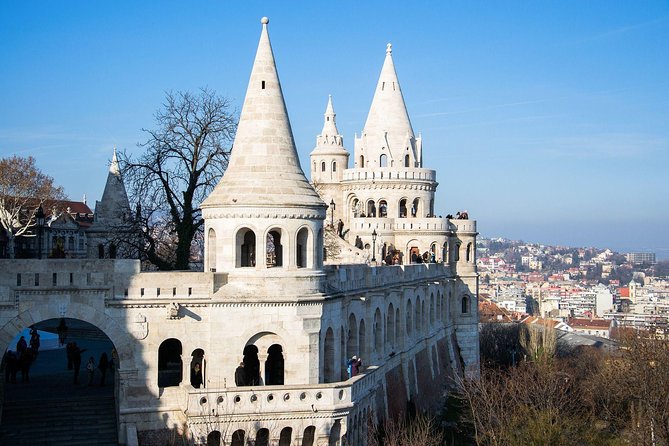
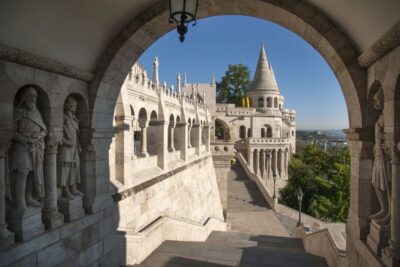
Fisherman’s Bastion is built for looking outward. Its Neo-Gothic and Neo-Romanesque towers were designed and built between 1895 and 1902. The seven towers represent the seven Magyar tribes that settled in the Carpathian Basin at the end of the ninth century.
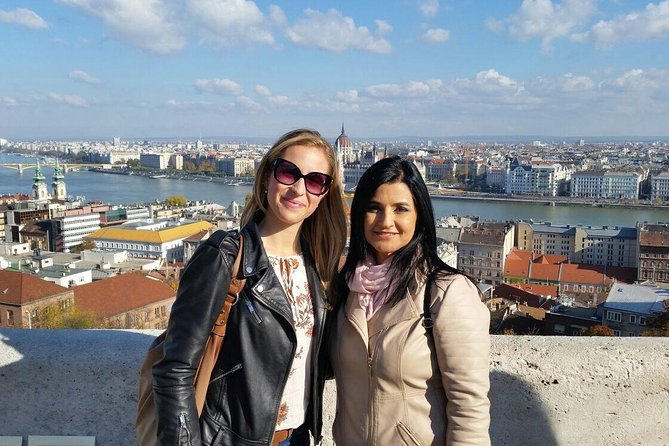
From the terraces, you can look across the Danube toward Pest, with views toward Margaret Island and Gellért Hill. This is one of those places where the geography of Budapest becomes clear. The river divides Buda from Pest, while the hill gives you a strong sense of how the city is arranged.
Entrance to Fisherman’s Bastion is also at your own expense. The listing does not specify the exact ticket price or which sections require payment, so budget a little extra and confirm the current arrangements before you go.
The stop lasts about 20 minutes. That is enough for photographs and an explanation of the towers, but you may want additional free time afterward. If you are keen on views, treat the tour as an introduction and return later on your own.
This is also a busy photo spot at times, so the small group helps. Your guide can keep the history moving while you get your bearings, instead of leaving you to search for meaning among the towers.
Vienna Gate and the end of the walk

The route ends at Vienna Gate, on the northern side of the district. From here, you can see toward Óbuda, or Old Buda, where the Romans founded the city called Aquincum.
Ending here gives the walk a useful geographical finish. You begin with royal power at the palace and finish by looking toward one of the oldest Roman roots of the city. The route does not simply circle the most famous buildings. It places Castle Hill within the wider story of Budapest.
The tour ends in Budapest rather than returning you to your hotel. That is worth planning around. You may want to continue exploring the hill, find lunch, or use public transportation back toward Pest.
The guides are the real value

At $126.15 per person, this is not a bargain-priced sightseeing walk. The price makes more sense if you value a small group and a guide who can adjust the conversation to your interests.
The strongest praise has focused on the guides rather than on the buildings alone. Peter has been praised for adapting the walk to the group and for knowing the Castle District in remarkable detail. Gergely has been described as thoughtful and able to discuss Hungary, Budapest, and broader subjects with ease.
Kata appears repeatedly as a friendly, energetic guide with excellent English and a strong grasp of Hungarian history. One especially memorable local touch came from a guide who showed the group his grandmother’s house and explained the story connected with it. Those details are what can turn a standard sightseeing walk into a sense of place.
The experience is not limited to one guide. Names associated with past departures include Judith, Veronica, Marianna, Runa, Henk, Susana, and others. The consistent theme is flexibility, clear English, and a willingness to answer questions.
That matters because Castle Hill can be dry if presented as a list of dates and rulers. The right guide can explain why the district looks as it does, point out small architectural details, and connect public history with ordinary lives.
Price, group size, and practical value
The three-hour duration gives you enough time to cover the main sights without turning the day into a marathon. The group limit is a major advantage. With six people per booking and a maximum of eight for the activity, you are far less likely to be lost in a large crowd.
Still, calculate the full cost. You pay $126.15 per person, then add admission for Matthias Church and Fisherman’s Bastion. Food, drinks, transportation, and hotel transfers are also separate.
I would call it a good value for someone who wants a serious introduction to the district, especially before a river cruise or a longer Budapest stay. One useful planning tip is to take a general city tour first, then use this walk for the more focused Castle District story. That order gives you a better grasp of how Buda fits with Pest.
The tour may be less suitable if you want a museum-heavy experience, an indoor palace visit, or a low-cost orientation walk. You are paying for personal guidance and a small group, not for a bundle of included admissions.
Who should book this Castle District walk?
I would recommend it to first-time visitors who want to understand Budapest rather than simply photograph it. It also suits people with Hungarian family roots, since the guide can give historical context to places that may carry personal meaning.
It is a strong pick for couples, families, and small groups who prefer questions and conversation over a scripted crowd tour. The walk also works well before a river cruise, when a clear introduction to Buda can make later sightseeing more rewarding.
You should think twice if walking on old streets is difficult for you or if you strongly prefer indoor attractions. The tour is built around outdoor movement, and the details supplied do not promise special accessibility arrangements.
Free cancellation is available up to 24 hours before the start time. After that point, the amount paid is not refunded, and changes are not accepted.
Should you book it?
Book this tour if you want Castle Hill explained, not just photographed. The palace, Matthias Church, Fisherman’s Bastion, and Vienna Gate are all worth seeing, but the guide’s interpretation is the main reason to choose this experience.
I would book it for the small group, the strong record of guides such as Peter, Kata, Gergely, Veronica, and Marianna, and the chance to hear both national history and personal local stories. I would skip it if your priority is entering the royal palace or keeping admission costs inside the advertised price.
For most first visits to Budapest, this is a thoughtful and well-paced way to meet Buda.
FAQ
How long does the Buda Castle walking tour last?
The guided walk lasts approximately three hours.
Where does the tour begin?
The meeting point is Budapest, Országh u. 31, 1014 Hungary.
Where does the tour end?
The tour ends at Vienna Gate in Budapest.
Are entrance tickets included?
No. Tickets for Buda Castle, Matthias Church, and Fisherman’s Bastion are not included.
How many people are in the group?
A booking can include a maximum of six people, and the activity has a maximum capacity of eight travelers.
Is hotel pickup included?
No. Hotel pickup and drop-off are not included.
Just added around Budapest
- UNESCO Holloko and Eger Castle Private Tour with Transport★ 5.0 · 4 reviews
- Private Sissi Castle Tour★ 4.5 · 12 reviews
- Buda Castle Walking Tour with Audioguide on Your Smartphone★ 4.0 · 24 reviews
- True Crime Walking Tour in the Buda Castle district★ 5.0 · 17 reviews
- Private Buda Castle walking tour & Danube river cruise with Margaret Island stop★ 5.0 · 2 reviews
- Live virtual walking tour in the Buda Castle quarter★ 5.0 · 10 reviews
- Private Budapest Sightseeing Tour: Royal Castle, Heroes Square, Chain Bridge★ 5.0 · 4 reviews
- Private Buda Castle Walk with Entry to Matthias Church★ 4.5 · 8 reviews
Castle Walking Tours, compared.

Edinburgh Castle: Guided Walking Tour with Entry Ticket
Read our review →
3-Hour Walking Tour of Old Town & Prague Castle
Read our review →Edinburgh Castle: Guided Walking Tour with Entry Ticket
Read our review →
Edinburgh Castle Guided Walking Tour in English
Read our review →

Prague 3-hour Afternoon Walking Tour including Prague Castle
Read our review →
Royal Mile and Edinburgh Castle – Small Group Walking Tour
Read our review →Browse the lists this tour appears in