
Review · SPAIN
Castle of Baños de la Encina
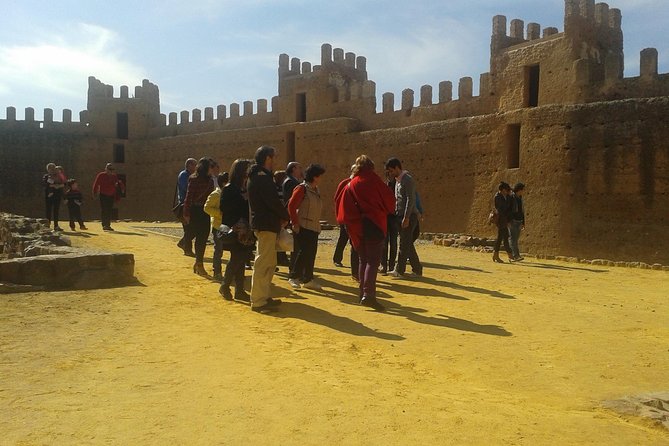
A fortress with layers beneath it. The 45-minute guided visit to the Castle of Baños de la Encina gives you two strong reasons to go: I like the chance to see one of Spain’s best-preserved Muslim castles, and I like that the tour explains archaeological remains from the Copper Age through the Almohad period. The price, about $7.49 per person, also makes this an easy addition to a day in Jaén province.
The main consideration is the short running time. Forty-five minutes is enough for a clear introduction, but not enough for a slow, detailed examination of every tower, wall, and archaeological feature. The experience also depends on good weather, so your plans need a little flexibility.
Key points to know before you go
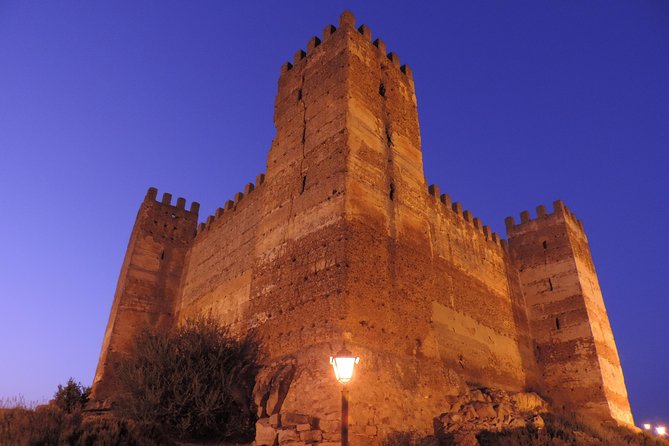
- Fourteen Almohad towers ring the castle, with a fifteenth Christian Tower of Tribute added to the fortress.
- Copper Age, Iberian, and 12th-century Almohad remains are part of the story, giving the visit far more depth than a simple castle walk.
- The tour lasts about 45 minutes, making it easy to fit into a wider visit to Baños de la Encina.
- A local guide leads the visit, explaining the castle’s construction, history, changing control, and recent archaeological discoveries.
- The group can include up to 25 people, though a smaller group may make the explanation easier to follow.
- Free cancellation is available up to 24 hours before the start, while poor weather may lead to a new date or a full refund.
Why this castle deserves your time
The Castillo de Baños de la Encina is not just a stone fort placed on a hill. Its location has been used for thousands of years, and the remains inside the walls reveal several very different chapters of human settlement.
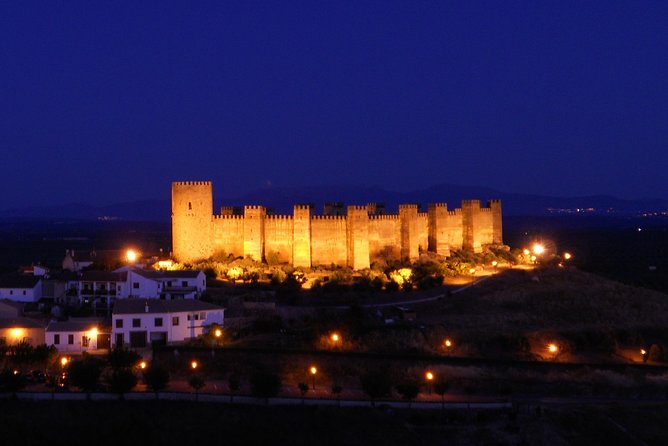
The castle is known as Bury al-Hamma, and its broad, fortified outline dominates the rural surroundings of Baños de la Encina. The walls are reinforced by fourteen towers, each with a crenellated form that gives the fortress its unmistakable profile. A fifteenth tower, known as the Christian Tower of Tribute, belongs to the later Christian phase.
That combination makes the visit useful for anyone who wants more than a pretty photograph. You can look at the fortification itself, then connect it to earlier occupation of the site and to the political changes that shaped southern Spain.
I especially like that the tour includes archaeology rather than stopping at the visible walls. The castle’s story reaches back to the Copper Age, continues through Iberian occupation, and then moves into the Almohad urban complex of the 12th century. That is a lot of time packed into one small site.
A few more castle visits around Spain worth a look
- Seville: Royal Alcázar Entry Ticket
★ 4.6 · 28,378 reviews - Seville: Alcázar, Cathedral & Giralda Skip-the-Line Tour
★ 4.8 · 11,525 reviews - Seville: Cathedral, Giralda & Alcazar Entry With Guided Tour
★ 4.6 · 8,560 reviews
Entering a remarkably preserved Almohad fortress
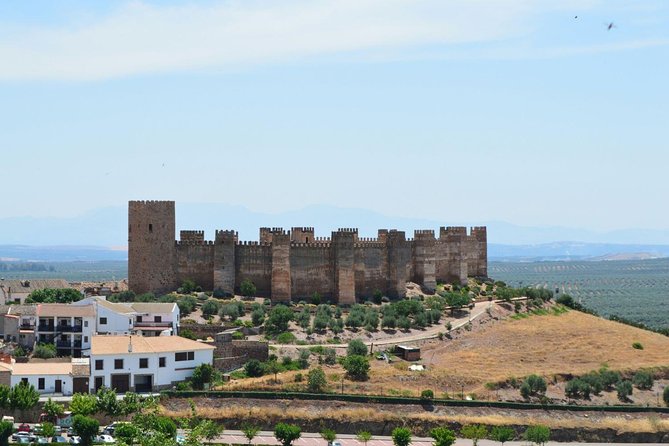
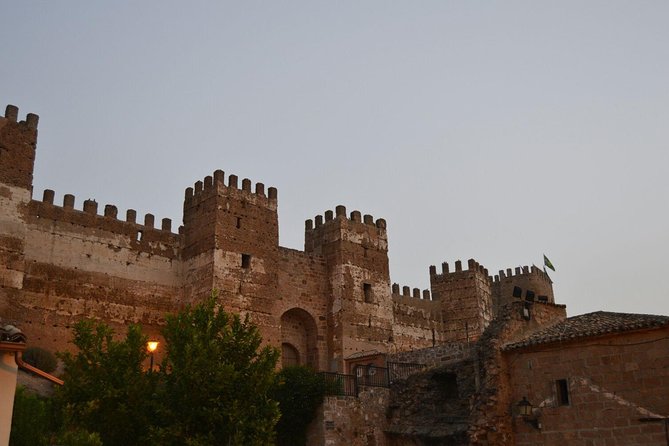
The first thing you notice is the castle’s strong outline. Its walls and towers have survived with very little damage, making it one of the best-preserved fortified complexes from the Almohad era and one of the best-preserved Muslim castles in Spain.
That condition matters. In many historic fortresses, you are left trying to imagine the original shape from scattered foundations. Here, the defensive design remains clear. The crenellated wall, repeated towers, and separate Tower of Tribute help you understand how the castle was organized and why it held such an important position.
You should pay attention to the relationship between the towers and the wall. The towers are not just decorative points along the outside. Together, they form a defensive system that gave watchmen better positions and made the perimeter harder to approach.
The short guided format is useful here. A local guide can point out features you might otherwise walk past, especially when several periods of construction overlap. Without an explanation, you could easily see only a medieval fortress. With one, the site becomes a record of changing communities and rulers.
The Copper Age begins the story
Before the Almohad period, people were already using this site. The earliest vestiges mentioned for the castle date to the Copper Age, which places human activity here in prehistoric times.
That fact changes how you read the fortress. The castle was not built on an empty piece of high ground. It occupied a location that had already proved useful over a very long period. The reasons for that early importance are not fully detailed in the available tour information, so you should treat this part as an introduction to the site’s age rather than expect a full prehistoric archaeology lecture.
Still, it is a valuable opening chapter. The visible walls may be medieval, but the ground beneath them holds evidence of much earlier occupation. I like tours that make this point because they prevent you from reducing a historic monument to one date or one ruling power.
If archaeology interests you, listen closely when the guide explains how the earlier remains fit into the later fortress. The site’s significance comes from the layers together, not from any single period.
Iberian walls and a sacred funerary monument
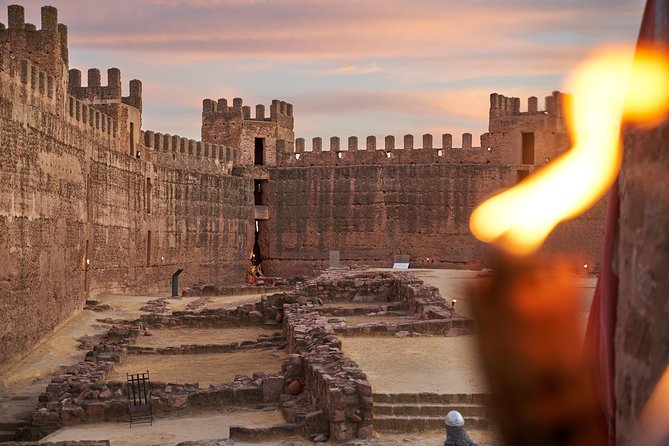
Inside the castle are strong Iberian walls and a funerary mausoleum with a sacred character. These remains add another period between the prehistoric occupation and the Almohad urban complex.
The Iberian walls are especially important because they show that the site had defensive or organized construction before the Islamic castle took shape. You may not see every feature as a complete standing structure, but the remains help establish that the hill had a long defensive and social role.
The funerary mausoleum brings a different note to the visit. It reminds you that this was not only a place for walls and military control. People also used the area for ritual and burial purposes, giving the site a human dimension that a simple fortress tour might miss.
This is where the guide’s explanation becomes central. Archaeological remains can be difficult to interpret on your own, particularly when they are less visually dramatic than the towers. A clear explanation helps you understand why a partial wall or buried structure matters.
Same region, a different set of walls:
- Madrid: Segovia and Toledo Tour, Alcazar, and Cathedral
★ 4.7 · 7,797 reviews - Seville: Priority Access Cathedral, Giralda & Alcázar Tour
★ 4.8 · 7,563 reviews - Madrid: Toledo & Segovia Tour w/ Cathedral, Alcazar & Lunch
★ 4.6 · 5,846 reviews - Córdoba: Jewish Quarter, Mosque, and Alcázar Tour
★ 4.6 · 5,143 reviews
The 12th-century Almohad urban complex
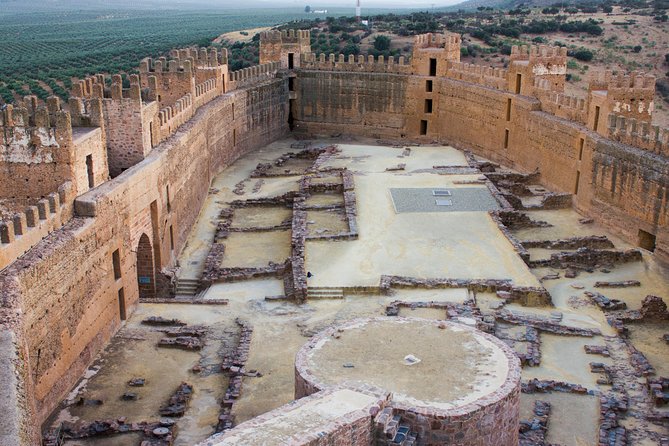
The central medieval chapter is the Almohad urban complex from the 12th century. The castle was not simply a military shell. It included an organized settlement, and that detail gives you a better sense of how the fortress functioned.
The term urban complex suggests a lived-in place, not merely a defensive perimeter. The tour explains the castle’s development from construction through its changing political control, including the loss of the site by the Muslims. The supplied information does not give a full sequence of dates for every change, so the guide’s spoken explanation will be important if you want to follow the timeline precisely.
This is also the point where the castle’s preserved walls become easier to picture in daily use. You can imagine the fortress as a functioning settlement with defensive needs, rather than as an abandoned monument created only for military display.
The 12th-century date is useful context. It places the castle within the Almohad era, when fortified sites played a major role in controlling territory in southern Spain. You do not need to know the entire political history of Andalucía to appreciate the visit, but understanding that the castle was part of a wider Muslim building tradition makes the towers and walls more meaningful.
Fourteen towers, plus the Christian Tower of Tribute
The castle’s most memorable feature is its defensive ring of fourteen towers. Add the Christian Tower of Tribute, and the fortress has fifteen prominent towers in total.
The repeated towers give the outer wall a powerful rhythm. Each one strengthens the castle’s outline and helps you see how the builders divided and protected the perimeter. The crenellations add to the classic medieval appearance, but the real interest lies in the way the whole structure works as a defensive complex.
The Christian Tower of Tribute is a useful reminder that the castle’s story did not end with the Almohad period. Its presence marks a later Christian phase and gives the guide a natural way to explain the change in control.
I would not expect the 45-minute visit to provide a separate, detailed study of every tower. Instead, you get the overall design, the main historical stages, and the archaeological context. If you want to photograph the full outline, give yourself additional time around the tour, since the guided portion itself is tightly scheduled.
What the guide adds in 45 minutes
A local guide leads the visit and explains the history in an approachable way. One especially positive detail is that the explanation has been praised as clear, enjoyable, and easy to follow. That matters because a fortress with several archaeological periods can quickly become a list of dates and names.
The best use of the 45 minutes is to listen for the connections:
- How the earliest occupation relates to the later fortress
- How Iberian walls fit into the site’s longer development
- Why the Almohad complex is considered so significant
- How the Christian Tower of Tribute reflects a later phase
- What recent excavations have added to the understanding of the castle
I like the guided format because it keeps the visit focused. You will not be left to guess which remains are important, and you will get a basic historical sequence in less than an hour.
The tradeoff is freedom. If you prefer to linger at one wall or take photographs at your own pace, a guided visit may feel brisk. The tour ends back at the meeting point, so you can spend more time in the area afterward if your schedule allows, but the guided explanation itself is not designed for an unhurried, all-day exploration.
Small groups and the overall atmosphere
The maximum group size is 25 people. That is not an intimate private tour, but it is still small enough for a guide to address the group directly and keep the visit organized.
The experience may feel more personal when fewer people book that time slot. A smaller group can make it easier to hear the explanation and ask a question, particularly inside or near the castle walls where sound may carry unevenly.
The local setting also suits the subject. This is not a large museum route with a constant stream of visitors. The castle sits in Baños de la Encina, and its fortified form remains closely tied to the town and surrounding countryside.
You should plan for ordinary outdoor conditions. The experience requires good weather, and poor weather can lead to a different date or a full refund. A pleasant day will make the castle easier to appreciate, especially if you want to pause outside the main guided explanation and study the fortress from different angles.
Is $7.49 a fair price?
At about $7.49, this is strong value for a guided visit lasting roughly 45 minutes. The ticket includes admission, and you receive more than access to the walls. You also get a local explanation covering the castle’s construction, Muslim and Christian phases, and archaeological remains from several periods.
The value is greatest if you would otherwise walk through the castle without understanding what you are seeing. The Copper Age traces, Iberian walls, funerary mausoleum, and Almohad urban complex are not features that explain themselves. A guide gives those remains a usable framework.
The price is less compelling only if you want a long, self-paced experience. Forty-five minutes is a compact introduction, not a full day devoted to archaeology. Still, the modest cost makes it easy to pair with other time in Baños de la Encina.
The tour is booked, on average, about six days ahead. That suggests you should not leave it until the last minute if the timing matters to your plans, though no guarantee of availability is provided for any specific date.
Who should book this experience?
I would recommend this tour to you if you enjoy castles, medieval Spain, archaeology, or short guided visits with a clear focus. It is particularly suitable if you want historical context but do not want to spend several hours in a large monument.
Families and mixed-interest groups may also find the 45-minute length practical. The guide keeps the visit moving, while the castle’s towers and walls offer enough visual impact for people who are less interested in detailed history.
You should think twice if you need a fully accessible, self-guided format, since the available information does not describe the physical route in detail. Service animals are allowed, and most people can participate, but specific access conditions are not provided.
The tour also suits a wider Andalucía itinerary. Because the activity begins and ends at Castillo de Baños de la Encina, you can treat it as a focused stop rather than a major all-day commitment.
Practical details for your visit
The meeting point is Castillo de Baños de la Encina, Calle Santa María, 1, 23711 Baños de la Encina, Jaén, Spain. The activity ends at the same meeting point.
You receive confirmation when you book, and the ticket is mobile, so you do not need a printed voucher based on the information provided. The group may contain up to 25 people, and service animals are permitted.
Cancellation is free up to 24 hours before the start time for a full refund. Cancellations or changes made less than 24 hours before the start are not accepted for a refund. If bad weather causes the activity to be canceled, you are offered another date or a full refund.
Should you book the Castle of Baños de la Encina tour?
Yes, if you want a short, affordable introduction to a remarkably intact Almohad fortress and prefer having the archaeology explained as you walk.
The strongest reason to book is the combination of visible medieval defenses and much older remains. Fourteen Almohad towers, a Christian Tower of Tribute, Iberian walls, a sacred funerary monument, and Copper Age traces give the castle unusual depth for a 45-minute visit.
Skip it only if you want a slow, independent examination of every feature or if your schedule cannot handle a weather-related change. For most visitors spending time in Jaén province, the low price, short duration, and focused local guidance make this a sensible stop.
FAQ
Where does the Castle of Baños de la Encina tour begin?
The tour begins at Castillo de Baños de la Encina, Calle Santa María, 1, 23711 Baños de la Encina, Jaén, Spain.
Where does the tour end?
The activity ends back at the meeting point.
How long does the guided visit last?
The guided visit lasts approximately 45 minutes.
How much does the tour cost?
The listed price is $7.49 per person.
Is admission included?
Yes, admission to the castle is included.
Is the ticket available on a mobile phone?
Yes, the experience provides a mobile ticket.
How many people can join the tour?
The activity allows a maximum of 25 people.
Can I cancel for a full refund?
Yes. You can cancel at least 24 hours before the start time for a full refund. Cancellations made less than 24 hours before the start are not refunded.
Just added around Spain
- Jerez Walking Tour with Alcazar and Cathedral Entrance★ 4.5 · 49 reviews
- Jerez Historic Guided Tour and Alcazar★ 4.0 · 10 reviews
- Montjuic Castle Admission Ticket in Barcelona★ 3.5 · 59 reviews
- Montjuïc Cable Car & Magic Fountain Barcelona Private Tour★ 5.0 · 77 reviews
- 2hr Montjuïc Castle Segway Tour★ 5.0 · 5 reviews
- Medieval Castles and Girona Exclusive trip with Catalan Lunch★ 5.0 · 3 reviews
- Castle of Montjuic- 3H Segway Tour★ 5.0 · 3 reviews
- Barcelona Best Views: Old Town and Montjuic Castle Private Tour★ 5.0 · 24 reviews
Spain Castle Tours, compared.

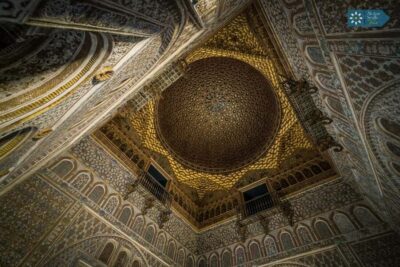
Alcázar, Cathedral & Giralda Skip-the-Line Tour
Read our review →
Cathedral, Giralda & Alcazar Entry With Guided Tour
Read our review →
Segovia and Toledo Tour, Alcazar, and Cathedral
Read our review →
Priority Access Cathedral, Giralda & Alcázar Tour
Read our review →
Toledo & Segovia Tour w/ Cathedral, Alcazar & Lunch
Read our review →
Alcázar and Cathedral Entry Ticket and Guided Tour
Read our review →Browse the lists this tour appears in