
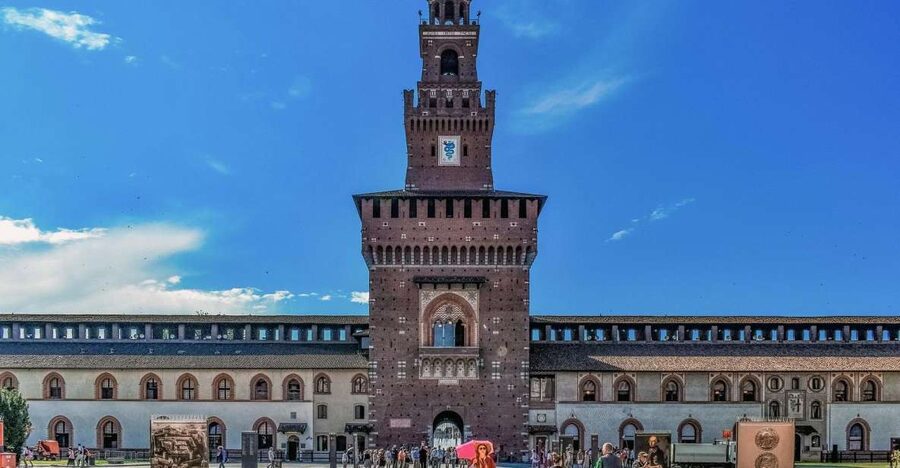
Review · MILAN
Milan: Sforza Castle and Michelangelo’s Pietà Rondanini Tour
Milan’s fortress has an artistic soul. This 1.5-hour tour pairs the imposing Sforza Castle with Michelangelo’s unfinished Pietà Rondanini, then adds the stories of Leonardo da Vinci, the Visconti, and the Sforza rulers. I especially like the focused look at Michelangelo’s final sculpture and the walk through the castle’s grand courtyards. The main limitation is time: the castle contains several museums, and you will only sample them.
The small-group format is another strong point. Guides such as Giorgio, Fabio, Simon, Stefania, and Lorella have been praised for clear explanations, lively storytelling, and useful Milan tips. At $47 per person, the tour offers good value if you want context and a guided route, but it may feel costly if your main goal is to wander through every museum at your own pace.
Key points at a glance
- Michelangelo’s final sculpture: See the Pietà Rondanini, an unfinished work shaped by the artist’s final years and changing ideas about the human body.
- Leonardo’s Milanese workplace: Learn how Leonardo served Ludovico il Moro as an engineer and architect while living at the castle for nearly two decades.
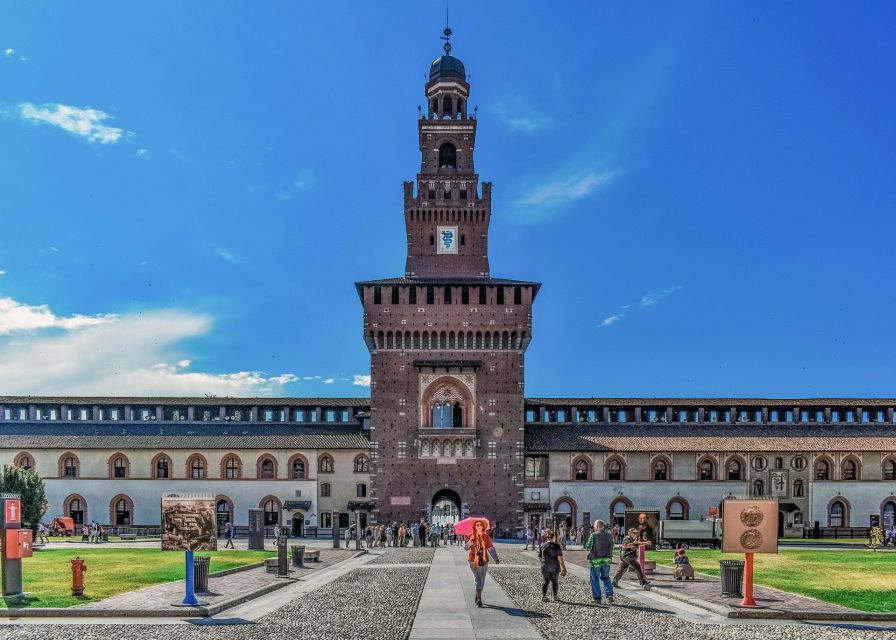
- Two great courtyards: Walk through the Corte Ducale and Cortile della Rocchetta, where military power meets Renaissance design.
- A short, focused visit: The 1.5-hour schedule suits a first look, though it does not allow time for every museum.
- Guides make the difference: Small groups and strong storytelling are recurring strengths, with private groups available.
- Easy meeting point: Find the guide in Piazza Castello, beneath the Filarete clock tower, outside the castle courtyards.
Why Sforza Castle matters in Milan
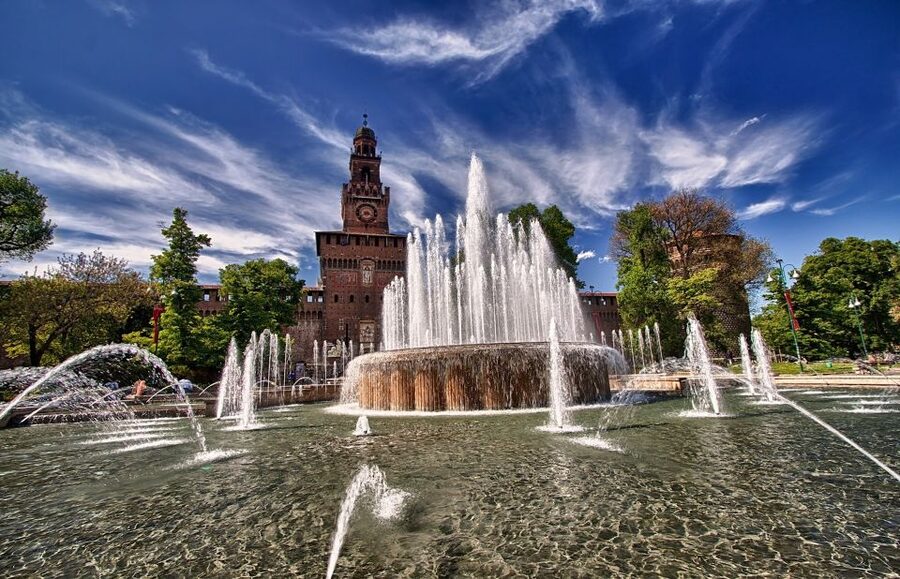
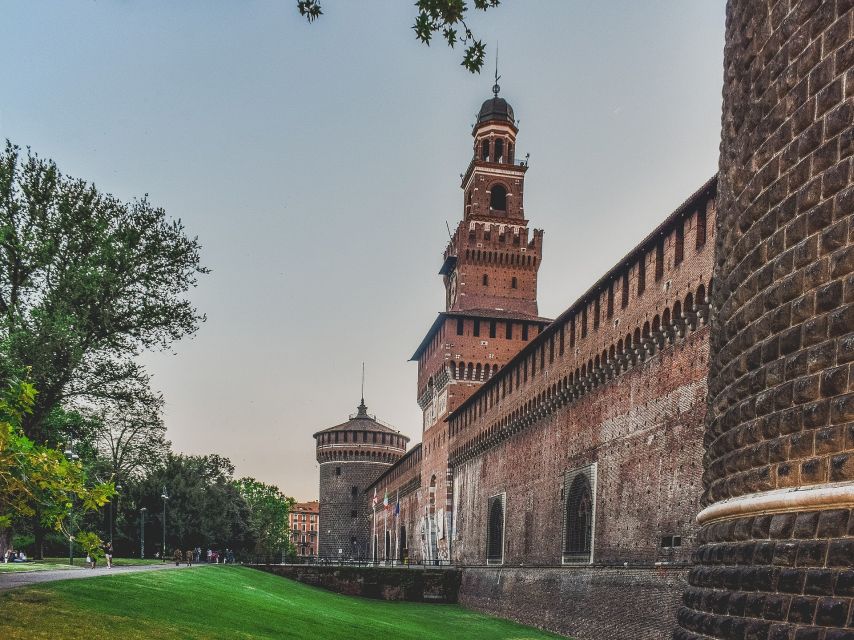
Milan can look forward-facing and modern, but Sforza Castle gives you the older city in one concentrated place. It began as a medieval defensive stronghold and later became the seat of the Visconti and Sforza dynasties, two ruling families that shaped Milan’s politics, culture, and public image.
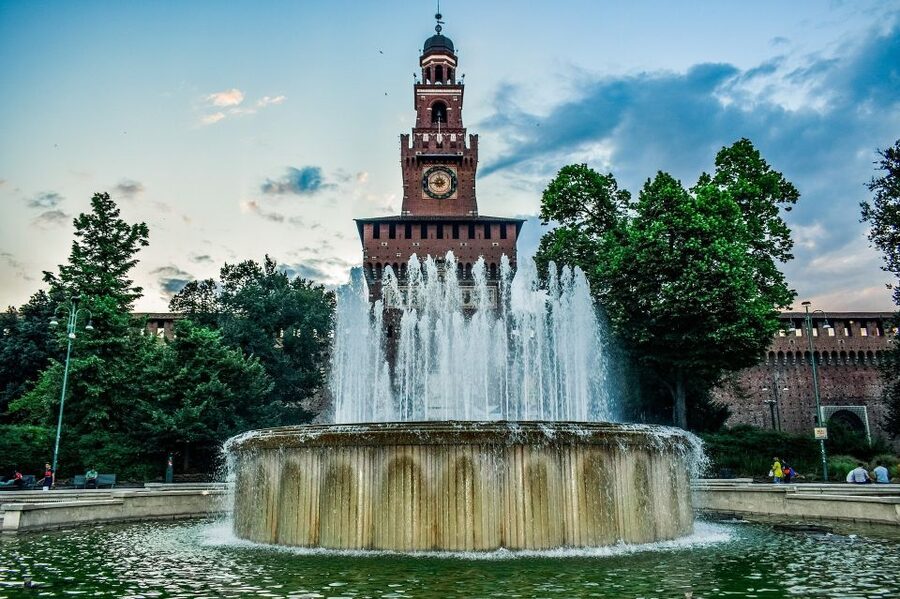
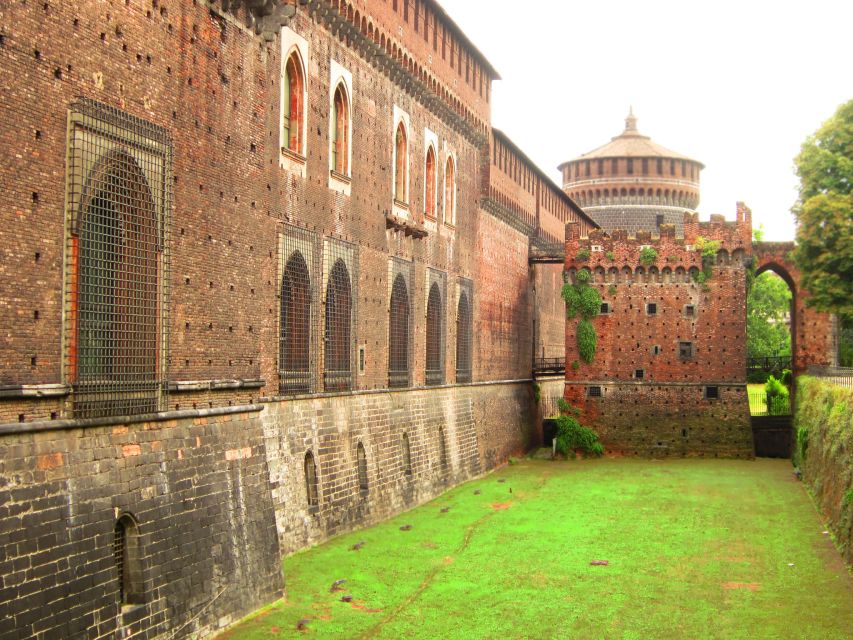
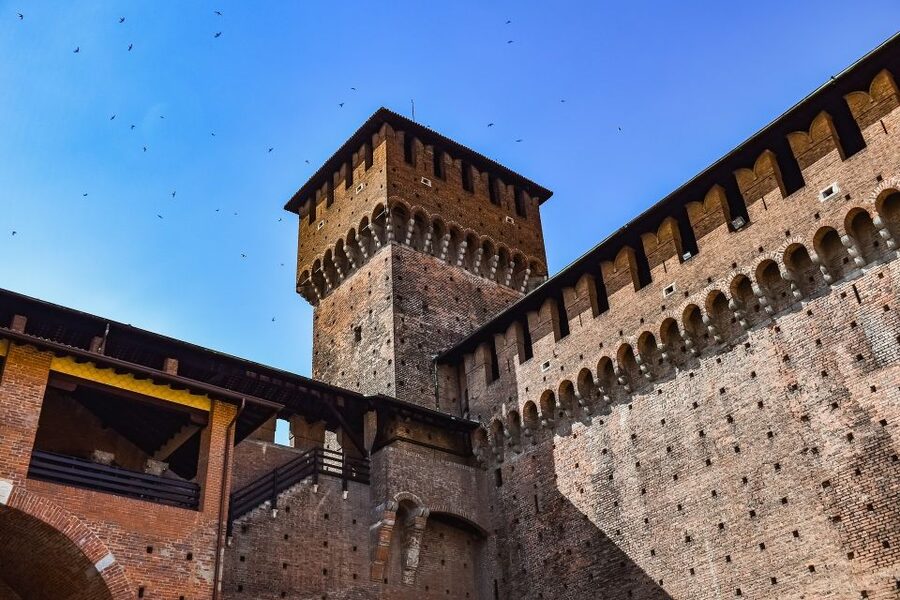
The castle is close to the Duomo, yet the mood changes as soon as you reach Piazza Castello. The Filarete Tower frames the entrance, and the heavy walls make the building’s military purpose clear. Inside, the courtyards soften that first impression. Broad spaces, Renaissance details, and elegant proportions show how a fortress became a ducal residence.
I like this contrast because it gives the tour a clear shape. You are not simply walking through old rooms. You are watching Milan move from defense and dynastic struggle toward court culture, art, and architectural ambition.
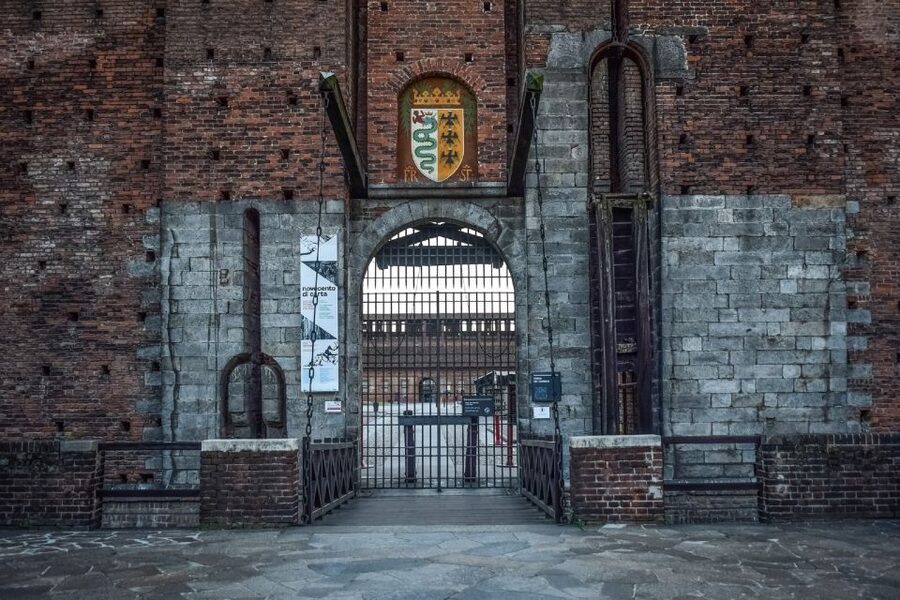
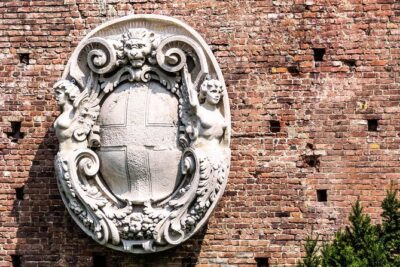
The guide also explains the symbols of power. The Biscione, the serpent emblem associated with Milan, appears as a reminder that rulers communicated through images as much as through armies and laws. These details can be easy to miss alone, especially when you are busy finding the next gallery or reading labels.
A few more castle visits around Milan worth a look
- Milan: Sforza Castle Entry Ticket with Digital Audio Guide
★ 4.0 · 2,675 reviews - Milan: The Last Supper & Sforza Castle Guided Tour
★ 4.6 · 610 reviews - Milan: Last Supper and Sforza Castle Guided Tour
★ 4.6 · 498 reviews
Meeting beneath the Filarete Tower
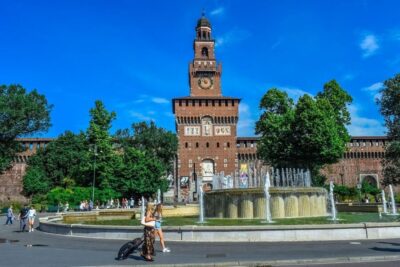
The meeting point is in Piazza Castello, under the Filarete clock tower, in front of Sforza Castle. Do not go inside the courtyards to find the guide. Look for the purple Hidden Experiences flag or board.
This is worth taking seriously because the castle entrance area is large and open, and the meeting instructions have caused some confusion. Arrive with enough time to locate the tower and the guide before the start.
The tour includes admission to the castle and its museums, so you do not need to arrange a separate entrance ticket. Hotel pickup and drop-off are not included, though an optional paid service is available.
The tour is offered in Italian, English, German, French, and Spanish. It is wheelchair accessible, and private groups can be arranged. Headphones are provided when the group reaches 11 participants or more. In a smaller group, you will usually be close enough to hear the guide directly, but one past visitor reported intermittent earpiece problems, so it is sensible to speak up if the sound is unclear.
Michelangelo’s Pietà Rondanini comes first
The emotional center of the visit is Michelangelo’s Pietà Rondanini. This is not the polished, anatomically precise Michelangelo you may expect from the artist’s earlier work. The figures are elongated, the surface remains rough in places, and the sculpture has the unfinished quality known in Italian as non-finito.
Michelangelo worked on the marble until only a few days before his death at age 89. That fact changes how you look at the work. The sculpture feels less like a display of physical perfection and more like a private struggle with age, death, faith, and the limits of the material.
The guide’s role is especially useful here. Without context, you might see a damaged or incomplete sculpture and move on. With a careful explanation, the rough sections become part of the meaning. The bodies appear to lean into one another, and the restrained forms create a mood very different from the confident power of Michelangelo’s earlier figures.
The museum setting gives the sculpture room to breathe. This is not a quick glance at an artwork in a crowded church. You get a concentrated explanation of why the Pietà Rondanini matters and how it differs from the better-known Pietà in St. Peter’s Basilica.
That focus is one reason I think the tour works well for visitors who are interested in art but do not want an entire day of museum visits. The guide selects the main ideas and gives you a framework for looking. You still need to take your time with the sculpture, however. The 1.5-hour schedule means the visit cannot linger over every detail.
The Corte Ducale and Cortile della Rocchetta
After the Pietà Rondanini, the tour moves through the castle’s internal courtyards. The Corte Ducale reflects the more refined side of Sforza rule, while the Cortile della Rocchetta retains a stronger sense of defense and enclosure.
This part of the tour helps connect the art to the people who commissioned, protected, and used it. The Sforza court was not simply a backdrop for famous artists. It was a working political center filled with ambitious men, noblewomen, military concerns, family alliances, and displays of wealth.
The guide explains how the castle changed across the centuries and how it survived as Milan itself changed around it. Under the Filarete Tower, the building feels like a symbol of the city, not just a preserved monument.
I would not expect every courtyard corner or architectural detail to receive equal attention. The guide has to keep the group moving and balance the castle with the museum visit. That tradeoff is sensible for a short tour, but you may want to return later if architecture is your main interest.
Same region, a different set of walls:
- Sforza Castle and Michelangelo’s Pietà Rondanini guided experience
★ 4.5 · 220 reviews - Milan: The Last Supper & Sforza Castle Guided Tour
★ 4.5 · 128 reviews - Milan: Last Supper and Sforza Castle Tour
★ 4.6 · 115 reviews - Milan: Duomo, Sforza Castle, and Pieta Guided Tour
★ 4.9 · 100 reviews
Leonardo da Vinci at the Sforza court
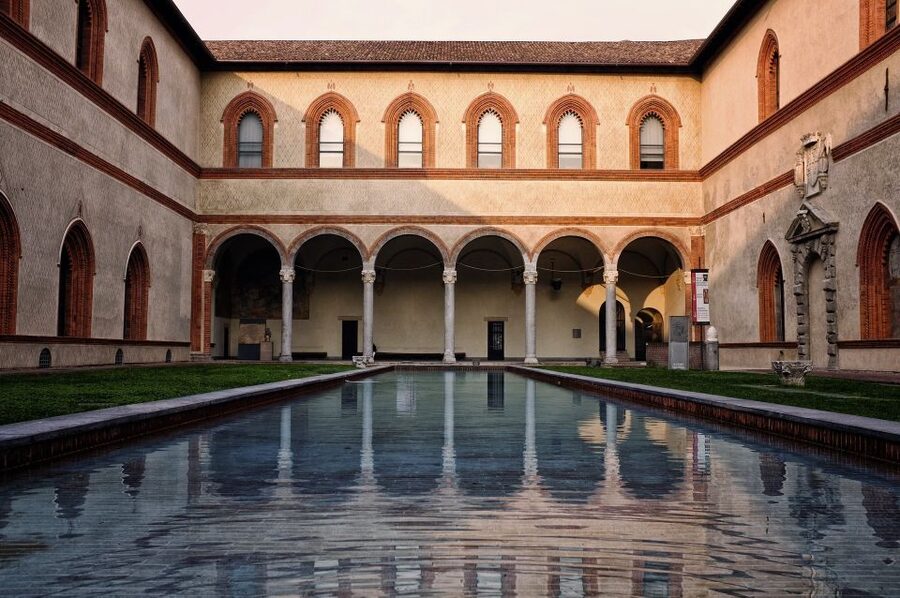
Many visitors first associate Leonardo with The Last Supper, but Sforza Castle presents a different side of his Milan years. Leonardo lived and worked in Milan for nearly 20 years, serving Ludovico il Moro as a court engineer and architect.
That role is important. Leonardo was not only a painter waiting for his next masterpiece. He designed, planned, advised, and solved practical problems for the ruling court. The castle gives the guide a natural setting for explaining his connection with the Sforza family and the wider world of Renaissance Milan.
You will hear about traces of Leonardo’s work and his complicated relationship with the court. The value here is not the promise of a single famous painting. It is the chance to understand Leonardo as a working professional whose talents stretched across art, engineering, architecture, and court service.
Guides have been praised for making these connections clear. Lore, for example, was singled out for linking Milan’s cultural past with Leonardo’s life and work. Giorgio was praised for turning art history into something closer to a masterclass. Those comments point to the main strength of a live guide: you can ask a question, stop over a detail, and get an explanation shaped to the group.
What you can see in the museums
The entrance covers the castle and its museums, but the tour does not attempt to cover everything. Sforza Castle contains several collections, and the guide selects key works and objects rather than leading you through every room.
That approach suits a first visit. You receive a readable story instead of a long list of names and dates. Anna described the experience as concise, with the guide choosing the most important and interesting sights. That is a useful way to think about the schedule.
The drawback is equally clear. One participant felt rushed through the archaeological museum and wanted more time there. Another appreciated the content but noted that the tour ran slightly long. These comments show the tension in a short guided visit: some groups want the planned 90 minutes, while others are happy to continue when the discussion is good.
If you have a special interest in archaeology, decorative arts, or a particular museum collection, treat this tour as an introduction. You can return afterward if the ticket arrangement allows and if you have enough time. The guided portion is best for orientation and interpretation, not for a complete museum study.
The guide is the real value
The castle is impressive on its own, but the guide determines how much you take away. The strongest praise focuses on clear speech, historical storytelling, patience, and the ability to connect political events with art.
Fabio was praised for making history exciting. Simon was described as engaging and full of lesser-known facts. Stefania received especially warm praise for connecting the dates, people, and artworks while also sharing tips for seeing Milan. Lorella was appreciated for making the castle timeline easy to follow.
This is useful when choosing a guided visit over a self-guided walk. You are paying not only for entry, but also for a route through a complicated site. The Visconti and Sforza families, Leonardo’s court position, the Biscione emblem, and Michelangelo’s late work can become a jumble without a clear narrator.
Small groups also help. Several bookings became very small, including groups of three, four, or six people, and some were effectively private tours. Group size can vary, so do not assume you will always receive a one-to-one experience. Still, the format allows more room for questions than a large coach tour.
One practical detail matters in warm weather. A guide named Flora was praised for choosing shaded and breezy areas during the outdoor portions. Much of the castle is open courtyard space, so a considerate guide can make the walk more comfortable on a hot day.
Is $47 a fair price?
At $47 per person, this is not the cheapest way to see Sforza Castle. The price includes admission, a certified guide, and a small-group visit lasting about 90 minutes.
I think the value is good if you care about context. The Pietà Rondanini alone deserves more than a quick look, and the castle’s story covers several centuries of political and artistic change. A strong guide can also save you the effort of sorting through the castle’s collections without knowing which rooms matter most.
The value is weaker if you prefer slow, independent museum visits. You may feel hurried when the group moves on, especially in the archaeological museum or other collections that interest you. The tour gives you a well-shaped first visit, not unlimited time.
The ability to reserve now and pay later adds flexibility, and free cancellation is available up to 24 hours before the tour for a full refund. Those terms are useful when your Milan schedule is still shifting.
Who should book this tour?
I would choose this tour if you are visiting Milan for the first time, want a clear introduction to Sforza Castle, or feel unsure how to approach the Pietà Rondanini. It is also a good fit for art and history fans who prefer explanations over reading labels alone.
Families can benefit from the stories about rulers, symbols, artists, and court life. The short duration is easier to fit into a busy day than a long museum tour. It also leaves time for nearby Milan sights.
You might skip it if you have already studied the castle in detail or want to spend several hours examining every museum. Independent visitors who prefer their own pace may find the group schedule restrictive.
The tour can also work well before or after other central Milan sights, since the castle is close to the Duomo. Just keep the meeting point clear: Piazza Castello, under the Filarete clock tower, outside the courtyards.
Should you book it?
Book this tour if you want the castle to make sense. The Pietà Rondanini provides a powerful focal point, while the courtyards and Leonardo stories give the sculpture a wider Milanese setting.
At $47, I see it as a worthwhile orientation rather than a complete museum day. Choose it for the guide’s explanations, the small-group feel, and the chance to connect Michelangelo’s final work with the Sforza court. Skip it only if your priority is unhurried, independent exploration of every collection.
FAQ
How long does the Sforza Castle tour last?
The tour lasts 1.5 hours.
What does the $47 price include?
The price includes entrance fees to Sforza Castle and its museums, a certified tour guide, and a small-group guided tour.
Where is the meeting point?
Meet in Piazza Castello, under the Filarete clock tower, in front of Sforza Castle. The meeting point is outside the courtyards.
How do I recognize the guide?
Look for a guide holding the Hidden Experiences purple flag or board.
Is Michelangelo’s Pietà Rondanini included?
Yes. The tour includes a guided visit focused on Michelangelo’s Pietà Rondanini.
Is the tour available in English?
Yes. Live tours are available in Italian, English, German, French, and Spanish.
Are private groups available?
Yes. A private group option is available.
Can I cancel the booking?
You can cancel up to 24 hours in advance for a full refund. Reserve now and pay later is also available.
Just added around Milan
- Milan: Skip-the-line Sforza Castle and Museums Private Tour★ 4.7 · 7 reviews
- Sforza Castle & Michelangelo’s Pietà Rondanini Guided Tour★ 4.7 · 3 reviews
- Milano: Highlights Private Tour, Duomo, Castle & Gelato★ 5.0 · 5 reviews
- Milan: Professional Photoshoot Outside Sforza Castle★ 3.9 · 12 reviews
- Milan Small Group: Duomo & Rooftop, Castle, Gelato Tasting★ 4.8 · 70 reviews
- Milan: Sforza Castle & Leonardo Skip-the-Line Private Tour★ 4.7 · 26 reviews
- Milan: Last Supper and Sforza Castle Tour★ 4.6 · 115 reviews
- Milan: Duomo, Sforza Castle, and Pieta Guided Tour★ 4.9 · 100 reviews
Milan Castle Tours, compared.
Sforza Castle Entry Ticket with Digital Audio Guide
Read our review →
Sforza Castle and Michelangelo’s Pietà Rondanini guided experience
Read our review →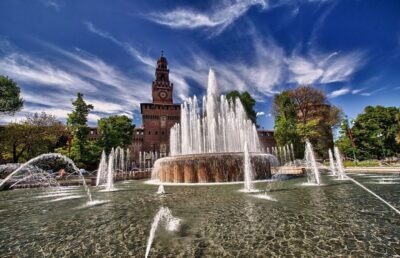
Milan Small Group: Duomo & Rooftop, Castle, Gelato Tasting
Read our review →Browse the lists this tour appears in