

Review · BARCELONA
Barcelona: Walking tour with Montjuic Castle & Cable Car
Barcelona reveals itself in layers here. Start among Las Ramblas, La Boqueria, and El Raval, then trade city streets for Montjuïc’s castle, dungeons, and broad views over the port and rooftops. I like the mix of architecture and local transport, and I like that the small group, capped at 12, keeps the outing personal. The main caution: the advertised cable car has been closed on some recent tour dates, with a bus used instead.
I also like that the guide handles the metro, funicular, and cable car tickets, so you are not sorting out Barcelona’s transport system while trying to keep up. Guides such as Miguel, Pepa, Katy, Edu, and Montse have been praised for clear history and friendly help. Still, the walking portion has uneven pavement and some uphill movement, and the tour is not suitable for wheelchair users or people with mobility impairments.
Key points to know before you book

- La Boqueria is a quick taste of Barcelona’s food culture: You pass through one of the city’s best-known markets, with modernist design and fresh produce.
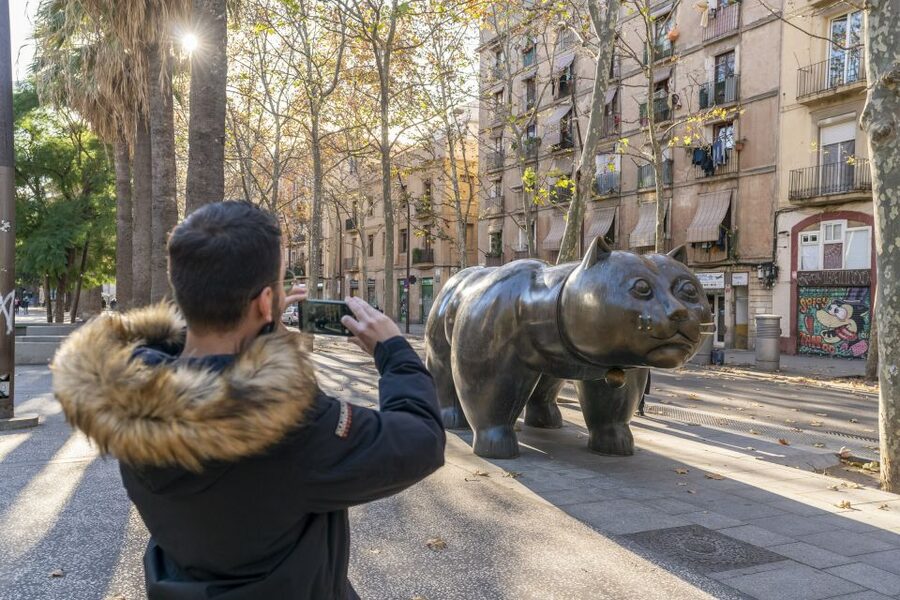
- El Raval adds a less polished side of the Old Town: The route includes the Botero Cat Statue and streets where daily city life matters as much as grand monuments.
- The journey to Montjuïc uses several forms of transport: Expect walking, metro travel, the Montjuïc Funicular, and, when operating, the Montjuïc Cable Car.
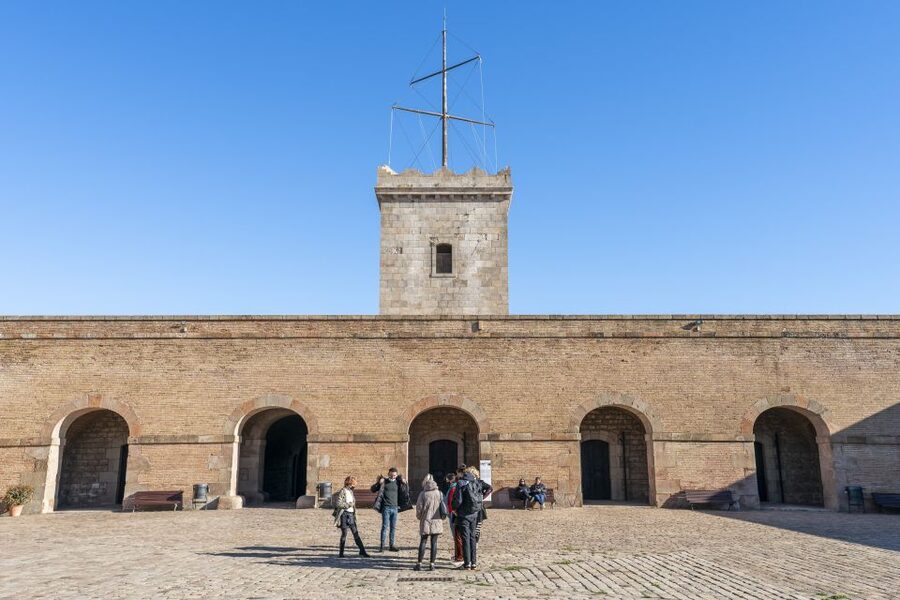
- Montjuïc Castle is more than a viewpoint: You visit the fortress, tower, and dungeons with your guide rather than simply taking photos outside.
- The small-group format matters: With a maximum of 12 people, it is easier to hear the guide and ask questions.
- Check the cable car before departure: Recent tours sometimes substituted a bus because of closures, so confirm what transport will operate on your date.
From Portaferrissa to Barcelona’s Old Town
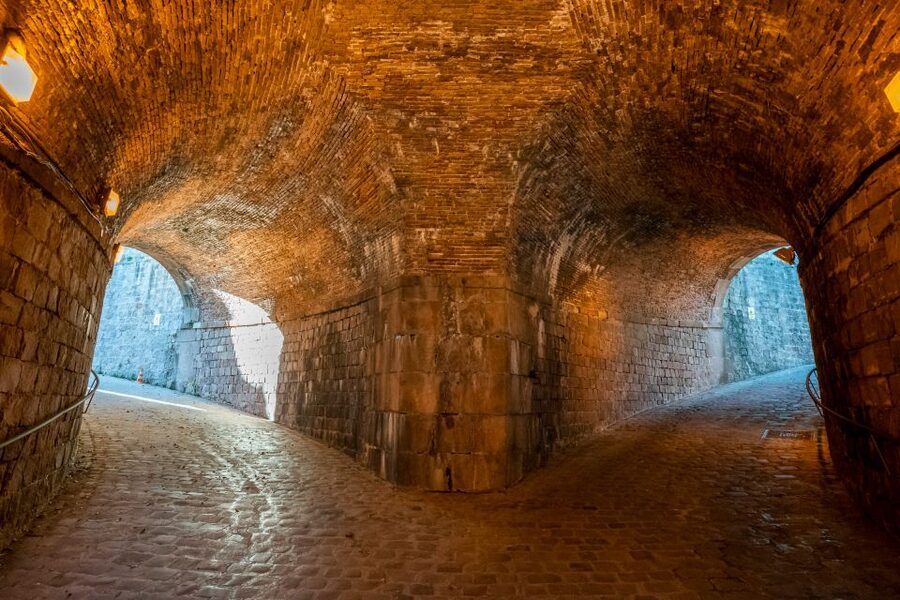
The tour begins at the reception of Palau Moja, at C/ de la Portaferrissa, 4. Look for the guide wearing an In Out Barcelona Tours badge. This is a central starting point, and you quickly find yourself in the Old Town rather than spending half the morning getting to the sights.
The first stretch gives you a useful orientation to Barcelona. You walk through the old center toward Las Ramblas, the broad pedestrian avenue that links Plaça de Catalunya with the waterfront. It is busy, touristy, and worth seeing once, but the real pleasure is turning into the side streets where the city feels less staged.
Your guide provides the thread connecting the buildings, streets, and Catalan identity. Several guides, including Pepa, Katy, Edu, and Montse, have been praised for explaining local history in clear English and answering questions without rushing the group. The quality of this part depends heavily on your guide, so a strong guide makes a noticeable difference.
More Castle Walking Tours in Spain
- Barcelona City Walk with Montjuïc Castle & Cable Car Guided Tour
★ 4.0 · 15 reviews - Seville Private Walking Tour with Alcazar & Cathedral Tickets
★ 5.0 · 332 reviews - Segovia: Guided Walking Tour with Cathedral & Alcázar Entry
★ 4.7 · 249 reviews
La Boqueria, Liceu, and Gaudí’s Palau Güell
La Boqueria is one of the route’s most colorful stops. Its modernist ironwork and glass-covered structure frame rows of produce and other fresh foods. You are walking through rather than sitting down for a meal, and food or drinks are not included, so bring your own spending money if you want a snack.
I would resist treating the market as only a photo stop. Look at how the market works as a daily food center, not just a popular attraction. The best visit is usually an alert one: keep moving with the group, watch your belongings, and leave time to notice the details overhead as well as the stalls at eye level.
The route passes the Gran Teatre del Liceu, one of Barcelona’s major opera houses and a fine example of Catalan modernist design. You do not enter, so this is a short exterior explanation rather than a full theater visit. That distinction matters if you want interior architecture and a performance history lesson.
You also pass Palau Güell, Antoni Gaudí’s striking urban palace near Las Ramblas. Again, the tour views it from outside. I like this arrangement for a first look at Barcelona because it introduces Gaudí without using up the day on one indoor attraction, but you should book a separate visit if entering Palau Güell is a priority.
El Raval and the Botero Cat Statue

From the central avenue, the walk moves into El Raval. This district brings a different tone from the grand façades near Las Ramblas. It is multicultural, lived-in, and full of contrasts, with busy streets, old buildings, and landmarks that do not always receive the same attention as Gaudí’s work.
The Botero Cat Statue is an easy landmark to remember. Its oversized form gives the neighborhood a playful visual marker, but the point of this section is broader: you see an off-the-main-route part of Barcelona’s Old Town and hear how the district has changed.
The walking pace is generally manageable. Lisa noted that her guide kept the pace slow, while other guides were praised for keeping everyone together through streets and transport changes. That is useful in a small group, especially if people have different walking speeds.
Still, do not confuse a 3.5-hour tour with a gentle stroll through flat streets. You will walk on old pavement, cross busy areas, and later reach Montjuïc by uphill transport. Wear comfortable shoes, as requested, and leave large bags and luggage behind. They are not allowed.
The climb to Montjuïc by metro and funicular
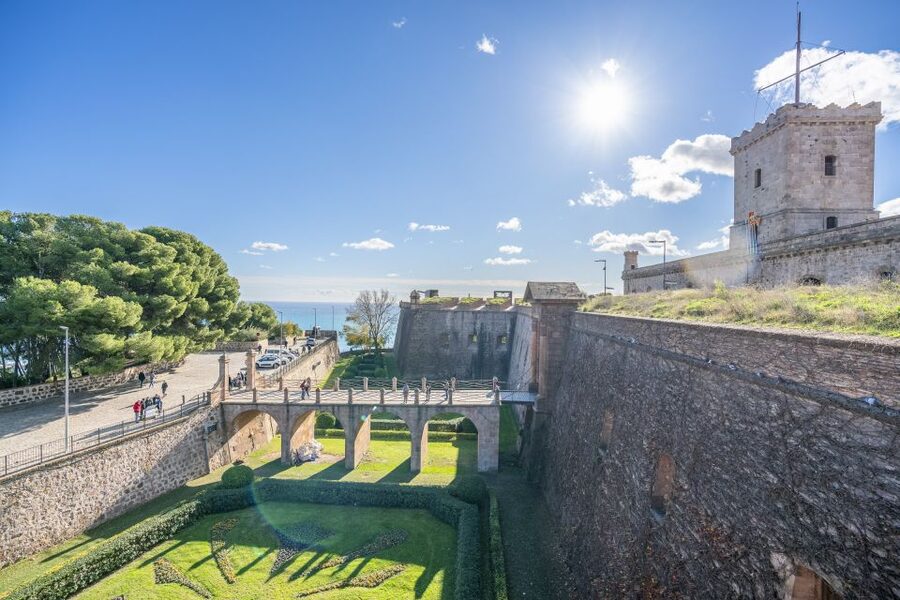
The change from old streets to Montjuïc is part of the experience. The tour includes a metro ride, the Montjuïc Funicular, and then the cable car when operating. These connections show you how residents and visitors move across a city built between the sea, central neighborhoods, and a hilltop fortress.
The funicular carries you partway up Montjuïc. From there, the cable car provides the most memorable ride of the day, with views across Barcelona, the port, and the surrounding city. The height changes quickly, and the ride gives you a useful sense of how Montjuïc overlooks the city rather than merely sitting beside it.
There is an important practical warning here. The tour includes roundtrip cable car and funicular tickets, but several recent experiences reported that the cable car and, on one date, the funicular were not running. In those cases, the guide arranged buses or other public transport. That shows useful flexibility, but it does not deliver the same aerial ride.
If the cable car is essential to your decision, check its operating status before booking and again shortly before the tour. The operator should also communicate any closure, since finding out only after meeting the group can be disappointing. If the ride is running, it is a major part of the value. If not, you are paying for a castle visit and guided transport rather than the promised full cable car experience.
More Castle Walking Tours in Barcelona:
- Edinburgh Castle: Guided Walking Tour with Entry Ticket
★ 4.7 · 11,699 reviews - Prague: 3-Hour Walking Tour of Old Town & Prague Castle
★ 4.7 · 5,696 reviews - Edinburgh Castle: Guided Walking Tour with Entry Ticket
★ 5.0 · 5,540 reviews - Edinburgh Castle Guided Walking Tour in English
★ 5.0 · 5,214 reviews
Montjuïc Castle, dungeons, and the tower
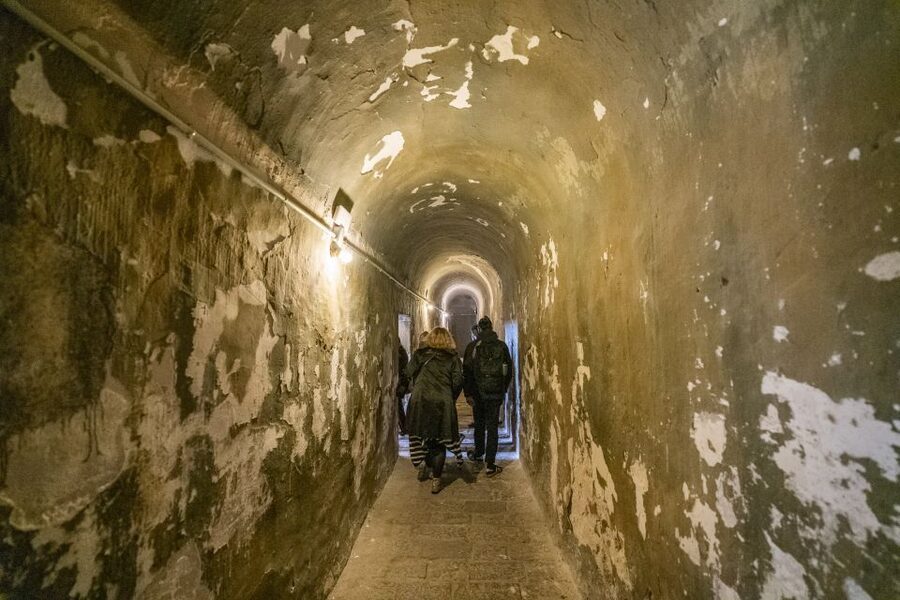
Montjuïc Castle is the tour’s main destination. This military fortress occupies the top of the hill, giving you views in several directions and a clear reason for Barcelona’s long interest in the site. The visit includes the castle, dungeons, and tower, rather than stopping at the entrance for a quick photograph.
The dungeons add weight to the visit. They remind you that the fortress was not built only for scenery or defense from an abstract enemy. Your guide explains the castle’s military role and its use across different periods, while the tower and upper areas open back onto Barcelona.
On a clear day, you may see as far as the Pyrenees. The views are the star when the weather cooperates, with the city below, the sea, and the port spread out from the hill. Several guides have been praised for allowing time for photographs instead of treating the castle as a race to the next stop.
Weather can change the experience. Rain or haze will soften the views, although guides such as Edu and Katy have kept the tour moving and adjusted explanations when conditions were poor. Bring sensible clothing for the forecast, but remember that large bags are not permitted.
The castle visit also benefits from having a guide. Without context, the fortress can become another set of walls and viewpoints. With a good explanation, you understand why this high position mattered and how the site fits into Barcelona’s political and military story.
Returning by cable car and finishing near El Molino

When the cable car is operating, the return ride gives you a second chance to see the city from above. The changing direction and light can make the return feel different from the ride up, and you may spot parts of Barcelona that were easy to miss on the first crossing.
The tour finishes at El Molino Paral·lel. This is a practical ending, not a return to the original meeting point. You are left near one of the city’s useful entertainment and transport areas, so the finish works well if you want to continue exploring, find a meal, or make your way back to your hotel.
Your guide may also offer suggestions for the rest of the day. Pepa, for example, was praised for giving advice about nearby sights and a restaurant for paella near the beach. Treat such suggestions as a helpful starting point, not part of the paid tour, since food and drinks are not included.
Is $64 a fair price?
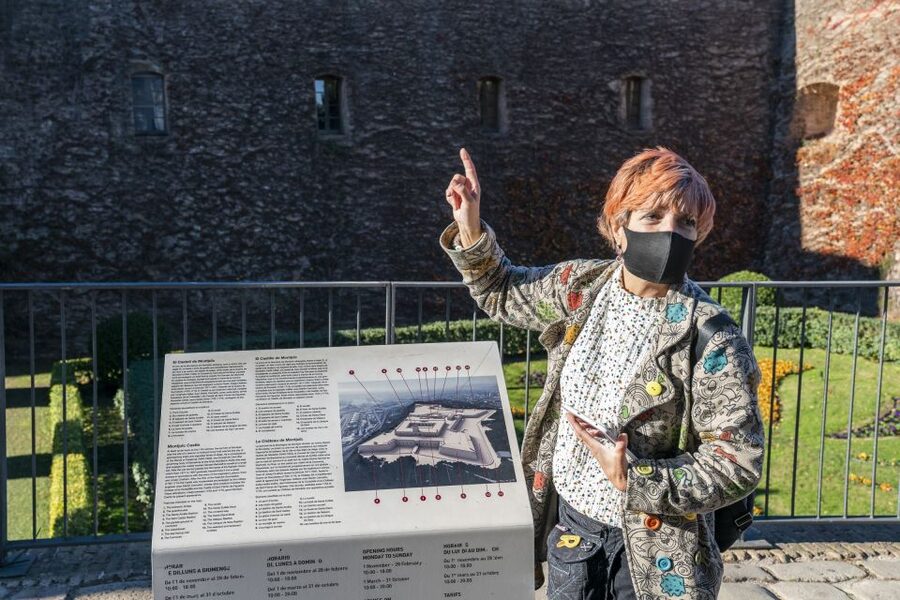
At $64 per person, the tour is fairly priced if the full transport package operates. The fee includes a professional English-speaking guide, the castle and dungeon visit, roundtrip funicular tickets, roundtrip cable car tickets, and a small group limited to 12 people. Buying the transport separately would require more planning, and you would not receive the same walking commentary.
The real value is convenience. Barcelona’s metro, funicular, and cable car are not difficult once you understand them, but moving through several connections while watching schedules can take attention away from the city. Here, the guide organizes the route and keeps the group together.
The price is less attractive if the cable car is closed. You still receive the Old Town walk, the Raval visit, guided access to Montjuïc Castle, and help with transport, but the aerial ride is a key reason many people choose this tour. Ask what happens during a closure and whether the route changes before you commit.
The 3.5-hour length is another advantage. It is long enough to connect central Barcelona with Montjuïc, but short enough to leave your afternoon open. You will not see every major attraction in the city, and the architecture stops at Liceu and Palau Güell are exterior visits. Think of this as a strong orientation tour, not a complete Barcelona sightseeing day.
Which guide style suits you best?
The most consistent strength is the guides’ care with the group. Pepa has been praised for clear explanations, warmth, and keeping people together during transport. Katy is often noted for her history knowledge and calm handling of questions. Edu has been praised for answering questions and managing difficult weather, while Miguel is described as easygoing and helpful with city history.
That range matters because this is not a self-guided route with a fixed audio track. Your experience will depend partly on the person leading the walk. Some guides focus more on history and Catalan politics, while others emphasize practical orientation, architecture, food, or personal recommendations.
If you want a slow, social tour with time for questions, the small group should suit you. If you prefer to stop at every building for a long architectural lecture, the 3.5-hour schedule may feel brisk. One useful expectation is that this tour gives you a broad sample of Barcelona rather than exhaustive treatment of any one sight.
Practical advice for making the day work
Wear shoes with good support. The route includes Old Town pavement, stairs or slopes may occur around the hill, and the castle requires walking. The tour is not suitable for wheelchair users or people with mobility impairments.
Arrive at Palau Moja with enough time to find the reception and the guide’s badge. The tour requires at least two people per booking, and the operating language is English.
Keep your bag small. Large bags and luggage are not allowed, and a bulky suitcase would be awkward on the metro, funicular, or cable car. Carry water and a little money for food, since refreshments are not included.
You can cancel up to 24 hours before the tour for a full refund, and the reserve-now, pay-later option keeps your plans flexible. That is useful in Barcelona, where weather and transport maintenance can affect the Montjuïc portion.
Who should book this Barcelona tour?
Book it if you want one organized morning that combines Old Town streets, Catalan architecture, public transport, and a hilltop fortress. It is especially useful on a first visit, when a guide can help you understand how the center, Raval, port, and Montjuïc connect.
It also suits anyone who values views but does not want to plan the cable car and castle independently. Families with older children and adults with moderate walking ability should find the mix varied enough to hold attention.
Skip it if you need a fully accessible route, want long indoor visits to Palau Güell or the Liceu, or cannot accept the possibility of a cable car substitution. The best booking decision is to confirm that the cable car is operating, then reserve this tour if you want a guided introduction rather than a list of isolated sights.
FAQ
How long does the tour last?
The tour lasts 3.5 hours.
Where does the tour begin?
It begins at the reception of Palau Moja, at C/ de la Portaferrissa, 4. Look for the guide wearing an In Out Barcelona Tours badge.
Where does the tour finish?
It finishes at El Molino Paral·lel.
Is the cable car ticket included?
Yes. Roundtrip Montjuïc Cable Car and funicular tickets are included when those services are operating.
What happens if the cable car is closed?
Recent tour dates used a bus or other public transport when the cable car was not operating. Check the service status before your tour if the aerial ride is important to you.
Is food included?
No. Food and beverages are not included.
Is the tour suitable for wheelchair users?
No. The tour is not suitable for wheelchair users or people with mobility impairments. Comfortable shoes are recommended, and large bags or luggage are not allowed.
Just added around Barcelona
- Montjuic Castle Admission Ticket in Barcelona★ 3.5 · 59 reviews
- Montjuïc Cable Car & Magic Fountain Barcelona Private Tour★ 5.0 · 77 reviews
- 2hr Montjuïc Castle Segway Tour★ 5.0 · 5 reviews
- Castle of Montjuic- 3H Segway Tour★ 5.0 · 3 reviews
- Barcelona Best Views: Old Town and Montjuic Castle Private Tour★ 5.0 · 24 reviews
- Medieval Castles and Girona Exclusive trip with Catalan Lunch★ 5.0 · 3 reviews
- Barcelona City Walk with Montjuïc Castle & Cable Car Guided Tour★ 4.0 · 15 reviews
- Tour of Barceloneta and the Citadel Park★ 3.4 · 9 reviews
Castle Walking Tours, compared.

Edinburgh Castle: Guided Walking Tour with Entry Ticket
Read our review →
3-Hour Walking Tour of Old Town & Prague Castle
Read our review →Edinburgh Castle: Guided Walking Tour with Entry Ticket
Read our review →
Edinburgh Castle Guided Walking Tour in English
Read our review →

Prague 3-hour Afternoon Walking Tour including Prague Castle
Read our review →
Royal Mile and Edinburgh Castle – Small Group Walking Tour
Read our review →Browse the lists this tour appears in