
Review · UK
Oxford Castle and Prison: Guided Tour
History gets under your skin here. Oxford Castle and Prison packs nearly 1,000 years into a lively one-hour visit, with two things I especially like: the 360-degree view from St. George’s Tower and the chance to walk through the old prison wings and cells. The main drawback is clear: steep stairs and uneven surfaces make this a poor fit for anyone with limited mobility.
The $28 price is fair if you value a guide who brings the site to life rather than simply handing you a map. Guides such as Rory, Anne, Yiyang, and Emily have been praised for mixing solid facts with humor and audience-friendly storytelling. You get about 50 minutes with the guide, followed by time to explore the exhibition and prison at your own pace.
Key points to know before you go
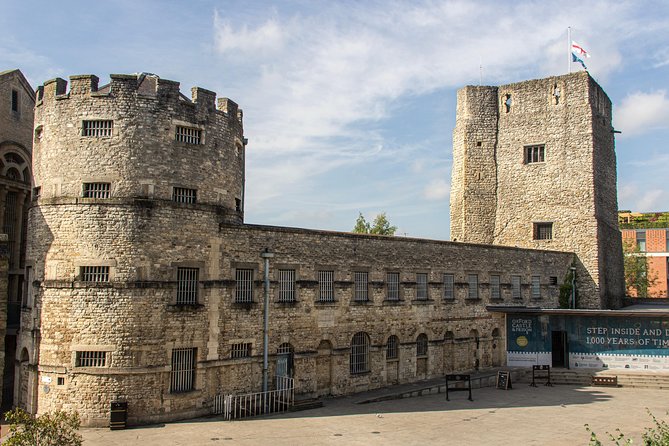
- The tower climb is the highlight: St. George’s Tower gives you wide views across Oxford, but the stairs are not suitable for everyone.
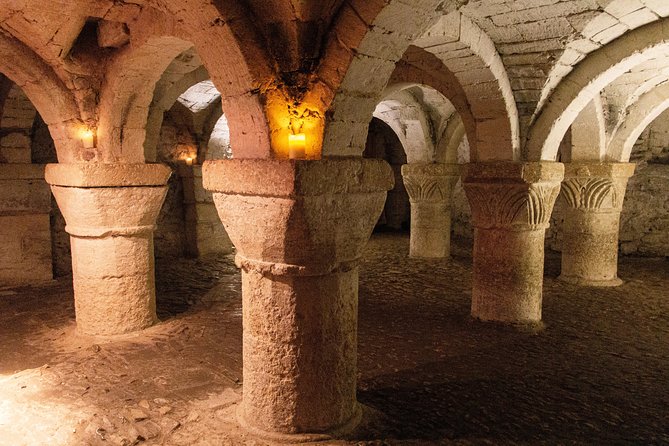
- The crypt feels genuinely atmospheric: This 900-year-old underground space is the only surviving part of St. George’s Chapel.
- The prison was in use until 1996: That recent closing date gives the site a sharper, more modern edge than the medieval walls suggest.
- The guided portion lasts about 50 minutes: You then continue alone through the exhibition and prison areas.
- The guides make a real difference: The best tours combine costume, humor, questions, and strong storytelling.
- Families can enjoy it: Children have liked the mugshots, dressing-up elements, interactive displays, and more gruesome tales.
Entering a castle that became a prison
Oxford Castle and Prison is not a polished royal residence with grand halls and fine furniture. Its appeal is more direct. You walk through a working site shaped by religion, royal conflict, law, punishment, and everyday prison life.
The castle was built in 1071, soon after the Norman conquest. Over time, the site served as a religious foundation, a royal setting, and the county jail. The prison finally closed in 1996, which means this is not simply a medieval ruin. Parts of the site connect the distant past with a prison system that existed within living memory.
That mix gives the tour its force. One moment you are hearing about the medieval period and the legends linked with King Arthur. Soon after, you are looking at spaces used by prisoners in the 18th and Victorian eras. The stories also touch on Oxford’s early educational world, Empress Matilda’s escape, and more recent criminal cases.
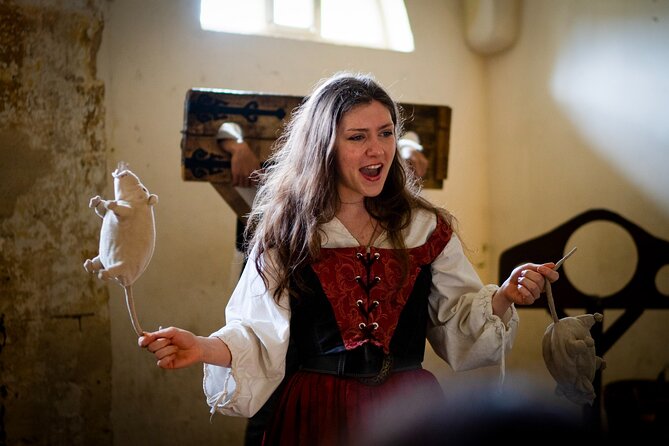
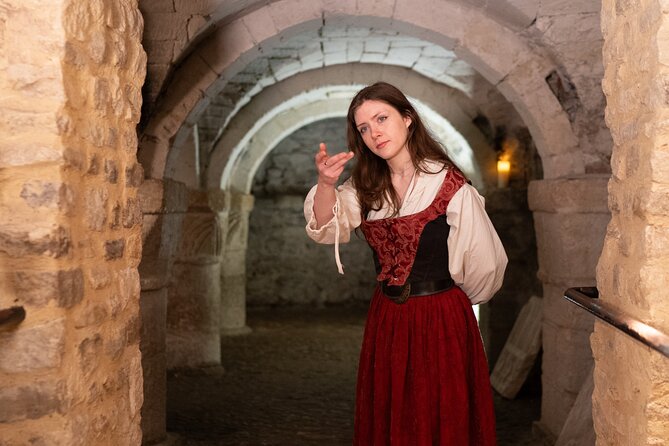
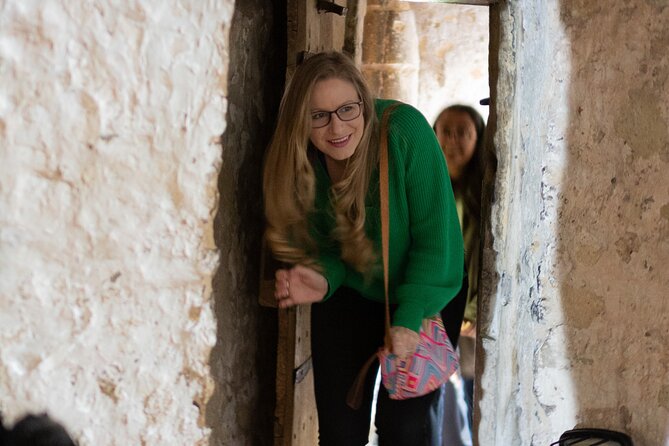
Your guide leads the group through the main stops in a set order. The presentation is costumed and theatrical, but it is not just a performance. The strongest guides explain why each room matters and tie the building to the larger story of Oxford.
More Guided Castle Tours in the UK
- Edinburgh Castle: Guided Walking Tour with Entry Ticket
★ 4.7 · 11,699 reviews - Edinburgh Castle: Guided Walking Tour with Entry Ticket
★ 5.0 · 5,540 reviews - Stonehenge, Windsor Castle and Bath Full Day Guided Tour
★ 4.5 · 5,346 reviews
St. George’s Tower and the price of the climb
The tour usually gives St. George’s Tower an early place in the experience. This is one of Oxford’s oldest buildings, and the climb rewards you with a broad view over the city.
The tower is especially useful because it helps you understand Oxford from above. Instead of seeing isolated streets and college buildings, you get a sense of how the castle sits within the city. The view is a major reason to choose the guided visit rather than simply passing the site from the pavement.
The climb is also the tour’s chief physical challenge. You should expect stairs, tight areas, and a need to move at the group’s pace. Children under five cannot enter the tower for health and safety reasons.
If you cannot make the climb, you do not have to abandon the tour. You can wait at the bottom with a guardian and watch a video called The Story of Oxford Castle. Once the group returns, you can rejoin the rest of the visit. That is a useful arrangement, though you will miss the best view and one of the oldest parts of the site.
Weather can affect the outdoor sections. One January visit could not include the mound because of poor conditions, although the view of it was still worthwhile. If the weather turns foul, keep your expectations flexible.
The 900-year-old crypt beneath the chapel
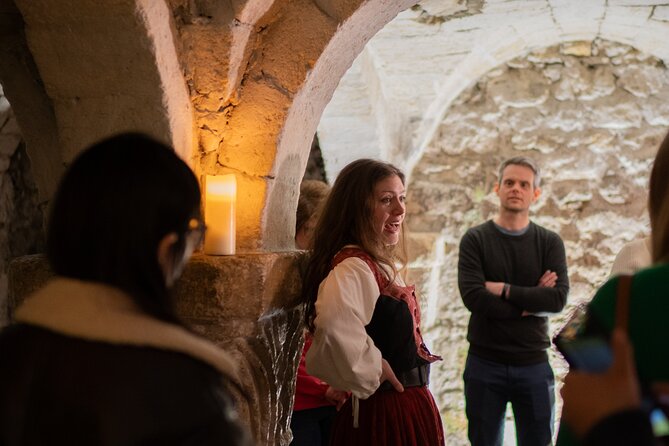
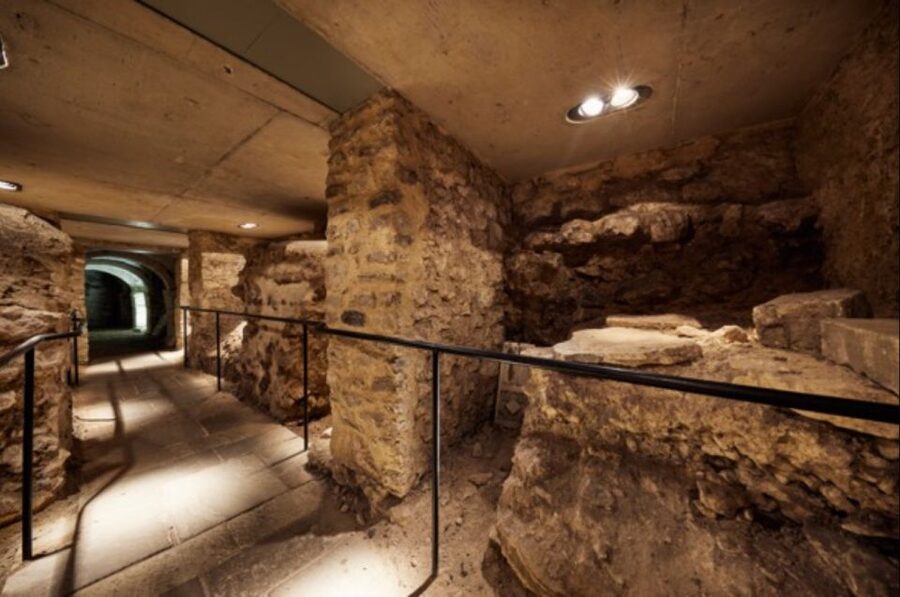
The crypt is one of the most memorable stops because it feels older and more enclosed than the open castle spaces. It is the only surviving part of St. George’s Chapel, and it sits below ground with a plain, heavy atmosphere.
This is not a huge room packed with objects. Its value comes from the structure itself. The stonework, low space, and age help you picture the religious community that once used the chapel. The guide’s explanation matters here because the room alone cannot tell you the full story.
You will probably notice a shift in mood as the tour moves from the tower’s open view to the crypt’s confined setting. That contrast is part of the pleasure. Oxford can feel like a city of colleges and elegant architecture, but this room reminds you that its past also included faith, power, fear, and hard living conditions.
The crypt is best appreciated slowly. Listen to the guide, look at the masonry, and notice how little has survived compared with the original chapel. The stop is brief, but it gives the visit a real sense of age.
The Motte-and-Bailey mound and Well Chamber

The mound comes from the 11th-century Motte-and-Bailey castle. It is a physical reminder of the Norman military stronghold that came before the later prison buildings.
Climbing the mound gives you another view and helps explain medieval defensive design. The structure is more basic than a later stone castle, but that is precisely the point. You are seeing the remains of an early power base rather than a finished palace.
The vaulted Well Chamber adds another layer. Water was essential to a fortified site, especially during conflict, and the chamber shows the practical side of castle life. You are not just hearing about battles and royal figures. You are also seeing the systems that allowed people to live inside a defended compound.
The mound may be closed in poor weather. If that happens, you can still appreciate its shape and position from nearby. It is worth checking conditions before you visit if the outdoor section is a priority.
Same region, a different set of walls:
- Stonehenge, Windsor Castle, and Bath from London
★ 4.5 · 18,662 reviews - Edinburgh: Edinburgh Castle Guided History Tour with Tickets
★ 4.8 · 9,933 reviews - Stonehenge, Windsor Castle and Bath with Pub Lunch in Lacock
★ 4.5 · 7,402 reviews - Windsor Castle Admission Ticket
★ 4.7 · 7,032 reviews
Prison D-Wing and the Debtors’ Tower

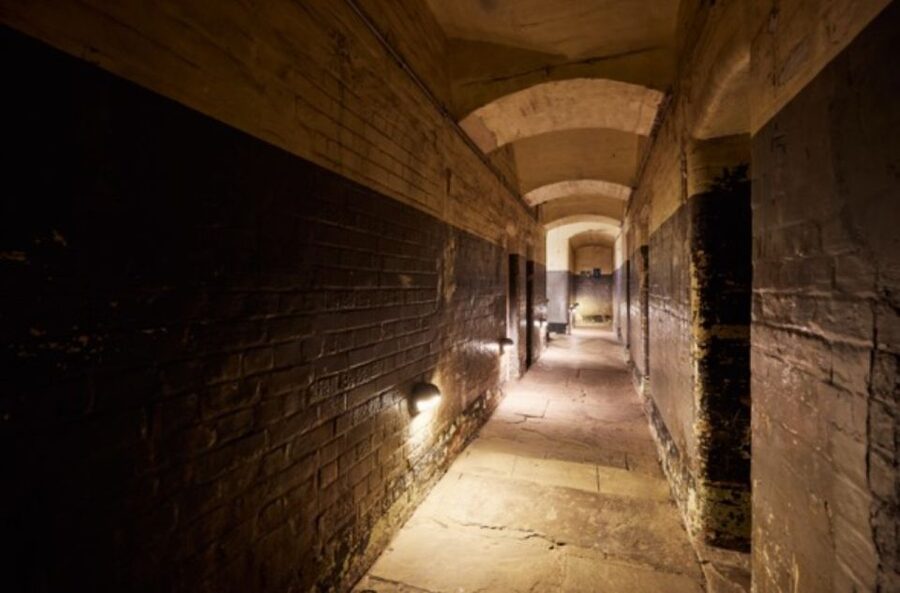
The prison areas are where the tour becomes most immediate. The 18th-century Debtors’ Tower and the Victorian Prison D-Wing show the austere conditions faced by people held for debt or criminal offenses.
The cells and reconstructed spaces help you understand the lack of comfort. Displays and room arrangements give you a sense of crowding, routine, and institutional control without needing a huge collection of objects.
The prison’s closing date, 1996, changes how you read the building. It is easy to treat old cells as a distant part of the past. Here, the end of the prison is recent enough to make the stories feel connected to modern Britain.
The tour also addresses infamous inmates, murder cases, and the county jail’s role in local justice. Some of the material is grim. Families should be ready for references to crime, punishment, and the more unpleasant side of prison life.
The cells set up to show how they would have looked are particularly useful. They turn abstract descriptions into something you can see. The mugshots, dressing-up elements, and prisoner photo activity also give younger visitors a way into the subject.
The Exhibition Wing after the guided tour
The guided portion lasts about 50 minutes. Afterward, you can explore the Exhibition Wing and prison areas independently, which is one of the best features of the visit.
I like this arrangement because the guide gives you a framework first. You hear the main stories, learn how the site fits together, and then have time to return to displays that caught your attention.
The interactive displays appeal to families and anyone who prefers learning through objects and images. The exhibition also covers the site’s more recent history, so you are not left with only medieval legends and castle warfare.
Allow extra time after the guided section if you want to read everything. The tour itself is short, but the self-guided portion makes the visit feel less rushed. You can take photographs, revisit parts of the prison, and study the displays at your own speed.
One practical point is worth noting: the tour and the independent section work well together, but the guided visit is the part that gives the castle its personality. Without the stories, some spaces could feel spare. If you are considering skipping the guide and only seeing the building, I would choose the full experience instead.
Why the guide matters so much
The strongest praise for this experience goes to the guides. Names reported from different visits include Rory, Anne, Yiyang, Katie, Melissa, Ciaran, James, Rob, Emily, and Alister. The exact guide will depend on your date, but the pattern is consistent: the visit works best when the guide is engaged and willing to adapt.
Good guides use humor without losing the darker facts. They answer questions, include children, and adjust the pace to the group. One guide was praised for keeping younger children involved without talking down to them. Another was especially attentive to health and safety during the climb and confined sections.
The costumed approach adds color, but it does not replace useful information. You are likely to hear stories about the castle, Oxford, prisoners, and the building’s changing purpose. The best moments come when a small room suddenly makes sense because the guide connects it to a person or event.
The reported rating of 4.7 from 251 reviews reflects that strength. Still, the guide is part of the value, not a guarantee of a particular performance. If you get a quieter presentation, the exhibition and prison displays help fill out the visit.
Is $28 good value?
At $28 per person, this is not the cheapest short attraction in Oxford. The visit lasts about an hour, and the guided part is roughly 50 minutes. You should judge the price against the access to the tower, crypt, mound, prison areas, and live storytelling.
I think the price works best for first-time visitors to Oxford, families, and anyone who wants context rather than a quick photograph outside the walls. You are paying for access to several parts of the site and for a guide who can explain how they connect.
The value is less convincing if you only want a long, slow museum visit. Much of the time is structured around the group, and the physical route may limit you. One visitor felt an additional self-guided attraction elsewhere was not worth extra time or money, which is a useful reminder to focus on the castle and prison itself.
The free cancellation option up to 24 hours before the start and the ability to reserve without paying immediately make it easier to fit the visit into a changing Oxford schedule. Check the available start times when booking.
Who should book this Oxford experience?
I would recommend it to you if you enjoy local history, old buildings, crime stories, and tours with a human voice. It also suits families with school-age children, especially those who like interactive displays and the more dramatic side of the past.
It is a good choice for a rainy-day plan if the indoor sections remain open, though bad weather can affect the mound and outdoor views. The gift shop and friendly staff are an added convenience after the tour.
You should think twice if stairs, confined spaces, or uneven ground are difficult for you. The experience is not recommended for people with mobility impairments. Children under five cannot go into St. George’s Tower, and anyone unable to climb it will need to wait below before rejoining the group.
The tour is in English. Translation materials may be available by asking at the desk, but the supplied details do not confirm which languages are offered or when.
Final verdict: book it for the stories and the view
I would book Oxford Castle and Prison if you want a compact, entertaining way to understand a less polished side of Oxford. The tower view, crypt, mound, and prison wings give the hour plenty of variety, while the exhibition lets you continue at your own pace.
Choose it especially if you value a strong guide. Names such as Anne, Rory, and Yiyang have helped make the tour lively, clear, and memorable for past groups, but the main reason to go is the site itself: a place where medieval power, religious life, punishment, and modern prison history occupy the same small patch of ground.
Skip it only if stairs and uneven surfaces will make the visit uncomfortable, or if you want a grand palace interior rather than a stark castle and prison. For most curious visitors, $28 is a sensible price for the access and storytelling.
FAQ
How long does the Oxford Castle and Prison tour last?
The full activity lasts about one hour. The guided portion takes approximately 50 minutes, followed by time to explore the exhibition and prison independently.
What language is the tour in?
The live guided tour is in English.
What does the ticket include?
It includes access to the castle, prison, and mound, along with the guided tour.
Can children join the tour?
Children can join, and the experience has been enjoyed by families with children as young as seven. Children under five cannot enter St. George’s Tower because of health and safety rules.
Can I join if I cannot climb the tower?
You can wait at the bottom with a guardian and watch The Story of Oxford Castle video. You may rejoin the group when it returns from the tower.
Is the tour suitable for people with mobility impairments?
The tour is not recommended for people with mobility impairments. The route includes stairs and areas that may be difficult to access.
Can I explore the prison after the guided tour?
Yes. After the guided portion, you can explore the exhibition and prison areas at your own pace.
Can weather affect the visit?
Yes. Poor weather can prevent access to the mound. You may still be able to view it from nearby.
How much does the tour cost?
The listed price is $28 per person.
Can I cancel the booking?
You can cancel up to 24 hours in advance for a full refund. You can also reserve your place and pay later.
Just added around the UK
- Standing Stones, Inveraray and Kilchurn Castle & Highlands Tour starting Balloch★ 5.0 · 35 reviews
- Cardiff: South Wales Cliffs, Beaches & Castles Day Tour★ 5.0 · 36 reviews
- West Coast Lochs & Castles Tour – from Glasgow★ 5.0 · 20 reviews
- Private Day Tour of South Wales, including Cardiff & Caerphilly Castle.★ 5.0 · 15 reviews
- Private Tour – Edinburgh to St Andrews, Dunnottar Castle & Dundee★ 5.0 · 9 reviews
- From Cardiff: 3 Amazing Castles, Tintern Abbey & Roman Caerleon★ 5.0 · 12 reviews
- Private Day Tour of Cardiff, including Cardiff Castle, St Fagans, & Cardiff Bay★ 5.0 · 5 reviews
- Cardiff: Welsh Castles, Mountains & Steam Railway Day Tour★ 4.5 · 25 reviews
Guided Castle Tours, compared.

Edinburgh Castle: Guided Walking Tour with Entry Ticket
Read our review →
Cathedral, Giralda & Alcazar Entry With Guided Tour
Read our review →Edinburgh Castle: Guided Walking Tour with Entry Ticket
Read our review →
Stonehenge, Windsor Castle and Bath Full Day Guided Tour
Read our review →
Edinburgh Castle Guided Walking Tour in English
Read our review →
Alcázar and Cathedral Entry Ticket and Guided Tour
Read our review →
Alcázar of Seville Skip-the-Line Tickets and Guided Tour
Read our review →
Dublin Book of Kells, Castle and Molly Malone Statue Guided Tour
Read our review →Browse the lists this tour appears in