
Review · AUSTRIA
Innsbruck: Tickets for Schloss Ambras
Old treasures tell strange stories here. Schloss Ambras gives you a close look at Renaissance collecting through its Chamber of Art and Wonders, unusual objects, scientific instruments, and portraits of people once considered miracles. I especially like the armories, where tournament armor and the famous Turkish Chamber show how court life mixed ceremony, warfare, and curiosity. The main drawback is simple: your ticket covers admission only, so an audio guide or tour costs extra.
I also like the Habsburg portrait gallery, which turns a long royal family tree into something you can actually see, face by face. At $16 per person for a full day, this is a strong-value museum visit, though the experience suits curious museumgoers more than anyone looking for a quick photo stop.
Key things to know before visiting
- Ferdinand II’s collecting passion: The castle preserves the interests of a Renaissance prince who gathered art, armor, scientific tools, objects from distant places, and natural curiosities.
- A truly unusual collection: Look for ivory, coral, the Ryukyu bowl, a compass attachment, unusual musical instruments, and the portrait of a hairy man once regarded as a miracle.
- Three strong museum sections: The Chamber of Art and Wonders, the Armories, and the Antiquarium each show a different side of Renaissance court culture.
- More than 200 Habsburg portraits: The gallery covers rulers and family members from Albrecht III through Emperor Franz II, also known as Franz I.
- A good family option: The strange objects, armor, and portraits of unusual people give children more to notice than a room of formal paintings alone.
- Bring your own interpretation: Admission does not include an audio guide or guided tour, so you may want background reading before your visit.
Why Schloss Ambras is worth your time
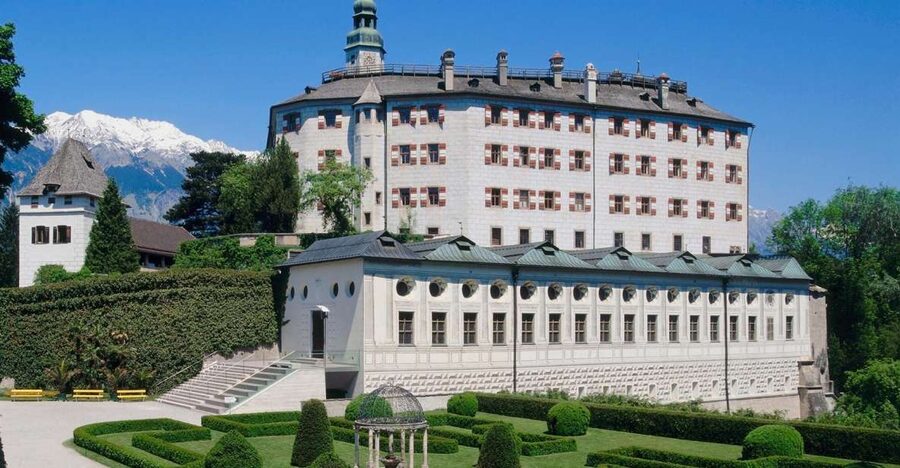
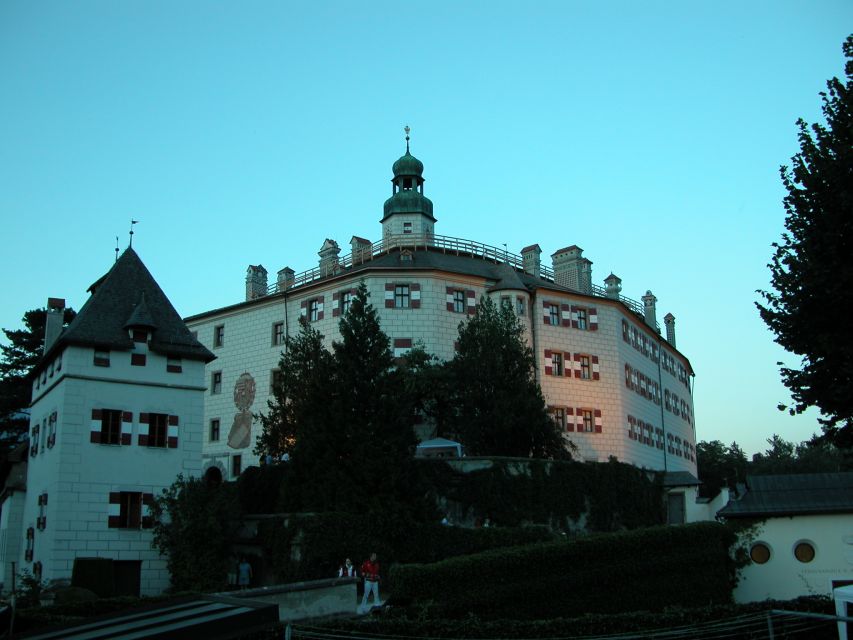
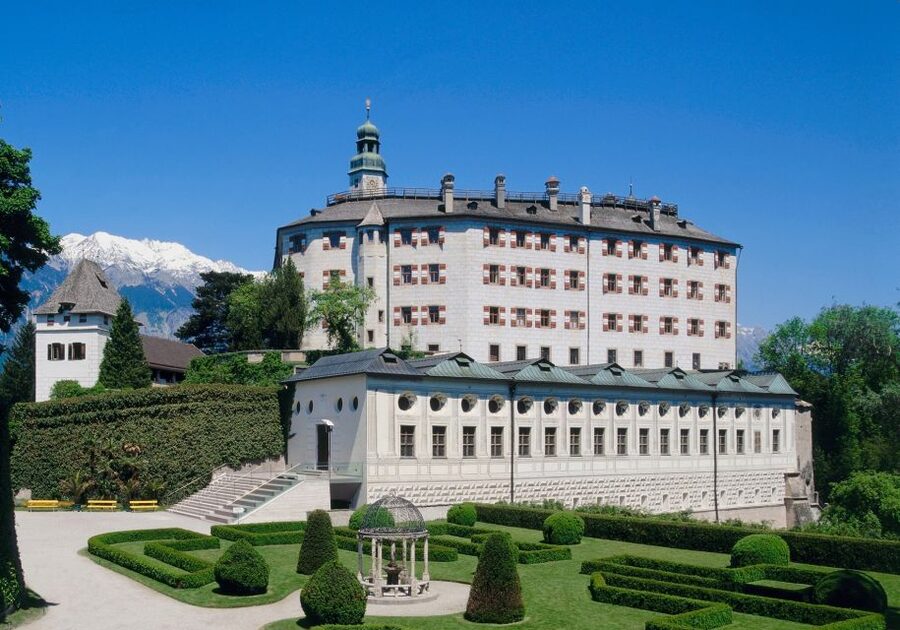
Schloss Ambras is one of Innsbruck’s major cultural sights, but it does not feel like a single-purpose museum. You are not simply walking through rooms of old paintings. Instead, the visit reveals how a Renaissance prince tried to organize the world around him.
Ferdinand II, who lived from 1529 to 1595, collected works of art, weapons, scientific objects, pieces from distant countries, rare natural materials, and things that seemed impossible or miraculous. That mix gives Schloss Ambras its character. One room may present a carefully made object of ivory, while the next shows coral, armor, or an instrument designed to explain how the world worked.
I like this approach because it makes the past feel curious rather than tidy. Renaissance collectors did not separate art, science, religion, nature, and entertainment as neatly as modern museums often do. At Ambras, those subjects sit side by side.
The admission price of $16 is reasonable for a full-day ticket to a museum with several major collections. You do not need to rush through it in an hour. If you take time with the portrait gallery and armories, you receive far more than a quick castle visit.
Still, I would set expectations correctly. This is not presented as a guided historical performance, and no audio guide or guided tour is included. You can come with a private tour guide, but independent visitors should be ready to read labels and make their own connections.
A few more castle visits around Austria worth a look
- Salzburg: Hohensalzburg Fortress Admission Ticket
★ 4.6 · 2,236 reviews - Salzburg: Best of Mozart Fortress Concert and Dinner
★ 4.5 · 1,424 reviews - Salzburg: Best of Mozart Fortress Concert
★ 4.6 · 762 reviews
The Chamber of Art and Wonders reveals a Renaissance mind
Start with the Kunst- und Wunderkammer, or Chamber of Art and Wonders. This is the section most likely to stay with you because the objects are so varied and often so odd.
The collection was meant to represent the entire understanding of the age. That does not mean you will find a modern science museum. Instead, you will see how Renaissance people tried to make sense of nature, distant places, human difference, craftsmanship, and the unknown.
Pay attention to the contrast between natural materials and highly finished objects. Ivory and coral were prized for their rarity, beauty, and difficulty to work. Their presence also tells you about long-distance trade and the power needed to obtain unusual materials.
The collection includes the Tödlein, scientific objects such as the attachment with compass, and objects brought from faraway parts of the world. The Ryukyu bowl is a particularly useful reminder that this was not a local collection in a narrow sense. Even one object from a distant culture could signal a wider world beyond the Tyrolean court.
You might also find musical instruments and games. These are valuable because they show that collecting was not only about solemn religious objects or grand paintings. A prince could gather items for study, conversation, amusement, and display.
The most startling pieces are the portraits of people once considered miraculous, including the hairy man. Modern viewers may find the old labels uncomfortable. That is part of the point. They show how earlier societies described people who looked different and placed them inside a world of wonders and signs.
I recommend taking this section slowly. The objects are small compared with a large painting or suit of armor, and their meaning is easy to miss if you hurry. Look at the materials, the craftsmanship, and the reason Ferdinand II might have considered each piece worth keeping.
The Armories connect ceremony with warfare
The Armories offer a different kind of spectacle. Here, the focus shifts from collecting the strange to presenting power through metal, ceremony, and military reputation.
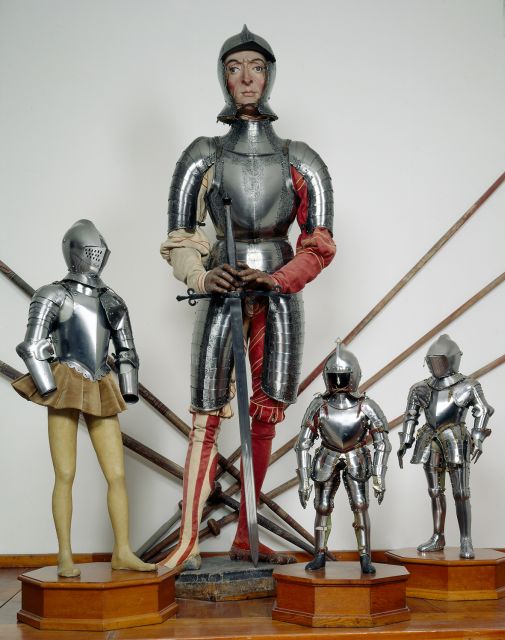
You can see rare tournament armor, ceremonial armor used for courtly feasts, and armor associated with famous generals. These pieces were not merely protective equipment. Tournament armor could be elaborate and specialized, while ceremonial armor helped turn a public event into a display of rank.
That distinction matters. When you look at armor in a museum, it is easy to think only about combat. At Schloss Ambras, you should also think about performance. Courtly festivals, tournaments, and formal gatherings allowed nobles to display wealth, skill, lineage, and loyalty.
The armor of famous generals adds another layer. It links an object to a person and a military story, even when the original battlefield is far away. You can picture how armor became a kind of public identity, as recognizable in its time as an official portrait.
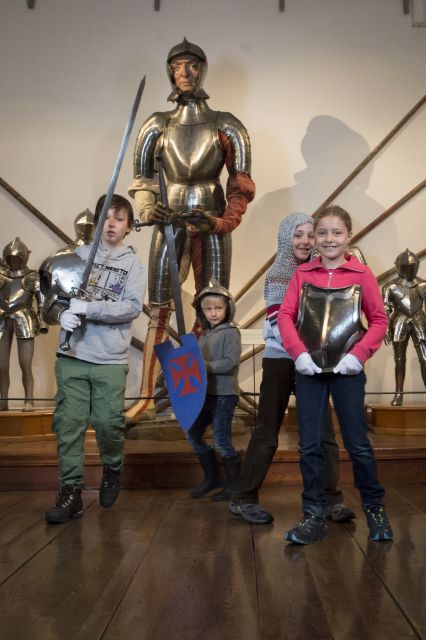
The Armories are also likely to work well for families. Children who lose interest in court portraits often pay attention when they see armor designed for competition or ceremony. Adults can use the same displays to consider how rulers shaped public image.
The main limitation is that armor can blur together if you rush. I would not treat this section as a corridor between the other galleries. Give yourself time to compare the shapes and purposes of the pieces. Tournament armor and ceremonial armor served different roles, and the collection rewards that kind of attention.
The Turkish Chamber shows fear and fascination
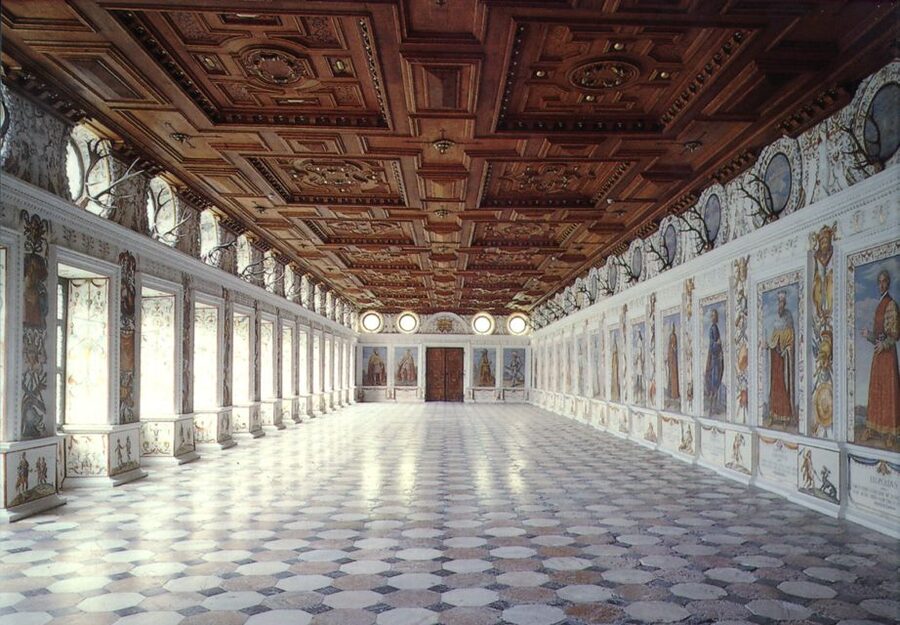
The Turkish Chamber, or Türkenkammer, belonged to Ferdinand II’s collection and records two attitudes toward the Ottoman world: fear of the Turks and fascination with the Orient.
That combination is important. Sixteenth-century Europe did not view the Ottoman Empire from a comfortable distance. Military conflict created real anxiety, while trade, design, objects, and stories also created strong curiosity.
The Turkish Chamber lets you see those reactions together. It is not simply a display of military opposition, and it is not simply admiration for foreign culture. It reflects the complicated way a powerful court viewed a major neighboring world.
I find this section useful because it adds context to the rest of the castle. The Chamber of Art and Wonders shows interest in distant places through objects. The Armories show power through weapons and armor. The Turkish Chamber brings those themes together, showing how politics and collecting could occupy the same room.
You may want to allow extra time here if you are interested in cultural exchange and the way European courts described other societies. The material can also prompt questions about whose viewpoint is being presented. Since the ticket does not include a guide, you will need to rely on the museum information provided on site or prepare before you go.
Same region, a different set of walls:
- Best of Mozart Concert and Dinner or VIP Dinner at Fortress Hohensalzburg
★ 4.5 · 598 reviews - Salzburg: River Cruise, Dinner & Fortress Concert
★ 4.6 · 406 reviews - Mozart Concert and Dinner or VIP Dinner at Fortress Salzburg with River Cruise
★ 4.5 · 280 reviews - Best of Mozart Concert at Fortress Hohensalzburg in Salzburg
★ 4.5 · 220 reviews
The Habsburg portrait gallery puts faces to a dynasty
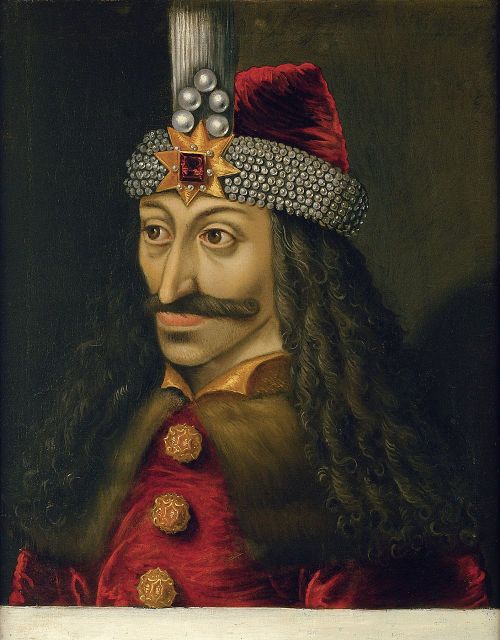
The Habsburg portrait gallery contains more than 200 paintings, covering a long period from Albrecht III, who lived from 1349 to 1395, through the reign of Emperor Franz II, also known as Franz I, who lived from 1768 to 1835.
That span is one of the gallery’s great strengths. Instead of seeing one ruler in isolation, you can follow generations of the dynasty. Clothing changes, hairstyles change, artistic styles change, and the presentation of power changes with them.
The gallery includes works by major artists such as Lukas Cranach, Giuseppe Arcimboldo, Peter Paul Rubens, Anton van Dyck, and Diego Velázquez. Their names give you a reason to look closely, but you do not need to be an art specialist to enjoy the room.
I suggest first walking through the gallery to notice the family connections and changing styles. Then return to paintings that catch your eye. A portrait can reveal far more than a face. Clothing, jewelry, posture, background, and expression all helped communicate rank.
Arcimboldo is especially worth seeking out because his portraits are known for imaginative arrangements of natural forms. Rubens and Van Dyck offer a different sense of courtly presentation, while Velázquez brings the weight of one of Europe’s most famous royal painting traditions.
The number of paintings can feel demanding. More than 200 works is a lot to absorb in one sitting, so do not pressure yourself to study every portrait equally. I would rather choose a handful and look carefully than rush through the entire gallery with a tired eye.
How to plan your one-day visit
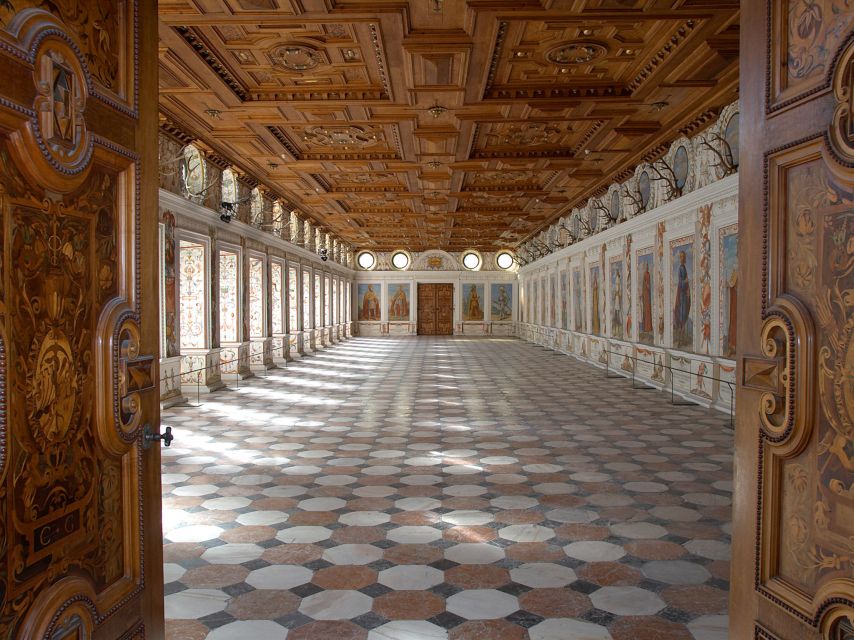
Your ticket is valid for one day, and the meeting point is Schloss Ambras at Schlossstrasse 20, 6020 Innsbruck. The activity information does not provide a fixed tour route or a named starting time, so check availability when planning your visit.
Because the admission is not tied to a guided schedule, you can shape the visit around your interests. Art lovers may want to spend the most time in the portrait gallery. Families may prefer the Chamber of Art and Wonders and the armor displays. History-minded visitors can give extra attention to the Turkish Chamber and the connections between collection, warfare, and court ceremony.
I would allow more time than the minimum needed to walk through the rooms. The museum includes several substantial areas, and the collections reward pauses. If you have only a short window in Innsbruck, choose your priorities before entering so you do not spend all your time deciding where to go next.
A simple plan might look like this:
- Begin with the Chamber of Art and Wonders while your attention is fresh.
- Continue to the Armories and compare tournament, ceremonial, and military armor.
- Give the Turkish Chamber a focused visit rather than treating it as a quick side room.
- Finish with the Habsburg portrait gallery, choosing a few artists or periods to follow.
You can reverse this order if portraits are your main interest. The important point is to avoid treating Schloss Ambras as a quick castle photo stop. The collections are the reason to come.
What the $16 admission includes
The $16 price covers admission to Schloss Ambras in Innsbruck. For a full-day visit with the Chamber of Art and Wonders, Armories, Antiquarium, Turkish Chamber, and Habsburg portrait gallery, I consider that fair value.
The value is strongest if you enjoy looking closely and reading about objects. You are paying for access to a wide range of material, not one single showpiece. The museum gives you art, military history, court culture, natural curiosities, and international objects in one place.
The price is less attractive if you want a fast, highly guided experience. No audio guide or guided tour is included. You can arrange a private tour guide, but that would add to your cost.
A useful detail applies to groups. One guide per group using a voucher receives free admission only when the group has at least 10 people and the guide accompanies the group to the museum. Groups with fewer than 10 people do not receive free guide admission under these arrangements. State-certified tourist guides always receive free admission.
For most independent visitors, the practical lesson is simple: budget for the $16 ticket, and decide in advance if you need expert interpretation. If you are comfortable exploring at your own pace, the included admission should be enough.
Who will enjoy Schloss Ambras most
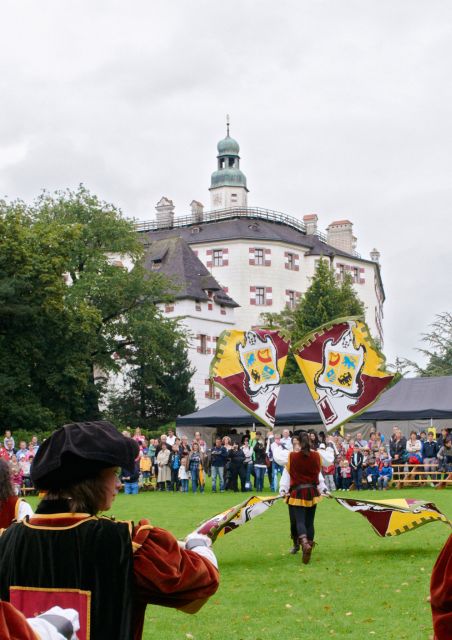
I recommend this experience to you if you like museums with variety. The unusual objects prevent the visit from becoming a long sequence of formal portraits, while the portrait gallery gives the castle an artistic backbone.
Families should find plenty to discuss. Armor, coral, ivory, strange portraits, musical instruments, and games offer clear visual subjects. One recent visitor specifically found the visit interesting for children, which fits the collection’s unusual mix.
Art lovers will appreciate the names attached to the portrait gallery, especially Cranach, Arcimboldo, Rubens, Van Dyck, and Velázquez. You will get the most from this section if you enjoy comparing styles and noticing how rulers wanted to be seen.
History enthusiasts will find the strongest material in the Armories and Turkish Chamber. These rooms connect personal collecting with court ceremony, military power, international conflict, and interest in distant cultures.
I would be less likely to recommend it to you if you dislike reading labels, want a short attraction with a tightly managed route, or need a guide included in the basic price. The visit asks you to take some responsibility for the interpretation.
The experience has received a 4.6 rating from 204 ratings, and the strongest practical praise centers on quality, ease, and broad appeal. It has also been described as positive, easy, and practical, which is a fair way to think about a self-guided museum admission.
Should you book Schloss Ambras?
Book it if you want an absorbing cultural stop in Innsbruck rather than a quick view of a historic building. The Chamber of Art and Wonders is the main reason to go, but the armor, Turkish Chamber, and 200-plus portraits make the $16 price worthwhile.
I would especially choose Schloss Ambras for families, art lovers, and anyone curious about how Renaissance courts collected and displayed the world. Plan enough time, accept that interpretation is mostly up to you, and focus on the objects that seem strange or unexpected. Those are often the pieces that make the visit memorable.
FAQ
Where is Schloss Ambras located?
Schloss Ambras is at Schlossstrasse 20, 6020 Innsbruck, in Tyrol, Austria.
How much does admission cost?
Admission costs $16 per person.
How long is the ticket valid?
The ticket is valid for one day.
What does the ticket include?
The ticket includes admission to Schloss Ambras in Innsbruck.
Is an audio guide included?
No. An audio guide is not included with admission.
Is a guided tour included?
No. A guided tour is not included, though you can come with a private tour guide.
What is the Chamber of Art and Wonders?
It is a Renaissance collection containing art, scientific objects, objects from distant countries, rare natural materials, unusual musical instruments, games, and portraits of people once considered miracles.
What can you see in the Armories?
You can see rare tournament armor, ceremonial armor for courtly feasts, armor associated with famous generals, and Ferdinand II’s Turkish Chamber.
How many paintings are in the Habsburg portrait gallery?
The Habsburg portrait gallery contains more than 200 paintings, including works associated with Lukas Cranach, Giuseppe Arcimboldo, Peter Paul Rubens, Anton van Dyck, and Diego Velázquez.
Just added around Austria
- Salzburg: River Cruise & Best of Mozart Fortress Concert★ 3.9 · 14 reviews
- Salzburg: Christmas/Advent Concert at Fortress Hohensalzburg★ 4.4 · 54 reviews
- Mauterndorf: Castle Entrance Ticket★ 4.7 · 8 reviews
- Graz: Funicular Ride & Schlossberg Picnic Experience★ 4.8 · 4 reviews
- Forchtenstein Castle Admission Ticket & Optional Guided Tour★ 4.7 · 16 reviews
- Bratislava: DayTrip: Castles around Vienna +underground lake★ 4.9 · 30 reviews
- Skip-the-line Hohensalzburg Fortress Private Tour and Ticket★ 4.7 · 9 reviews
- Salzburg Old Town, Fortress, Cathedral Private Walking Tour★ 4.5 · 41 reviews
Austria Castle Tours, compared.
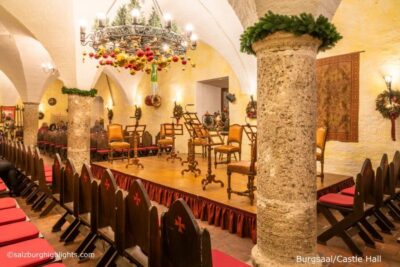

Best of Mozart Concert and Dinner or VIP Dinner at Fortress Hohensalzburg
Read our review →

Mozart Concert and Dinner or VIP Dinner at Fortress Salzburg with River Cruise
Read our review →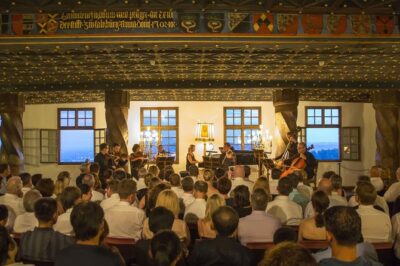
Best of Mozart Concert at Fortress Hohensalzburg in Salzburg
Read our review →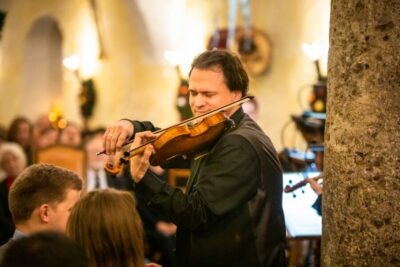
Christmas/Advent Concert at Fortress Hohensalzburg
Read our review →Browse the lists this tour appears in