
Review · MILAN
Guided Tour: Discover Sforza Castle and Michelangelo’s Art
Milan keeps its Renaissance cards close. This 1.5-hour visit combines Sforza Castle with Michelangelo’s final sculpture, the Pietà Rondanini, then adds clear stories about Leonardo da Vinci’s years in Milan. I like the focused route and the chance to see two major artists connected to one powerful Milanese family. I also like that guides such as Paula, Lorella, and Maria have been praised for explaining the difference between Leonardo’s era and Michelangelo’s in a way that makes the art easier to follow.
The main drawback is the tight schedule. You get a useful introduction to the castle and its art, but not enough time for every museum room. The booking information also gives conflicting details about wheelchair access, so anyone with mobility needs should confirm this directly before paying.
Key points to know before you book
- Michelangelo’s last sculpture: The Pietà Rondanini is unfinished, intimate, and very different from the artist’s polished marble figures.
- Leonardo in Milan: The guide connects the castle, Ludovico Sforza, Leonardo’s engineering work, and the nearby Last Supper.
- A compact 90-minute visit: This suits a first look at the castle, not a full museum day.
- Meet under the Torre Filarete clock tower: Piazza Castello is easy to identify, but allow time to find your guide in the open square.
- English guidance only: The tour is shared, with a certified guide rather than a private visit.
- Good booking flexibility: You can cancel up to 24 hours ahead and reserve without paying immediately, but chosen time slots may be changed by the operator.
Why Sforza Castle belongs on your Milan list
Milan is often reduced to the Duomo, fashion streets, and Leonardo’s Last Supper. Sforza Castle gives you a different view of the city. It shows how art, politics, military power, and wealthy patrons worked together during the Renaissance.
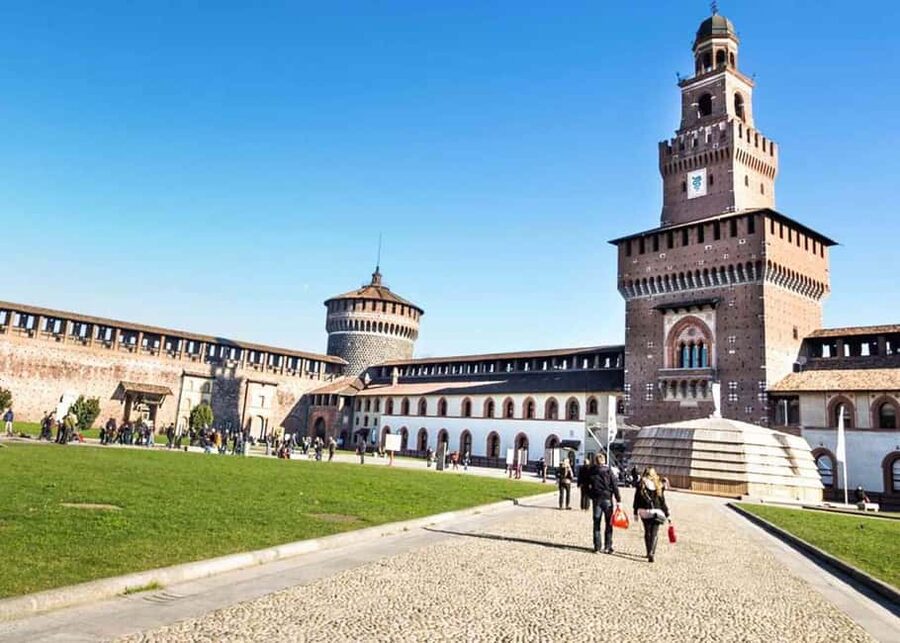
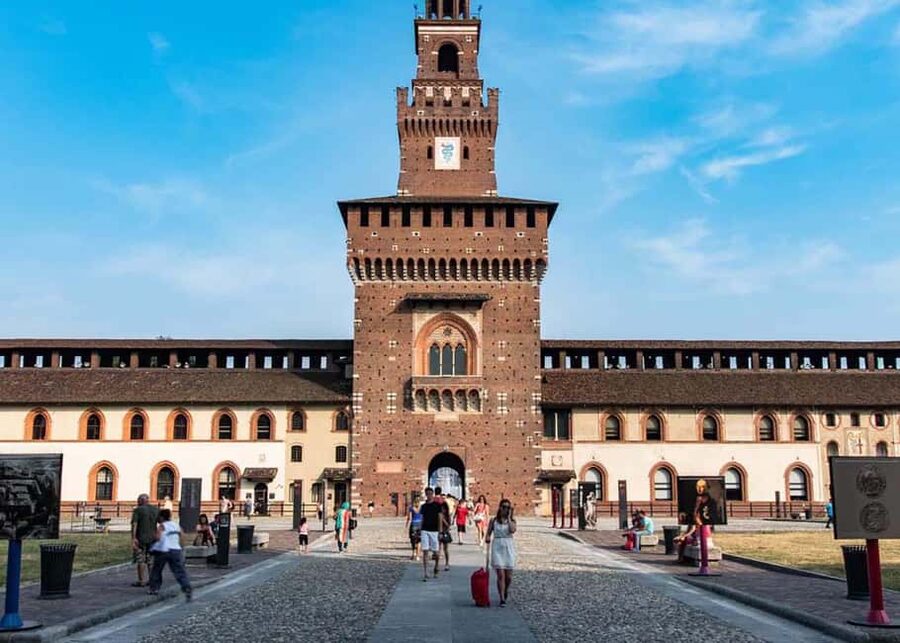
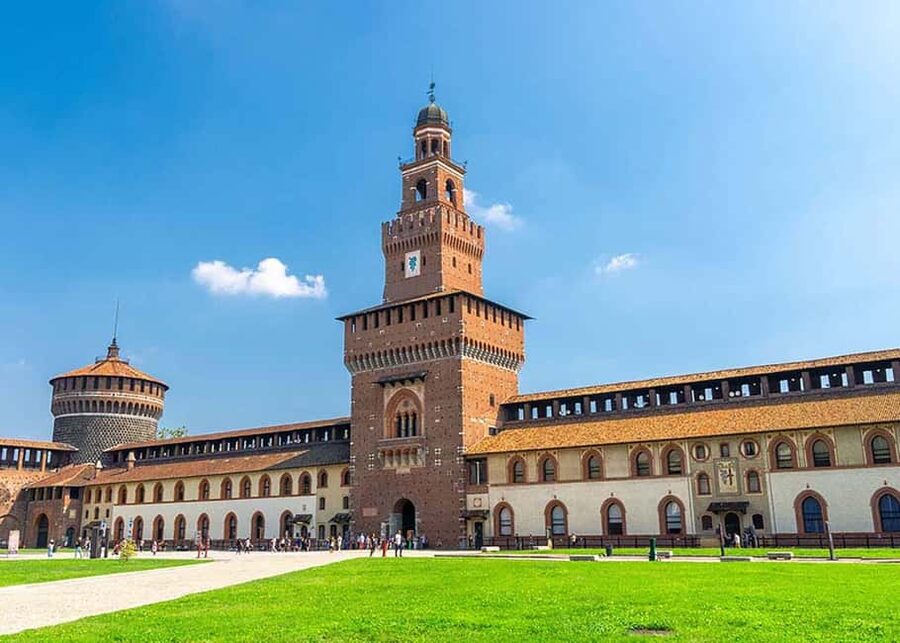
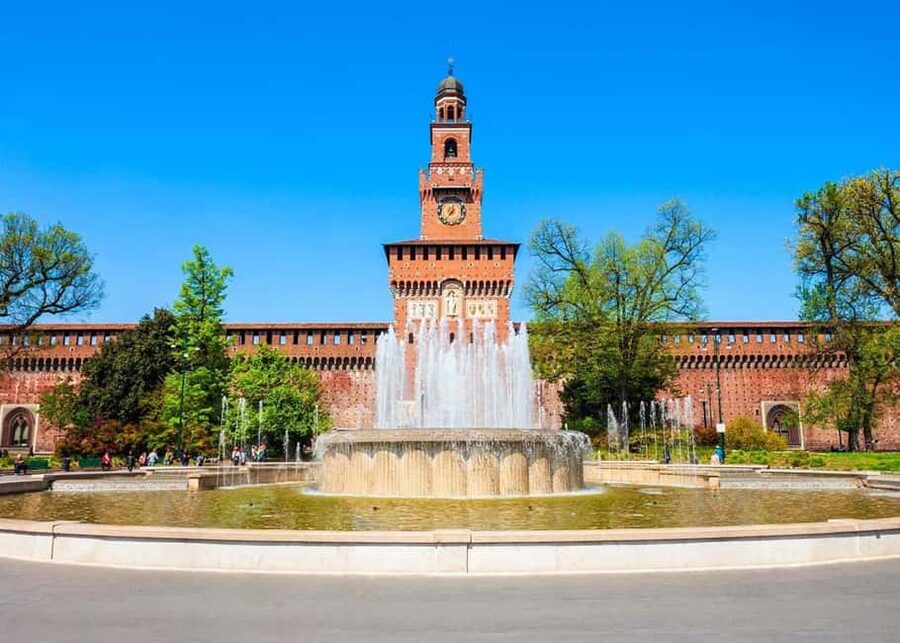
The castle sits in Piazza Castello, only a short walk from central Milan’s main sights. Its entrance is marked by the tall Torre Filarete, the clock tower you use as the meeting point. Behind the heavy walls are courtyards, museum rooms, and collections that reflect centuries of Milanese history.
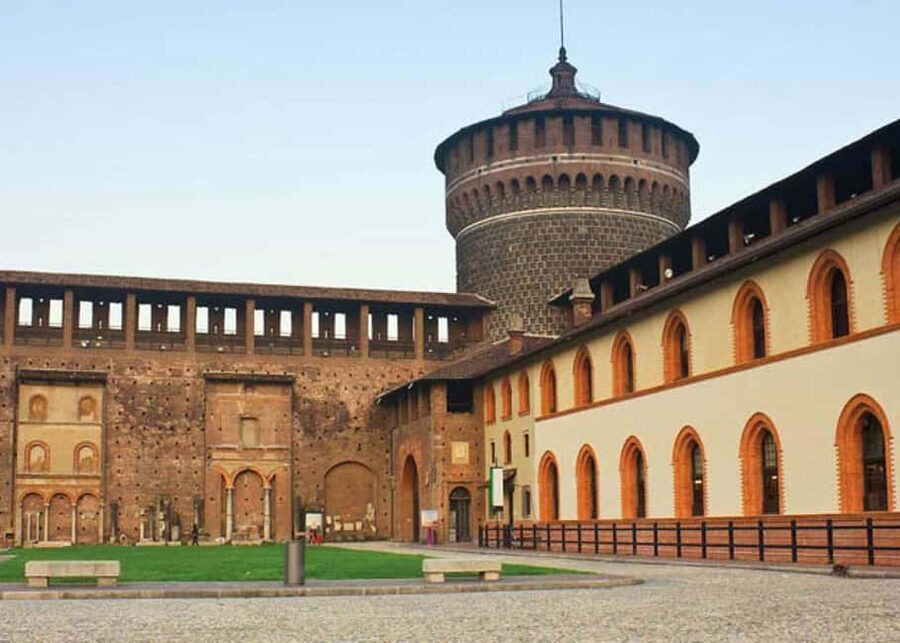
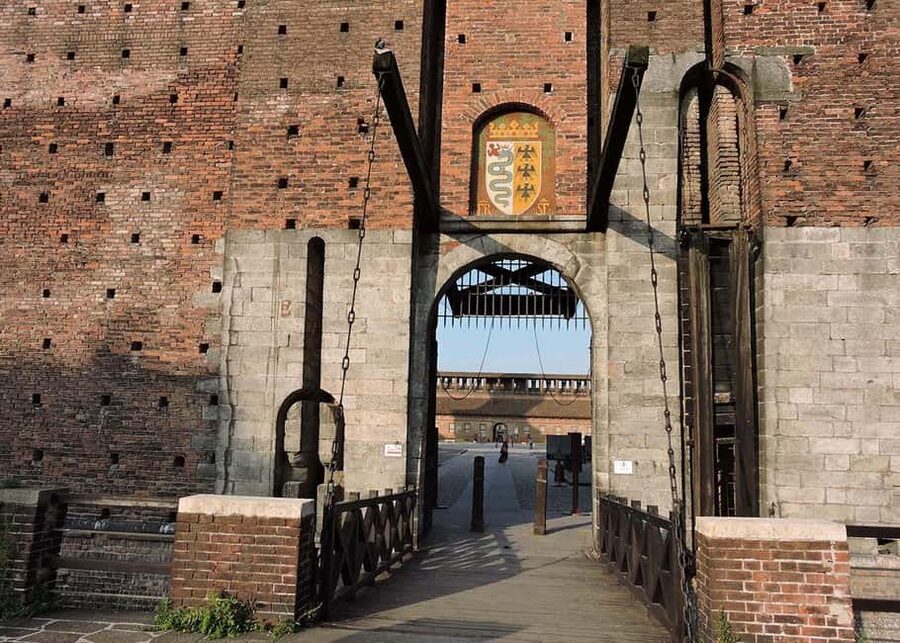
The exterior may first suggest a fortress rather than an art museum. That is part of its appeal. The Sforza family needed a stronghold, but the ruling court also wanted artists, engineers, architects, and musicians nearby. The result is a place where defensive walls lead to refined interiors.
I find this setting helpful because it gives the art a political frame. Michelangelo and Leonardo were not working in isolation. They depended on patrons, court politics, commissions, and the changing fortunes of Milan’s ruling families.
More Guided Castle Tours in Italy
- Milan: The Last Supper & Sforza Castle Guided Tour
★ 4.6 · 610 reviews - Milan: Last Supper and Sforza Castle Guided Tour
★ 4.6 · 498 reviews - Milan: The Last Supper & Sforza Castle Guided Tour
★ 4.5 · 128 reviews
Meeting at Torre Filarete in Piazza Castello
Your guide meets you under the clock tower at the castle’s main entrance. Look for the Torre Filarete, rather than simply waiting somewhere in the broad piazza. The square can feel open and busy, so a clear meeting point matters.
Bring a passport or identity card. Large bags and backpacks must be left in the castle’s locker room, which means you should avoid arriving with luggage or an overstuffed day pack. Food and drinks are not included, and there is no hotel pick-up or drop-off.
The tour is conducted in English and is not private. That keeps the price lower than a one-to-one visit, but your experience will depend partly on group size and the guide’s pace. The strongest feedback has focused on the guides’ ability to explain complicated material clearly and answer questions.
Support is available online before the tour, and one booking experience specifically praised the help given in locating the meeting point. That can be useful if your confirmation instructions are not immediately clear.
Inside the castle: power before paintings
The first part of the visit introduces Sforza Castle itself. Your guide explains the role of the Sforza family, who ruled Milan during the Renaissance and used this fortress as both a defensive structure and a courtly home.
The courtyards are important because they help you read the building before entering its museums. You can see the scale of the walls and towers, then consider how the castle changed from a military site into a center for art and culture.
This is not a tour built around one isolated masterpiece. The castle supplies the setting for the whole story. You learn why Milan attracted major artists, how powerful patrons shaped commissions, and how the city’s political ambitions encouraged artistic work.
The pace should suit you if you prefer explanation to exhaustive viewing. In 90 minutes, the guide can point out the key spaces and direct your attention to the main work. You should not expect to inspect every collection in detail. If you want a full museum visit, plan extra time before or after the guided portion.
Pietà Rondanini: Michelangelo at the end of his life
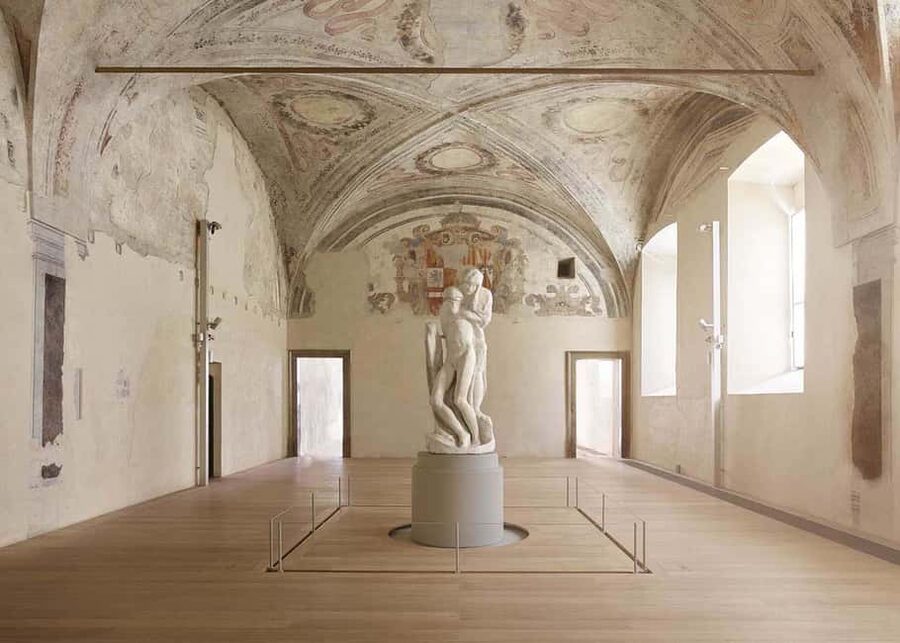
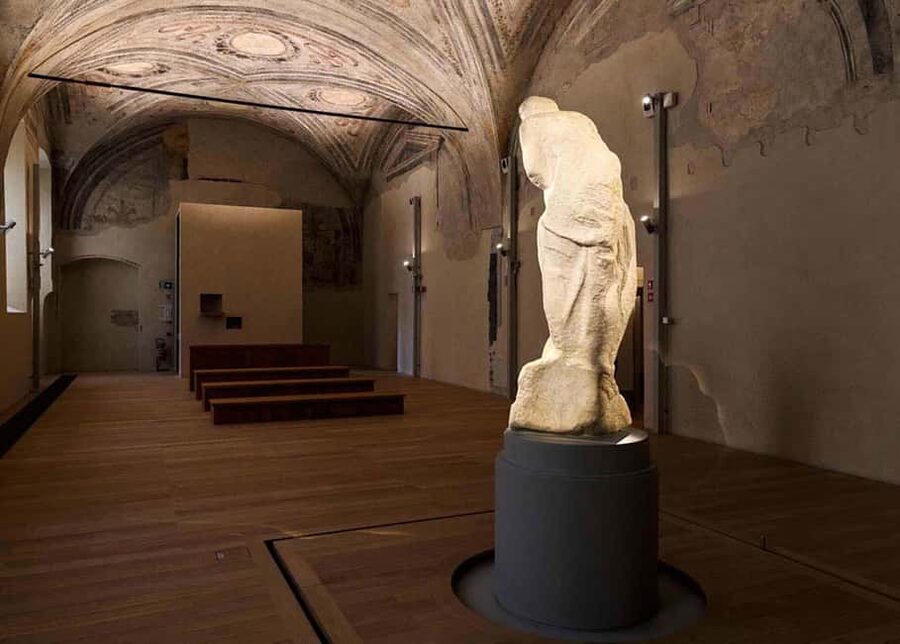
The central reason to book this experience is Michelangelo’s Pietà Rondanini. The sculpture was made during the final period of his life, when he was 89. It remained unfinished, and that unfinished surface is central to how you experience it.
Instead of the smooth, controlled finish associated with Michelangelo’s more famous works, the Pietà Rondanini feels spare and searching. Mary holds Christ’s body in an intimate arrangement. The forms appear to emerge from the marble, and the work carries a strong sense of physical effort and spiritual reflection.
Your guide can help you look past the easy reaction that unfinished means incomplete or lesser. Here, the roughness is part of the meaning. The sculpture feels less like a public display of perfect anatomy and more like a private meditation on suffering, age, and death.
That makes this stop especially valuable if you have already seen Michelangelo’s grander works in Florence or Rome. You will encounter a different side of the artist. The Pietà Rondanini does not depend on theatrical scale. Its power comes from the narrow space between the figures and the sense that Michelangelo kept changing his idea of the piece.
You should give yourself a quiet moment here. Listen to the explanation, then look again without trying to force a quick opinion. Some visitors expect a finished masterpiece and may find the sculpture challenging. Others appreciate its emotional directness precisely because it does not look polished.
More Guided Castle Tours in Milan:
- Milan: Duomo, Sforza Castle, and Pieta Guided Tour
★ 4.9 · 100 reviews - Branca Tower and Sforza Castle Guided Tour
★ 4.5 · 36 reviews - Sforza Castle & Michelangelo’s Pietà Rondanini Guided Tour
★ 4.7 · 3 reviews - Edinburgh Castle: Guided Walking Tour with Entry Ticket
★ 4.7 · 11,699 reviews
Leonardo’s Milan: court life, engineering, and art
The second major thread is Leonardo da Vinci’s connection with Milan. Leonardo worked under Ludovico Sforza, Duke of Milan, and the guide places his artistic and scientific projects within that courtly world.
You hear about more than painting. Leonardo contributed ideas in engineering, architecture, and design, showing the broad range of work expected from an ambitious Renaissance court artist. His time in Milan also involved friendships, professional competition, and the shifting demands of his patron.
The tour also connects Leonardo with The Last Supper, painted in the nearby convent of Santa Maria delle Grazie. This experience does not include entry to that fresco, so you should book a separate timed visit if you want to see it. Still, the connection adds value: Sforza Castle helps explain the political and cultural environment in which Leonardo worked.
I especially like this part of the tour because it prevents the usual Leonardo shorthand. He was not simply a solitary genius producing famous paintings. In Milan, he was also an engineer, designer, court employee, and problem solver whose ideas served a powerful ruler.
The guide’s explanation can also help you keep the chronology straight. One particularly strong account praised the way the guide clearly separated Leonardo’s period from Michelangelo’s, even for someone familiar with major Italian sites such as the Sistine Chapel and St. Peter’s Basilica.
The courtyards and museum interiors
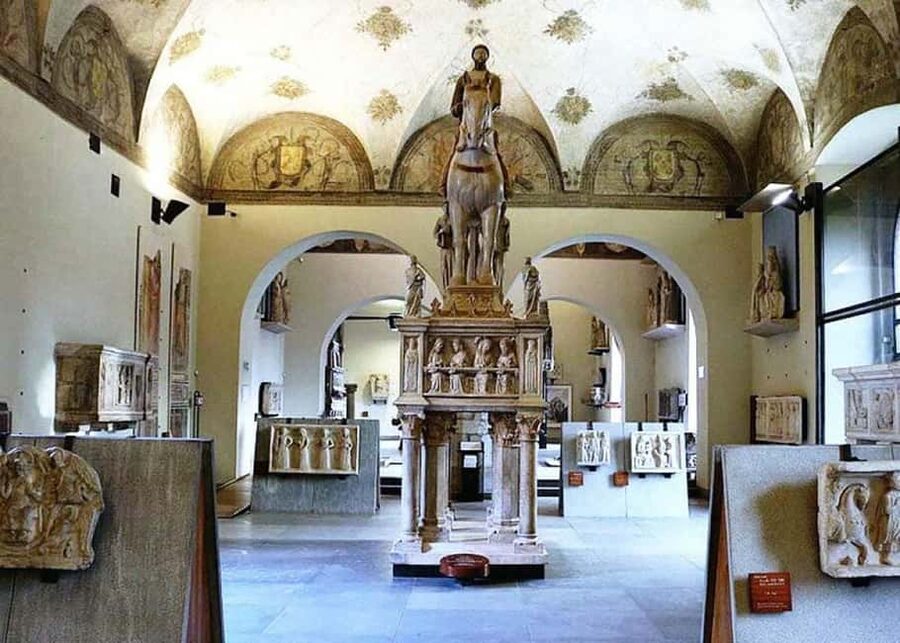
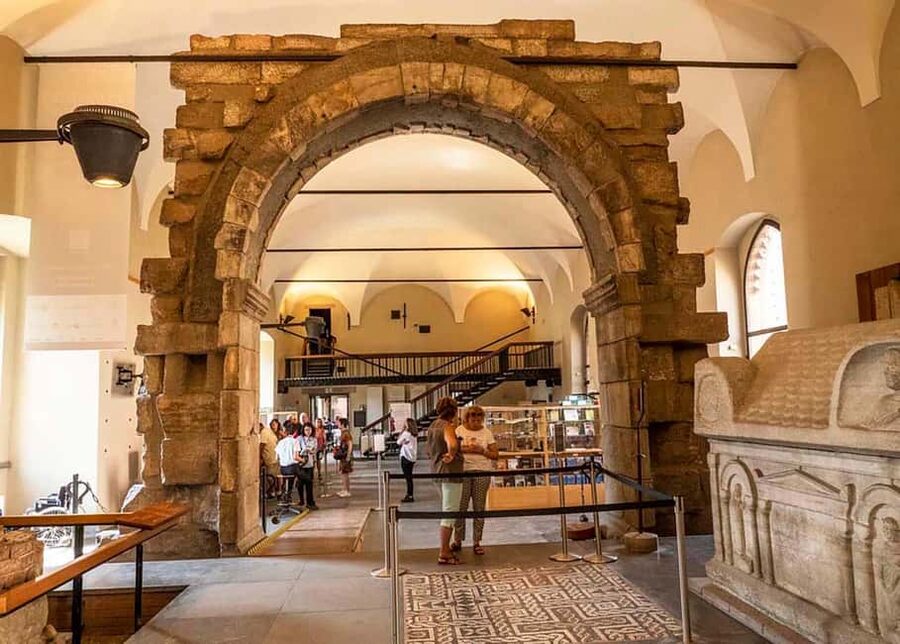
After the Pietà Rondanini, the visit continues through additional courtyards and interiors. These spaces give you a broader sense of the castle’s collections and architecture, although the short duration limits how much detail you can cover.
You might find the courtyards more useful than expected. They allow you to pause from the sculpture and understand the building’s proportions. They also show how the castle served different purposes over time, from fortified residence to public cultural institution.
Inside, the guide helps select the most relevant details rather than leaving you to sort through every object on your own. That is the tradeoff. A guided route gives you context and saves time, but it may pass by displays you would have chosen to study independently.
If you enjoy museums at your own speed, consider returning later without the group. The tour works best as an orientation. It tells you what matters, gives you a framework, and lets you decide which parts deserve a longer look.
Is $106 good value for 90 minutes?
At $106 per person, this is not a budget museum entry. The price includes castle and museum admission, a certified English-speaking guide, and online assistance before the visit. It does not include food, drinks, or transportation.
The value depends on what you want from Sforza Castle. If you only want to walk through the courtyards, the cost may feel high. If you want the Pietà Rondanini explained properly and would otherwise struggle to connect Michelangelo, Leonardo, and the Sforza family, the guide adds real value.
The short duration is both a benefit and a limitation. You can fit it into a busy Milan day, perhaps before the Duomo or after another central sight. You will not spend half a day indoors, but you also will not receive a full survey of the castle’s museums.
The high rating of 4.7 from nine recorded ratings reflects a consistent pattern: praise centers on clear explanations, friendly service, reliable meeting assistance, and guides who know how to make Milan’s story understandable. Specific guides named in the feedback include Maria, Paula, and Lorella. Maria was praised for her command of Milanese history, while Paula was credited with answering questions and covering several aspects of the city in a well-paced visit.
I would consider the price reasonable for a first-time visitor who values a human explanation. It is less convincing for repeat visitors who already know the castle and want long, quiet time with individual artworks.
Timing, changes, and practical cautions
Check the starting time carefully, but keep your schedule flexible. If your selected slot is unavailable, you may be moved to another time on the same day, such as a later morning or afternoon departure. Same-day or overnight bookings may be moved to the following day if no seats remain.
That policy matters if you have a train reservation, a timed Last Supper ticket, or a fixed dinner booking. I would avoid placing this tour directly beside another appointment unless you have plenty of space between them.
Cancellation is allowed up to 24 hours before the tour for a full refund. You can also reserve and pay later, which helps if your Milan plans are still changing.
The information provided about mobility needs is inconsistent. It says the tour is accessible to wheelchairs and strollers, yet it also lists wheelchair users as unsuitable. Because the castle includes historic spaces and museum interiors, you should contact the provider before booking if you use a wheelchair. Strollers should also be checked against the current instructions.
Who will enjoy this Milan tour most?
This experience suits you if you want a short, guided introduction to Milan’s Renaissance story. It works particularly well for first-time visitors, art lovers, and anyone who wants more context before visiting The Last Supper or other major Milan sights.
It also suits travelers who enjoy connections between artists and patrons. You are not just looking at a sculpture. You are learning how the Sforza court created the conditions for Leonardo’s work and how Michelangelo’s late art took a very different path.
Families may appreciate the 90-minute length, especially if younger visitors would struggle with a longer museum route. The guide’s storytelling can help, though the subject matter includes mortality, religion, and political power.
You may want to skip it if you prefer independent museum visits, dislike fixed schedules, or expect a broad tour of every castle collection. The visit is focused, not exhaustive.
Should you book it?
I would book this tour if the Pietà Rondanini is high on your Milan list and you want an expert explanation rather than a quick look. The guide’s strongest contribution is making the relationship between Michelangelo, Leonardo, and the Sforza court easy to understand.
Before booking, confirm the exact time, allow room for a possible schedule change, and resolve the wheelchair-access question if it applies to you. Bring identification and keep large bags at your hotel if possible.
For a compact introduction to Milan’s art and power, this is a strong choice. For a full day inside Sforza Castle, it is only the beginning.
FAQ
How long does the Sforza Castle tour last?
The tour lasts 1.5 hours and returns to Piazza Castello.
Where do I meet the guide?
Meet under the clock tower at Torre Filarete in Piazza Castello.
What language is the tour in?
The live tour guide speaks English.
Is admission to Sforza Castle included?
Yes. Admission to the castle and museum is included in the price.
Do I need identification?
Yes. Bring a passport or ID card.
Can I cancel the booking?
You can cancel up to 24 hours in advance for a full refund. You can also reserve now and pay later.
Just added around Milan
- Milan: Skip-the-line Sforza Castle and Museums Private Tour★ 4.7 · 7 reviews
- Sforza Castle & Michelangelo’s Pietà Rondanini Guided Tour★ 4.7 · 3 reviews
- Milano: Highlights Private Tour, Duomo, Castle & Gelato★ 5.0 · 5 reviews
- Milan: Professional Photoshoot Outside Sforza Castle★ 3.9 · 12 reviews
- Milan Small Group: Duomo & Rooftop, Castle, Gelato Tasting★ 4.8 · 70 reviews
- Milan: Sforza Castle & Leonardo Skip-the-Line Private Tour★ 4.7 · 26 reviews
- Milan: Last Supper and Sforza Castle Tour★ 4.6 · 115 reviews
- Milan: Duomo, Sforza Castle, and Pieta Guided Tour★ 4.9 · 100 reviews
Guided Castle Tours, compared.

Edinburgh Castle: Guided Walking Tour with Entry Ticket
Read our review →
Cathedral, Giralda & Alcazar Entry With Guided Tour
Read our review →Edinburgh Castle: Guided Walking Tour with Entry Ticket
Read our review →
Stonehenge, Windsor Castle and Bath Full Day Guided Tour
Read our review →
Edinburgh Castle Guided Walking Tour in English
Read our review →
Alcázar and Cathedral Entry Ticket and Guided Tour
Read our review →
Alcázar of Seville Skip-the-Line Tickets and Guided Tour
Read our review →
Dublin Book of Kells, Castle and Molly Malone Statue Guided Tour
Read our review →Browse the lists this tour appears in