
Review · ACCRA
10 Days Trip to Cape Coast and Elmina Castles from Accra
Ghana’s past is never far away. This 10-day journey links Accra’s neighborhoods, Ashanti craft villages, slave-trade sites, forest trails, and the castles of the Central Region in one carefully planned trip. I especially like the small group limit of 10 and the use of a private vehicle, which should make long transfers easier and allow the guide to respond to the group. I also like the mix of serious historical sites and hands-on cultural stops, from Adinkra cloth to Kente weaving.
The main caution is the pace. You cover Accra, Kumasi, Elmina, Cape Coast, Assin Manso, and Kakum in 10 days, with several long road journeys. The schedule is also tied to PANAFEST and Emancipation Day activities, so exact events may depend on the festival calendar. At $4,695 per person, this is a substantial purchase, but it includes hotels, private transport, a guide, daily breakfast, nine dinners, airport transfers, and many admissions.
Key things to know before booking
- The trip reaches beyond the castles: You also visit Accra’s Jamestown district, Kumasi’s Ashanti cultural sites, Assin Manso, and Kakum National Park.
- The group is capped at 10 people: That is useful for castle tours, museum visits, and questions during long drives.
- The history can be emotionally difficult: Elmina Castle, Cape Coast, and Assin Manso address enslavement and the Middle Passage directly.
- Kakum offers two levels of activity: You can walk the forest floor and canopy walkway, or choose time at the pool or ocean.
- Guides are a major part of the experience: Past praise has singled out Joshua, George, Kwaku, Elvis, Solomon, Emanuel, Anim, and others for care and strong cultural explanations.
- Meals are included, but food preferences matter: Breakfast and dinner are covered, though some meals may be repetitive or spicy.
Accra arrival and a gentle first evening
Your journey begins at Kotoka International Airport. After immigration, baggage collection, and customs, a guide meets you for the transfer to your Accra hotel. Dinner is included on the first night, while the rest of the evening is left open for rest.
That open time is sensible. International flights, airport formalities, and Accra traffic can take more energy than expected. You will also receive an orientation covering Ghanaian history, customs, safety, and health, so you can get your bearings before the sightseeing begins.
The trip is led by a cultural guide for the full duration, supported by a private driver. That arrangement matters in Ghana because it removes the need to arrange taxis or negotiate transport between several cities. It also gives you one person who can connect the historical themes from one region to the next.
More Cape Coast and Elmina Castle Tours in Accra:
- Cape Coast ,Elmina Castle and Kakum Full-Day Tour
★ 5.0 · 62 reviews - Cape Coast and Elmina Castles Tour
★ 5.0 · 31 reviews - Assin Manso Slaves River and Cape Coast Castle Tour
★ 5.0 · 24 reviews
Accra’s memorials, Jamestown, and the story of independence
The second day focuses on Accra and gives you a useful introduction to the country’s political and cultural identity. The W.E.B. Du Bois Centre honors the Pan-African thinker who chose Ghana as his home and workplace. It is a meaningful early stop, especially if your interest in Ghana includes the wider African independence movement.
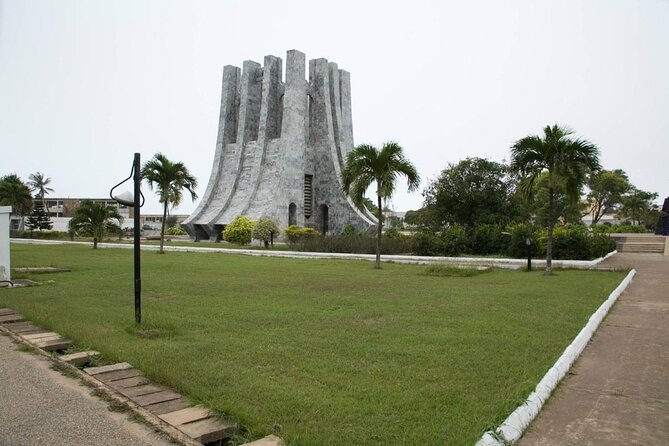
At Independence Square, you see the flame of African Liberation, lit by Kwame Nkrumah in 1961. The nearby Kwame Nkrumah Memorial Park is his final resting place and provides a clear connection between Ghana’s independence and the wider history of Pan-Africanism.
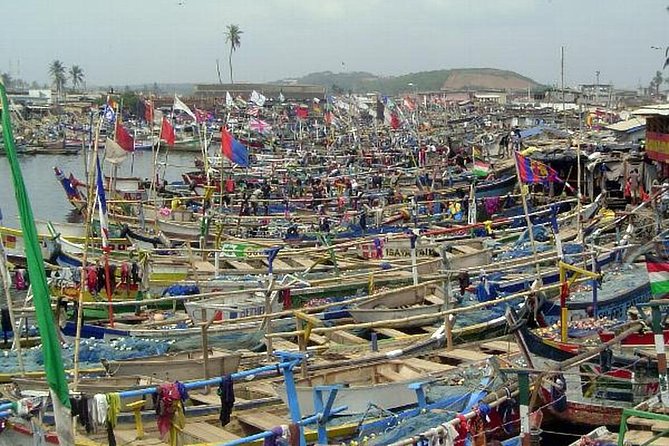
The day also includes Jamestown, one of Accra’s oldest communities. Its fishing harbor and lighthouse offer a sharp contrast with the office towers, hotels, and wide avenues of modern Accra. The Brazil House adds another layer to the area’s story, connecting the neighborhood to Ghana’s Atlantic trade and return communities.
I like this opening because it does not reduce Accra to monuments. You see national symbols, a historic neighborhood, and daily life around the fishing waterfront. Allow time for heat, uneven walking surfaces, and the possibility that the Jamestown portion feels more immediate and less polished than the memorial sites.
Kumasi and the Ashanti center of culture
After breakfast and checkout on Day 3, you travel to Kumasi, the historic seat of the Ashanti Empire. The transfer takes much of the day, with arrival planned for late afternoon. This is one of the tour’s longer road sections, but it takes you from coastal Accra into the heart of Ashanti culture.
The National Centre for Culture is the first major stop. Its Prempeh II Jubilee Museum presents objects and information connected with the Ashanti monarchy. The center also includes working studios where you can see brass makers, potters, and batik artisans at work.
This visit is more useful than a standard museum stop because the craft displays connect objects with living skills. You are not only looking at finished pieces. You may also see how they are made, and you have the chance to ask questions through the guide.
Kumasi also includes a drive past British colonial buildings, monuments connected with Ashanti history, and Kejetia Market, described in the program as one of West Africa’s most dynamic marketplaces. The market drive gives you a sense of the city’s scale, even if the schedule does not promise an extended market visit.
Ahwiaa, Ntonso, Bonwire, and Manhyia Palace
Day 4 is the strongest day for craft traditions. At Ahwiaa, woodcarvers make royal stools, walking sticks, and fertility dolls. You can purchase carved pieces, but the real value is seeing the skill and symbolism behind them before deciding what, if anything, to buy.
At Ntonso, artisans hand-stamp patterns onto cotton cloth to create Adinkra textiles. The process helps explain why these fabrics are more than decoration. The repeated symbols carry meanings, and your guide can add context that you would miss by simply browsing a shop.
The program also includes Bonwire, known for handwoven Kente cloth. Watching the weavers work on narrow looms gives you a better sense of the time and care behind the fabric. If you plan to buy Kente, ask questions about the pattern, color, and intended use before making a decision.
Manhyia Palace Museum completes the day. As the former home of the Ashanti royal court, it gives the Ashanti story a political setting after the craft villages have introduced you to the artistic side of the culture.
The shopping opportunities are real, so set a budget before you go. You may see attractive woodwork and textiles at several stops. Your guide can help explain the items, but you remain responsible for checking prices and arranging any custom orders clearly.
A few more castle visits around Accra worth a look
- One Day Tour To Cape Coast, Elmina Castle, Kakum National Park
★ 5.0 · 21 reviews - Cape Coast Castle, Assin Manso Slave River & Kakum Day Tour.
★ 5.0 · 19 reviews - Assin Manso Slave River, Cape Coast and Elmina Castle Day Tour
★ 5.0 · 19 reviews - From Accra: Cape Coast and Elmina Castles Day Trip
★ 5.0 · 19 reviews
Elmina Township and the coast at sunset
After completing the Kumasi portion, you travel toward Cape Coast and the coast. The day includes a guided walk through Elmina Township and time around the lagoon and fishing harbor.
Elmina is not only a castle destination. Its harbor remains tied to fishing, and the colorful canoes offer a glimpse of work that has shaped the town for generations. A walk through the township lets you see how modern life exists beside buildings and sites linked to the Atlantic trade.
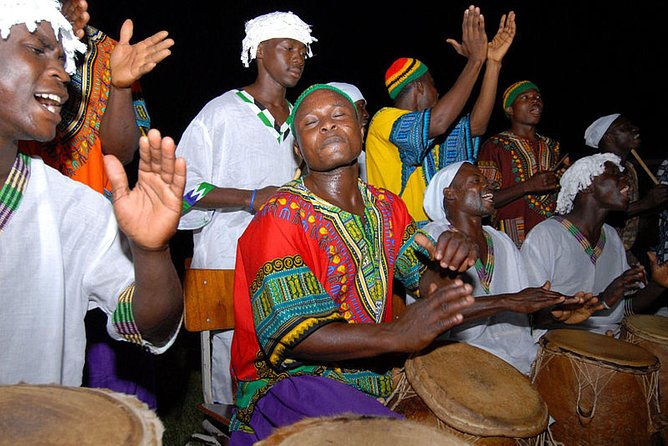
The schedule also brings PANAFEST into the trip. Festival activities may include performances, ceremonies, and cultural events, but the exact program can vary. This is a strength when dates line up, though you should not assume every listed event will have the same format each year.
A guide is especially useful here. Elmina’s history is complex, and the town can feel like a place to pass through if you only visit the castle. The walking portion helps connect the fortress, lagoon, fishing community, and present-day town.
Kakum National Park and a choice of activity
Day 6 gives you the trip’s main nature break. Kakum National Park protects one of West Africa’s remaining tropical forests and offers both a forest-floor walk and a high canopy walkway.
The canopy route is about 1,000 feet long and crosses seven bridges. Viewing platforms rise more than 150 feet above the ground, giving you a broad view over the forest. The height is the main attraction, but it is also the part that requires the most confidence. If you are uneasy with suspended walkways, the lower forest walk is a better choice.
On the ground, you may see butterflies, birds, and a wide range of plant life. The program also notes more than 40 species of mammals, including monkeys and the reclusive forest elephant, but wildlife sightings are not guaranteed. The forest walk also covers how people traditionally used plants and lived in the forest.
You can instead relax at the hotel pool or spend time at the ocean. That choice is important because the whole journey has a full schedule. I would choose Kakum if the canopy walkway appeals to you, but a rest day may be the wiser option if you are tired from the road travel and castle visits.
Elmina Castle and the weight of the Atlantic trade
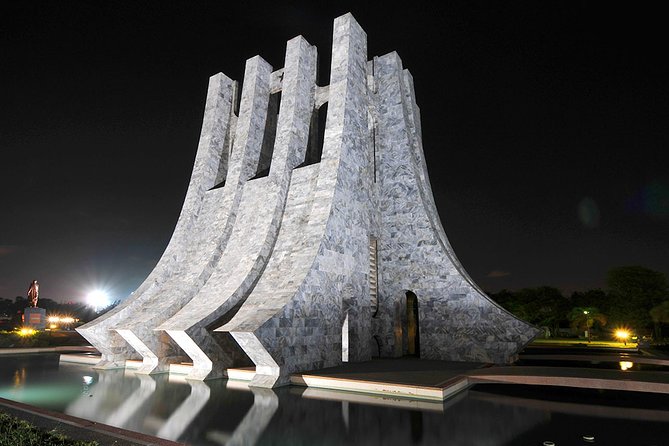
Day 7 centers on Elmina Castle, originally called St. George’s Castle. It was the first European structure built in Sub-Saharan Africa and later became part of the system that confined enslaved Africans before shipment across the Atlantic.
The visit includes the castle grounds and interior rooms. Expect a serious, emotionally difficult experience rather than a light sightseeing stop. The spaces make the history physical, and the guide’s explanation will shape how much context you take away.
A memorial ceremony follows at the beach. Participants throw bread into the water in remembrance of ancestors. A wreath and candle are sent out to sea, followed by a moment of silence for those who died during the Middle Passage.
The ceremony may be especially meaningful if you are visiting Ghana as part of a family or African diaspora pilgrimage. It also requires respect and patience. This is not a place for hurried photographs or casual conversation during the memorial portion.
Assin Manso and the route toward the castles
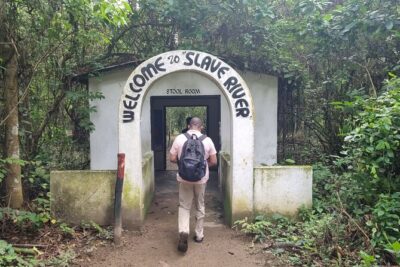
Assin Manso offers another important part of the story. The Slave River Site was a final transit point where captured Africans were washed before being confined in the coastal castles and sent across the Atlantic.
The site includes the river and the burial place of two formerly enslaved people from the United States and Jamaica. Their remains were reinterred during Ghana’s first Emancipation Day celebration in 1998.
This stop helps you understand the forced movement from inland areas toward the coast. Elmina and Cape Coast show the castles themselves, while Assin Manso addresses an earlier stage in the process. Taken together, the sites create a fuller account than a castle visit alone.
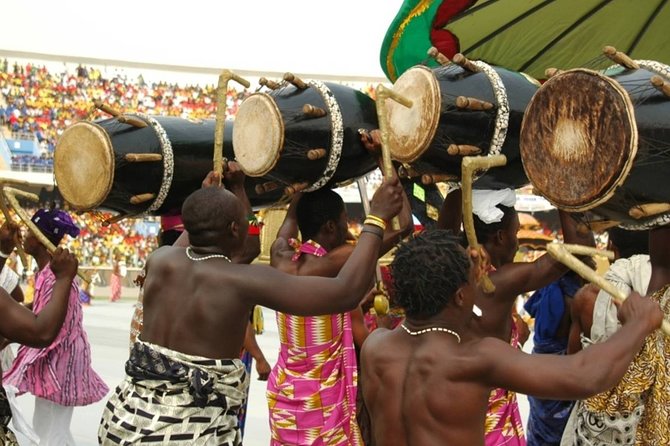
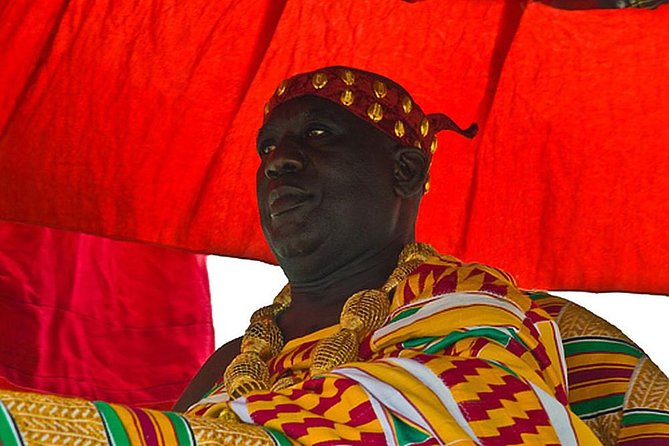
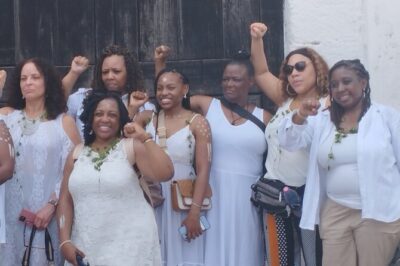
Day 9 returns to Assin Manso for the opening of Emancipation Day celebrations. The Grand Durbar features traditional chiefs and people from the Central Region in ceremonial clothing, gold jewelry, and beads. Drumming and dancing, including the fontomfrom drums, bring a public and communal element to the program.
The event is a high point for cultural spectacle, but the schedule depends on the celebration dates. If your trip is not timed with the main ceremony, PANAFEST activities may fill the cultural program instead.
How the price works at $4,695
At $4,695 per person, this trip is not a budget Ghana tour. Its value comes from the amount of coordination included rather than from a low daily price.
The package includes hotel accommodation, private vehicle transport, an experienced guide, airport transfers in both directions, bottled water each day, breakfast every morning, and nine dinners. Admissions are included for the listed sites, and the group size is limited to 10.
Private transport matters most on the Accra to Kumasi and Kumasi to Cape Coast sections. You are not piecing together public transport, finding hotels in several cities, or arranging separate castle and museum tickets. The guide also stays with you, which can make the historical portions more coherent.
The weak point is meal variety. Some included dinners may feel repetitive, and dishes can be spicy. If you have strong food preferences, tell the guide early and budget for meals that are not listed, since the package does not cover every meal.
Flights, visas, travel insurance, gratuities, personal purchases, and unlisted meals are extra. Build those costs into the total before booking.
Who will get the most from this Ghana tour
I would recommend this trip most strongly if you want a guided cultural journey rather than an independent beach holiday. It suits people who want historical context, meaningful memorials, traditional crafts, and direct contact with Ghana’s major cultural regions.
It also works well for families, organized heritage groups, and first-time visitors who prefer a private vehicle and a set schedule. The guide feedback is consistently strong, with particular praise for Joshua, George, Kwaku, Elvis, Solomon, Emanuel, Anim, and others for being attentive, friendly, and able to answer difficult questions.
You should think twice if you dislike long drives, fixed itineraries, or emotionally heavy sites. The schedule is full, and one group found the program strenuous. You also need to be comfortable with cultural events whose timing may depend on PANAFEST or Emancipation Day schedules.
The experience is rated 4.8 out of 5, with 97 percent recommending it. Those figures match the tour’s main strengths: strong guiding, careful attention, educational visits, and a sense of personal welcome. They do not remove the practical concerns about food, pace, or price.
Should you book this 10-day Ghana journey?
Book it if you want Ghana presented as a connected story: Accra’s independence movement, Kumasi’s Ashanti traditions, Elmina’s fishing town, the castles, Assin Manso, Kakum, and the modern ceremonies of remembrance.
Before paying, confirm the hotel properties, the festival dates, the exact PANAFEST schedule, and how much free time you will have in each city. Ask about dietary needs and whether a preferred guide, such as Joshua or another praised guide, can be assigned.
For a first visit, the private transport and full-time guide justify much of the cost. If you prefer slow travel, independent meals, or several unplanned afternoons, this itinerary may feel too packed. For a focused Ghana heritage trip with a small group and strong cultural guidance, it is a well-rounded choice.
FAQ
Where does the tour begin and end?
It begins at Kotoka International Airport in Accra and ends back at the same meeting point after the return from the Central Region.
How long is the experience?
The tour lasts approximately 10 days, from airport arrival on Day 1 to airport transfer on Day 10.
What is the maximum group size?
The group can include a maximum of 10 people.
Is airport transportation included?
Yes. Meeting and assistance on arrival and departure, plus round-trip airport and hotel transfers, are included.
Are meals included?
Breakfast is included every day, along with nine dinners. Meals not listed in the program are not included.
Is Kakum National Park required?
No. On Day 6, you can visit Kakum National Park or relax at your hotel pool or spend time at the ocean. At Kakum, you can choose between a forest walk and the canopy walkway.
What is the cancellation policy?
You can cancel at least 24 hours before the experience start time for a full refund. Cancellations or changes made less than 24 hours before the start time are not accepted for a refund.
Just added around Accra
- Cape Coast and Elmina castle Day Trip★ 5.0 · 2 reviews
- Naming Ceremony, Assin Manso Slave River and Cape Coast Castle★ 5.0 · 7 reviews
- Private Slave Castles and Dungeons Tour in Cape Coast, Ghana★ 5.0 · 3 reviews
- Cape Coast Castle and Kakum National Park 2-Day Private Tour★ 5.0 · 3 reviews
- The Door Of No Return/ Dungeon & cape Coast Castle★ 5.0 · 4 reviews
- Day Tour to Kakum National Park, Cape Coast and Elmina Castles★ 5.0 · 3 reviews
- Cape Coast Castle, Assin Manso Slave River and Door of No Return★ 5.0 · 14 reviews
- Elmina & Cape Coast Castles Day Trip from Accra★ 5.0 · 5 reviews
Cape Coast & Elmina Castle Tours, compared.
Cape Coast ,Elmina Castle and Kakum Full-Day Tour
Read our review →
Assin Manso Slaves River and Cape Coast Castle Tour
Read our review →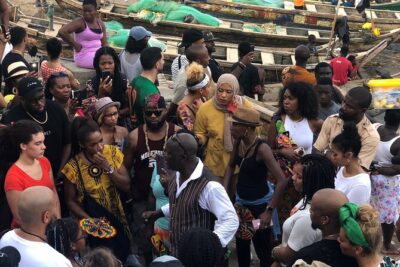
One Day Tour To Cape Coast, Elmina Castle, Kakum National Park
Read our review →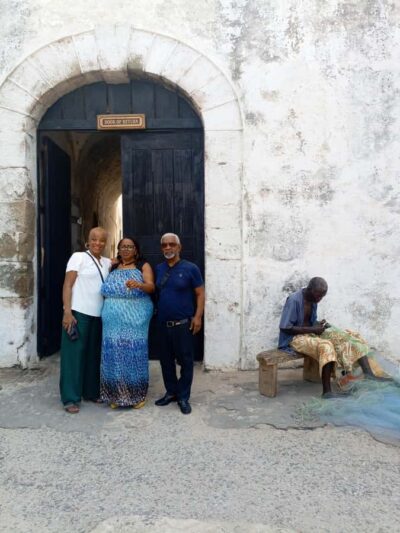
Assin Manso Slave River, Cape Coast and Elmina Castle Day Tour
Read our review →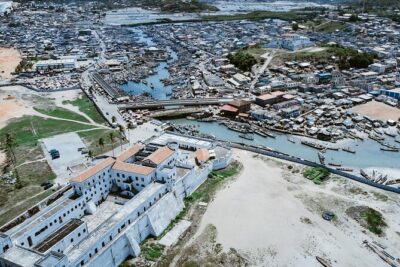
Cape Coast Castle, Assin Manso Slave River & Kakum Day Tour.
Read our review →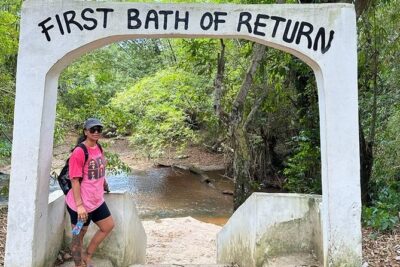
Assin Manso Slave River and Cape Coast Castle Private Day Tour
Read our review →Browse the lists this tour appears in